
Life, 1922-12-07 · page 46 of 80
Life — December 7, 1922 — page 46: what you’re looking at
What you’re looking at
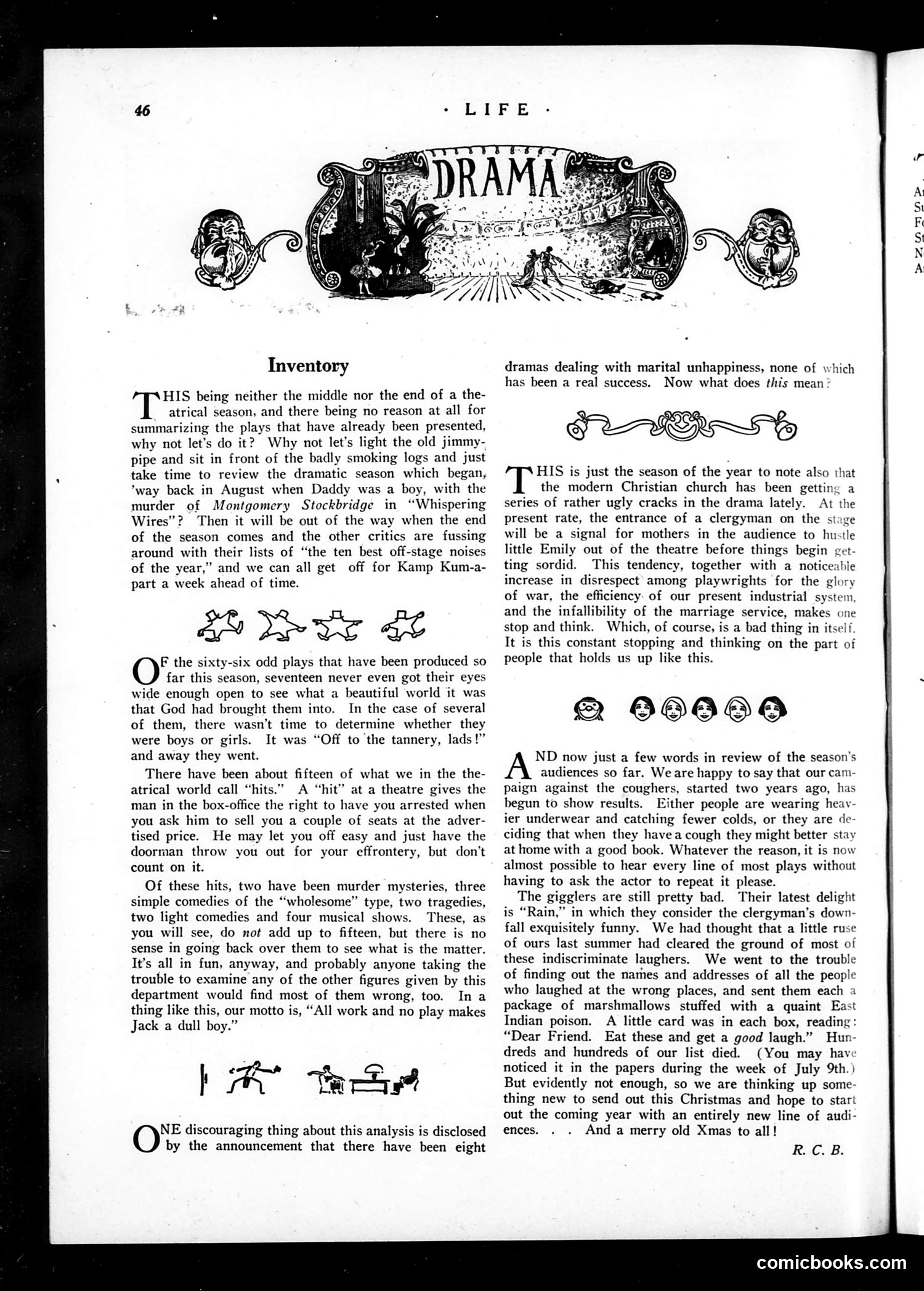
This is a satirical theater review from *Life* magazine's "Drama" section. The author humorously catalogs the theatrical season, noting that of 66 plays produced, 17 failed entirely and only 15 achieved "hit" status. The satire targets: 1. **Theater economics**: "Hits" give box-office managers the right to charge premium prices without offering seats at advertised rates—a jab at theatrical price gouging. 2. **Playwrights' social criticism**: Eight plays dealt with marital unhappiness (none successful), suggesting audiences reject such themes. The author notes modern drama increasingly mocks the church, war, industrial efficiency, and marriage—trends he presents as intellectually troubling. 3. **Audience behavior**: The piece celebrates reduced coughing (attributed to either better health or staying home with books) while lamenting continued giggling, particularly at "Rain," a play about a clergyman's moral fall. The tone is tongue-in-cheek about theatrical conventions and audience tastes, reflecting early 1920s sensibilities about propriety and entertainment.
📄 Transcribed text from this page (OCR, searchable)
Machine-transcribed from the original scan — historical spelling and the odd misread are preserved.
Inventory HIS being neither the middle nor the end of a the- atrical season, and there being no reason at all for summarizing the plays that have already been presented, why not let’s do it? Why not let's light the old jimmy- pipe and sit in front of the badly smoking logs and just take time to review the dramatic season which began, *way back in August when Daddy was a boy, with the murder of Montgomery Stockbridge in “Whispering Wires”? Then it will be out of the way when the end of the season comes and the other critics are fussing around with their lists of “the ten best off-stage noises of the year,” and we can all get off for Kamp Kum-a- part a week ahead of time. ao Tr ve a F the sixty-six odd plays that have been produced so far this season, seventeen never even got their eyes wide enough open to see what a beautiful world it was that God had brought them into. In the case of several of them, there wasn’t time to determine whether they were boys or girls. It was “Off to the tannery, lads!” and away they went. There have been about fifteen of what we in the the- atrical world call “hits.” A “hit” at a theatre gives the man in the box-office the right to have you arrested when you ask him to sell you a couple of seats at the adver- tised price. He may let you off easy and just have the doorman throw you out for your effrontery, but don't count on it. Of these hits, two have been murder mysteries, three simple comedies of the “wholesome” type, two tragedies, two light comedies and four musical shows. These, as you will see, do not add up to fifteen, but there is no sense in going back over them to see what is the matter. It’s all in fun, anyway, and probably anyone taking the trouble to examine any of the other figures given by this department would find most of them wrong, too. In a thing like this, our motto is, “All work and no play makes Jack a dull boy.” ba teh NE discouraging thing about this analysis is disclosed by the announcement that there have been eight dramas dealing with marital unhappiness, none of wt has been a real success. Now what does this mean? HIS is just the season of the year to note also that the modern Christian church has been getting a series of rather ugly cracks in the drama lately. At the present rate, the entrance of a clergyman on the stage will be a signal for mothers in the audience to hustle little Emily out of the theatre before things begin get- ting sordid. This tendency, together with a notice increase in disrespect among playwrights for the glory of war, the efficiency. of our present industrial sys and the infallibility of the marriage service, makes one stop and think. Which, of course, is a bad thing in itseli. It is this constant stopping and thinking on the part of people that holds us up like this. Q 996668 ND now just a few words in review of the season's audiences so far. We are happy to say that our cam- paign against the coughers, started two years ago, has begun to show results. Either people are wearing heav- ier underwear and catching fewer colds, or they are de- ciding that when they havea cough they might better stay at home with a good book. Whatever the reason, it is now almost possible to hear every line of most plays without having to ask the actor to repeat it please. The gigglers are still pretty bad. Their latest delight is “Rain,” in which they consider the clergyman’s down- fall exquisitely funny. We had thought that a little ruse of ours last summer had cleared the ground of most of these indiscriminate laughers. We went to the trouble of finding out the names and addresses of all the people who laughed at the wrong places, and sent them each a package of marshmallows stuffed with a quaint East Indian poison. A little card was in each box, reading: “Dear Friend. Eat these and get a good laugh.” Hun- dreds and hundreds of our list died. (You may hav: noticed it in the papers during the week of July 9th.) But evidently not enough, so we are thinking up some- thing new to send out this Christmas and hope to start out the coming year with an entirely new line of audi- ences. And a merry old Xmas to all! R.C. B. comicbooks.com