
Life, 1922-11-02 · page 19 of 40
Life — November 2, 1922 — page 19: what you’re looking at
What you’re looking at
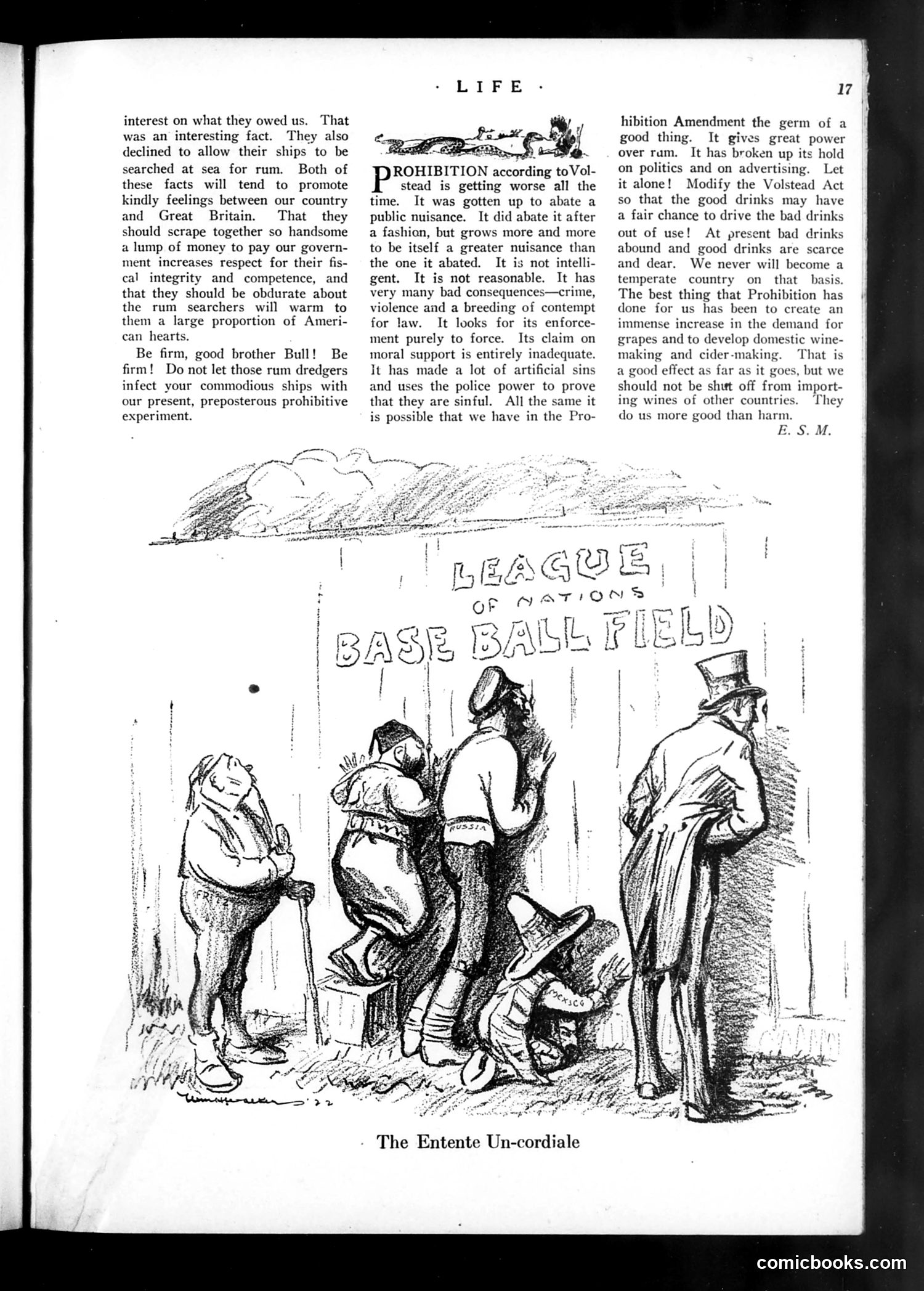
This page contains two distinct pieces: upper text about British-American relations regarding rum smuggling, and a cartoon titled "The Entente Un-cordiale" (a pun on the actual French-British "Entente Cordiale" alliance). **The Cartoon's Satire:** The drawing depicts caricatured figures at a "League of Nations Base Ball Field," likely representing Britain ("Bull") and America, playing baseball together. The joke appears to mock the strained post-WWI relationship between these allies—the title's "Un-cordiale" (not cordial) suggests tension despite their supposed friendship. **The Text's Context:** The article criticizes Prohibition (the 18th Amendment banning alcohol), arguing it creates more problems than it solves—crime, contempt for law, and artificial scarcity. The writer suggests modifying the Volstead Act and permitting wine and cider imports. The opening text sarcastically praises Britain's fiscal integrity while resisting American ship searches for smuggled rum, hinting at Prohibition-era rum-running tensions between the nations. **Historical Context:** This reflects 1920s American frustration with both Prohibition's failures and post-war Allied relationships.
📄 Transcribed text from this page (OCR, searchable)
Machine-transcribed from the original scan — historical spelling and the odd misread are preserved.
interest on what they owed us. That was an interesting fact. They also declined to allow their ships to be searched at sea for rum. Both of these facts will tend to promote kindly feelings between our country and Great Britain. That they should scrape together so handsome a lump of money to pay our govern- ment increases respect for their fis- cal integrity and competence, and that they should be obdurate about the rum searchers will warm to them a large proportion of Ameri- can hearts. Be firm, good brother Bull! Be firm! Do not let those rum dredgers infect your commodious ships with our present, preposterous prohibitive experiment. e. ROHIBITION according toVol- stead is getting worse all the time. It was gotten up to abate a public nuisance. It did abate it after a fashion, but grows more and more to be itself a greater nuisance than the one it abated. It is not intelli- gent. It is not reasonable. It has very many bad consequences—crime, violence and a breeding of contempt for law. It looks for its enforce- ment purely to force. Its claim on moral support is entirely inadequate. It has made a lot of artificial sins and uses the police power to prove that they are sinful. All the same it is possible that we have in the Pro- The Entente Un-cordiale 17 hibition Amendment the germ of a good thing. It gives great power over ram. It has broken up its hold on politics and on advertising. Let it alone! Modify the Volstead Act so that the good drinks may have a fair chance to drive the bad drinks out of use! At present bad drinks abound and good drinks are scarce and dear. We never will become a temperate country on that basis. The best thing that Prohibition has done for us has been to create an immense increase in the demand for grapes and to develop domestic wine- making and cider-making. That is a good effect as far as it goes, but we should not be shut off from import- ing wines of other countries. do us more good than harm. They comicbooks.com