
Life, 1922-08-31 · page 25 of 36
Life — August 31, 1922 — page 25: what you’re looking at
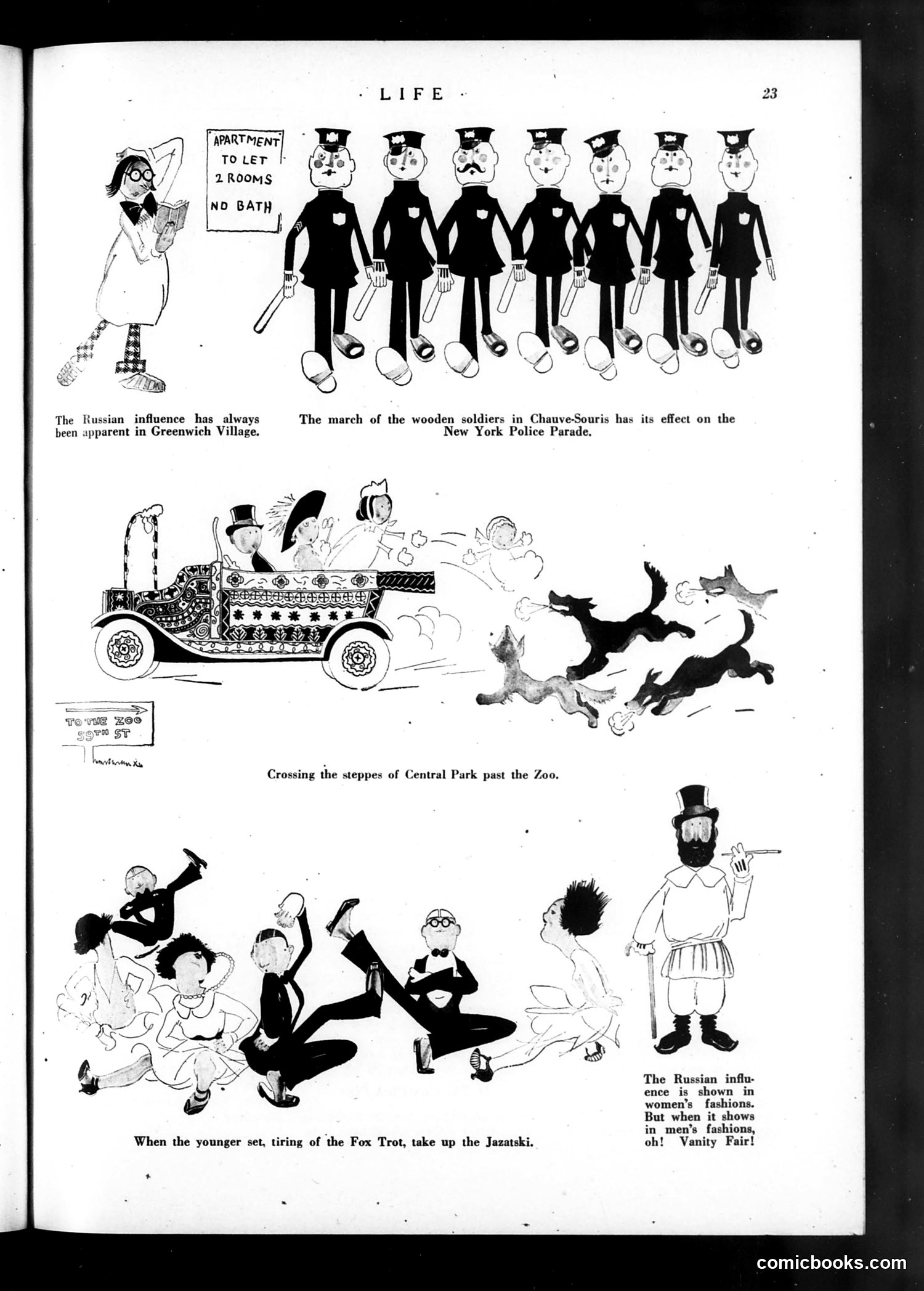
What you’re looking at
This page satirizes the "Russian craze" sweeping 1920s America, particularly affecting Greenwich Village bohemians and high society. The cartoons mock how Russian cultural imports—from the avant-garde theater revue "Chauve-Souris" to jazz-influenced dance (the "Jazatski")—were reshaping American style and behavior. The top panel jokes that Russian aesthetics even influenced the NYC Police Parade (wooden-soldier rigidity). The Central Park scene references Russian steppes imagery pervading popular culture. The final panels contrast women adopting Russian fashions (presented acceptably) versus men doing so, which the caption sarcastically condemns as excessive vanity. The overall satire targets how eagerly Americans, especially fashionable urbanites, embraced Russian cultural trends as markers of sophistication, while simultaneously viewing such adoptions as absurd affectation.
📄 Transcribed text from this page (OCR, searchable)
Machine-transcribed from the original scan — historical spelling and the odd misread are preserved.
| APARTMENT] TOLET | | 2 ROOMS The Russian influence has always The march of the wooden soldiers in Chauve-Souris has its effect on the been apparent in Greenwich Village. New York Police Parade. hedonic Crossing the steppes of Central Park past the Zoo. When the younger set, tiring of the Fox Trot, take up the Jazatski. + The Russian influ- ence is shown in women’s fashions. But when it shows in men’s fashions, oh! Vanity Fair! comicbooks.com