
Life, 1922-08-31 · page 13 of 36
Life — August 31, 1922 — page 13: what you’re looking at
What you’re looking at
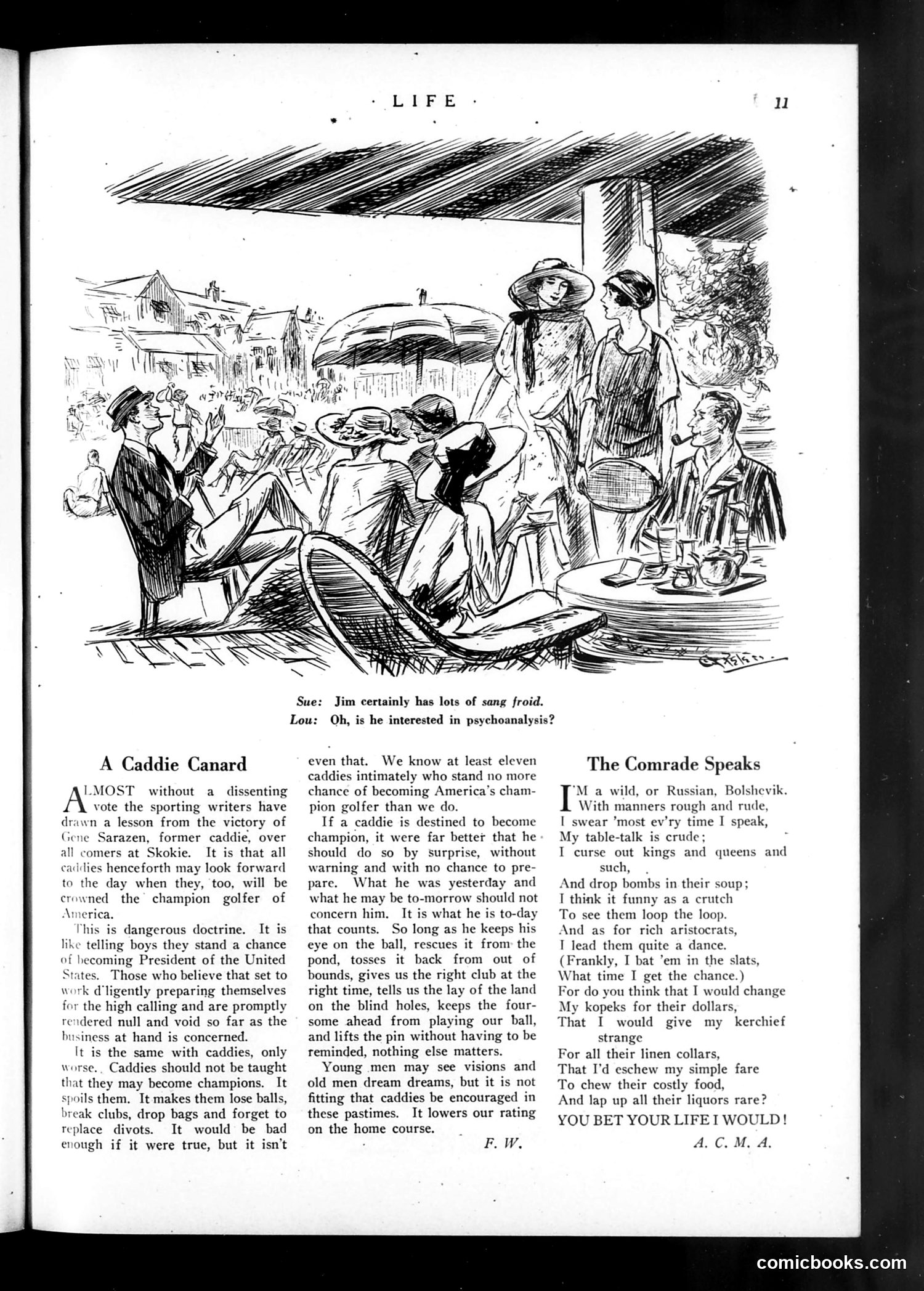
This page contains two satirical pieces about golf and social behavior circa early 20th century. **"A Caddie Canard"** criticizes the idea that caddies should aspire to become golf champions. The author argues caddies should focus on their actual job—keeping their "eye on the ball" and maintaining the course—rather than being encouraged to abandon their role through unrealistic dreams of advancement. **"The Comrade Speaks"** features a Russian character (indicated by "Bolshevik" reference) expressing crude, materialistic values—preferring money and food to aristocratic refinement. This appears to satirize Russian revolutionary ideology and working-class attitudes as vulgar or uncultured. The cartoon above depicts a beach or social scene, with dialogue about someone named Jim having "lots of sang froid" (composure) and being "interested in psychoanalysis"—contemporary intellectual trends being mocked.
📄 Transcribed text from this page (OCR, searchable)
Machine-transcribed from the original scan — historical spelling and the odd misread are preserved.
jdt Randa)? cae a Jim certainly has lots of sang froid. Oh, is he interested in psychoanalysis? Sue: Lou: A Caddie Canard LMOST without a dissenting A vote the sporting writers have drawn a lesson from the victory of Gene Sarazen, former caddie, over all comers at Skokie. It is that all cadilies henceforth may look forward to the day when they, too, will be crowned the champion golfer of America. his is dangerous doctrine. It is like telling boys they stand a chance of hecoming President of the United States. Those who believe that set to work d'ligently preparing themselves for the high calling and are promptly rendered null and void so far as the business at hand is concerned. It is the same with caddies, only worse., Caddies should not be taught that they may become champions. It spoils them, It makes them lose balls, break clubs, drop bags and forget to replace divots. It would be bad enough if it were true, but it isn’t even that. We know at least eleven caddies intimately who stand no more chance of becoming America’s cham- pion golfer than we do. If a caddie is destined to become champion, it were far better that he should do so by surprise, without warning and with no chance to pre- pare. What he was yesterday and what he may be to-morrow should not concern him. It is what he is to-day that counts. So long as he keeps his eye on the ball, rescues it from the pond, tosses it back from out of bounds, gives us the right club at the right time, tells us the lay of the land on the blind holes, keeps the four- some ahead from playing our ball, and lifts the pin without having to be reminded, nothing else matters. Young men may see visions and old men dream dreams, but it is not fitting that caddies be encouraged in these pastimes. It lowers our rating on the home course. FLW. The Comrade Speaks *M a wild, or Russian, Bolshevik. With manners rough and rude, | swear ’most ev’ry time I speak, My table-talk is crude; I curse out kings and queens and such, And drop bombs in their soup; I think it funny as a crutch To see them loop the loop. And as for rich aristocrats, I lead them quite a dance. (Frankly, I bat ’em in the slats, What time I get the chance.) For do you think that I would change My kopeks for their dollars, That I would give my _ kerchief strange For all their linen collars, That I'd eschew my simple fare To chew their costly food, And lap up all their liquors rare? YOU BET YOUR LIFEI WOULD! A.C. M. A, comicbooks.com