
Life, 1922-08-03 · page 10 of 36
Life — August 3, 1922 — page 10: what you’re looking at
What you’re looking at
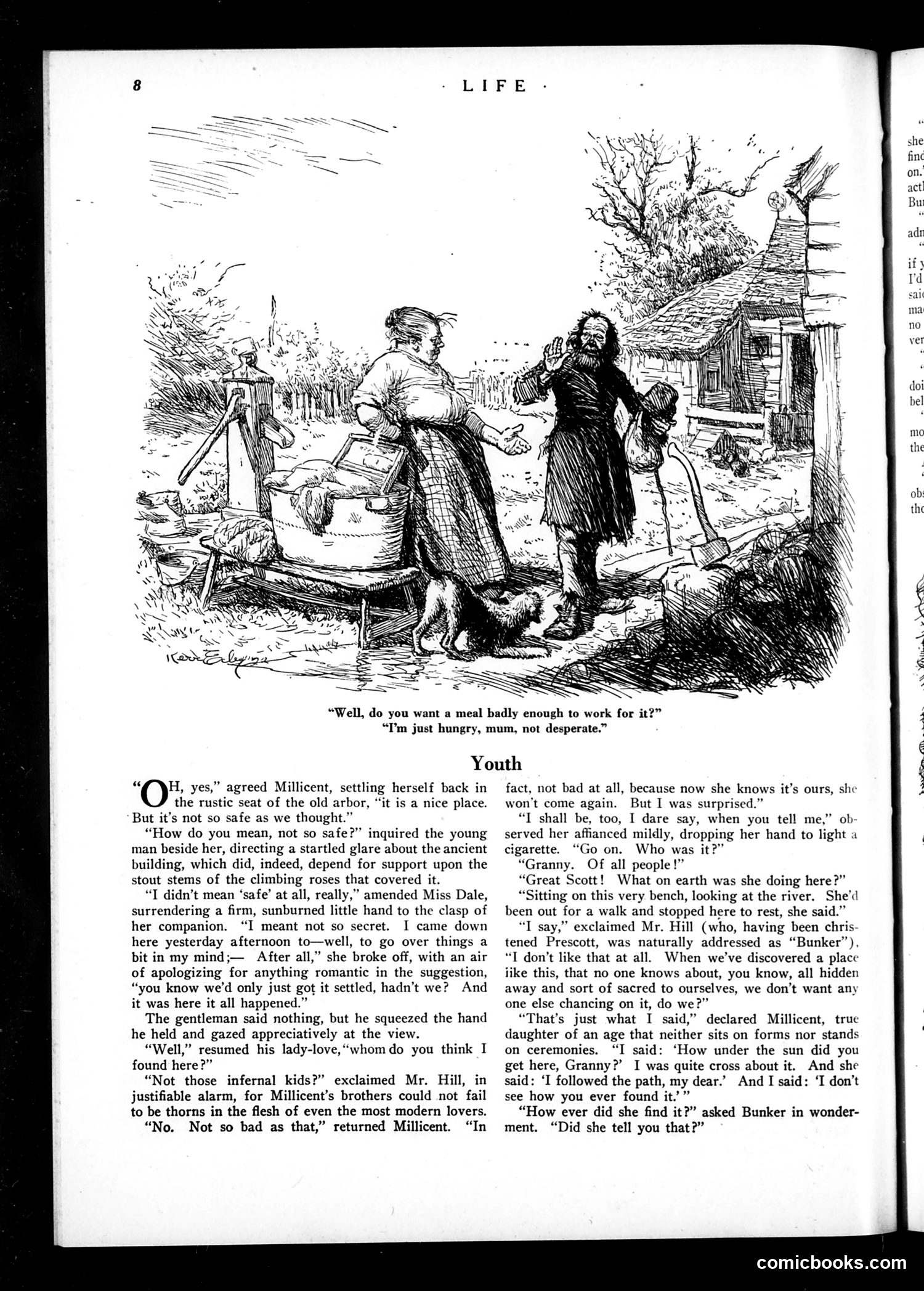
This page contains a sketch and story titled "Youth." The illustration depicts a rural scene where a young woman (Millicent) encounters an elderly man and woman. The dialogue reveals social commentary on class and propriety: when asked if she wants "a meal badly enough to work for it," Millicent claims hunger rather than desperation—a distinction about maintaining dignity. The subsequent narrative mocks Victorian sensibilities through characters like Mr. Hill and the genteel Millicent, who follows strict social conventions while others behave more freely. The satire targets rigid class consciousness and hypocrisy: characters judge behavior harshly while engaging in questionable conduct themselves. The "infernal kids" reference suggests generational conflict and moral anxiety about youth's independence from traditional constraints.
📄 Transcribed text from this page (OCR, searchable)
Machine-transcribed from the original scan — historical spelling and the odd misread are preserved.
“Well, do you want a meal badly enough to work for it?” “I’m just hungry, mum, not desperate.” Youth “ H, yes,” agreed Millicent, settling herself back in the rustic seat of the old arbor, “it is a nice place. But it’s not so safe as we thought.” “How do you mean, not so safe?” inquired the young man beside her, directing a startled glare about the ancient building, which did, indeed, depend for support upon the stout stems of the climbing roses that covered it. “T didn’t mean ‘safe’ at all, really,” amended Miss Dale, surrendering a firm, sunburned little hand to the clasp of her companion. “I meant not so secret. I came down here yesterday afternoon to—well, to go over things a bit in my mind;— After all,” she broke off, with an air of apologizing for anything romantic in the suggestion, “you know we'd only just got it settled, hadn’t we? And it was here it all happened.” The gentleman said nothing, but he squeezed the hand he held and gazed appreciatively at the view. “Well,” resumed his lady-love,“whomdo you think I found here?” “Not those infernal kids?” exclaimed Mr. Hill, in justifiable alarm, for Millicent’s brothers could not fail to be thorns in the flesh of even the most modern lovers. “No. Not so bad as that,” returned Millicent. “In fact, not bad at all, because now she knows it’s ours, she won't come again. But I was surprised.” “T shall be, too, I dare say, when you tell me,” ob- served her affianced mildly, dropping her hand to light a cigarette. “Go on. Who was it?” “Granny. Of all people!” “Great Scott! What on earth was she doing here?” “Sitting on this very bench, looking at the river. She'd been out for a walk and stopped here to rest, she said.” “I say,” exclaimed Mr. Hill (who, having been chris- tened Prescott, was naturally addressed as “Bunker”), “I don’t like that at all. When we've discovered a place iike this, that no one knows about, you know, all hidden away and sort of sacred to ourselves, we don’t want any one else chancing on it, do we?” “That's just what I said,” declared Millicent, true daughter of an age that neither sits on forms nor stands on ceremonies. “I said: ‘How under the sun did you get here, Granny?’ I was quite cross about it. And she said: ‘I followed the path, my dear.’ And I said: ‘I don’t see how you ever found it.” “How ever did she find it?” asked Bunker in wonder- ment. “Did she tell you that?” comicbooks.com