
Life, 1922-06-29 · page 26 of 35
Life — June 29, 1922 — page 26: what you’re looking at
What you’re looking at
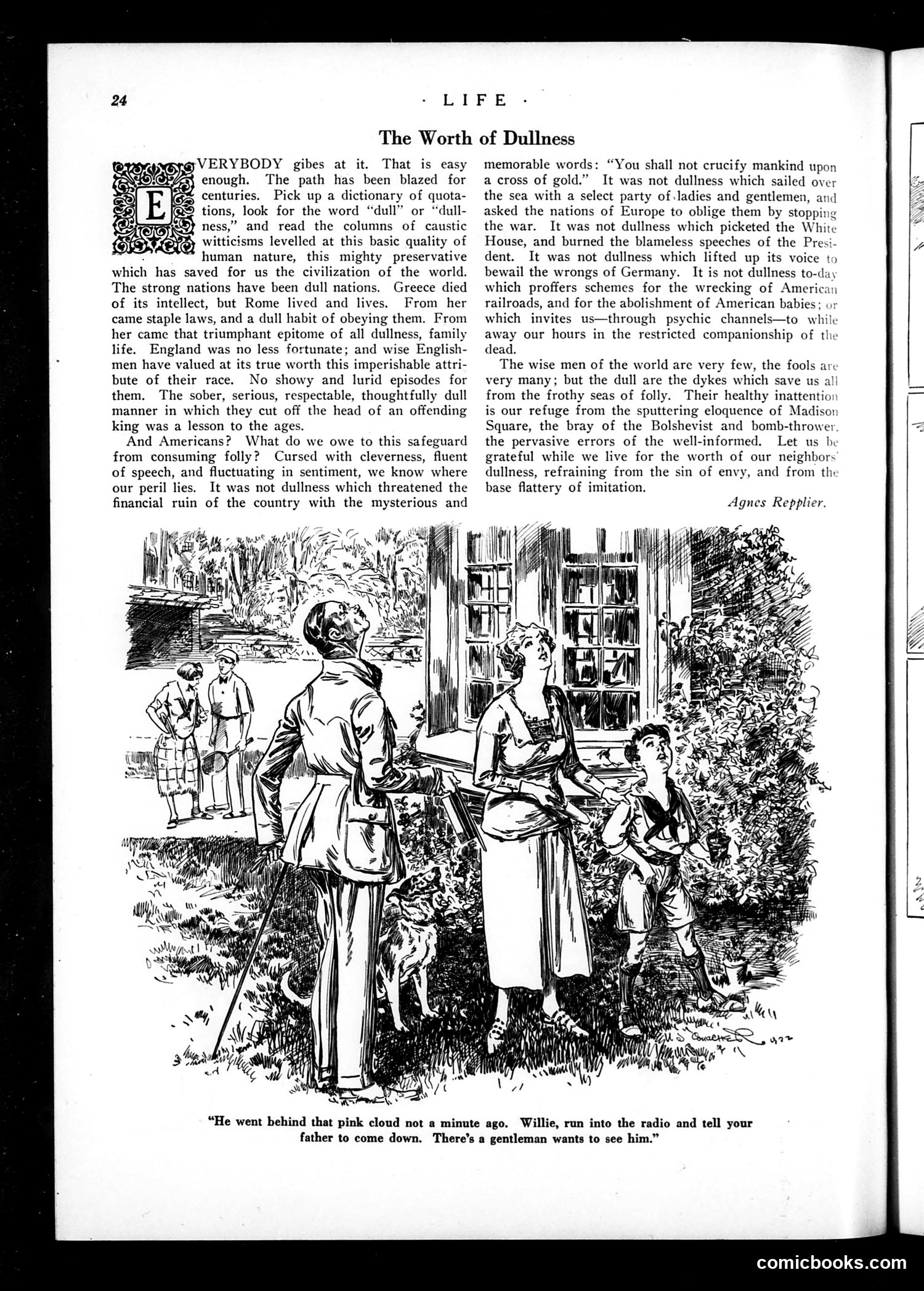
This is an essay by Agnes Repplier defending "dullness" as a stabilizing social force. Written during a turbulent period (references to financial panic, anti-war activism, and Bolshevism suggest early 20th century), Repplier argues that excessive cleverness and rhetoric—not dullness—threatens society. The essay alludes to William Jennings Bryan's 1896 "cross of gold" speech and peace activists who lobbied European nations to stop World War I. It mocks "well-informed" radicals advocating railroad nationalization and birth control, along with spiritualist séances gaining popularity. The cartoon below, captioned about someone disappearing behind a pink cloud while a boy fetches his father via radio, illustrates the essay's point: modish enthusiasms (spiritualism, new technology) distract from sensible domestic life. The joke satirizes how fashionable foolishness disrupts ordinary family routines—exactly the kind of thoughtless "cleverness" Repplier warns against.
📄 Transcribed text from this page (OCR, searchable)
Machine-transcribed from the original scan — historical spelling and the odd misread are preserved.
LIFE The Worth of Dullness VERYBODY gibes at it. That is easy enough. The path has been blazed for centuries. Pick up a dictionary of quota- tions, look for the word “dull” or “dull- ness,” and read the columns of caustic witticisms levelled at this basic quality of Z human nature, this mighty preservative which has saved for us the civilization of the world. The strong nations have been dull nations. Greece died of its intellect, but Rome lived and lives. From her came staple laws, and a dull habit of obeying them. From her came that triumphant epitome of all dullness, family life. England was no less fortunate; and wise English- men have valued at its true worth this imperishable attri- bute of their race. No showy and lurid episodes for them. The sober, serious, respectable, thoughtfully dull manner in which they cut off the head of an offending king was a lesson to the ages. And Americans? What do we owe to this safeguard from consuming folly? Cursed with cleverness, fluent of speech, and fluctuating in sentiment, we know where our peril lies. It was not dullness which threatened the financial ruin of the country with the mysterious and “Sr aN Z we WY ie we co Aunt acca memorable words: “You shall not crucify mankind upon a cross of gold.” It was not dullness which sailed over the sea with a select party of ladies and gentlemen, and asked the nations of Europe to oblige them by stopping the war. It was not dullness which picketed the White House, and burned the blameless speeches of the Presi- dent. It was not dullness which lifted up its voice to bewail the wrongs of Germany. It is not dullness to-d: which proffers schemes for the wrecking of Amer: railroads, and for the abolishment of American babies; which invites us—through psychic channels—to wh away our hours in the restricted companionship of the dead. The wise men of the world are very few, the fools a very many; but the dull are the dykes which save u from the frothy seas of folly. Their healthy inattenti is our refuge from the sputtering eloquence of Madisor Square, the bray of the Bolshevist and bomb-thrower the pervasive errors of the well-informed. Let us be grateful while we live for the worth of our neighbors dullness, refraining from the sin of envy, and from the base flattery of imitation. Agnes Repplier. “He went behind that pink cloud not a minute ago. Willie, run into the radio and tell your father to come down. There’s a gentleman wants to see him.” comicbooks.com