
Life, 1922-03-02 · page 8 of 34
Life — March 2, 1922 — page 8: what you’re looking at
What you’re looking at
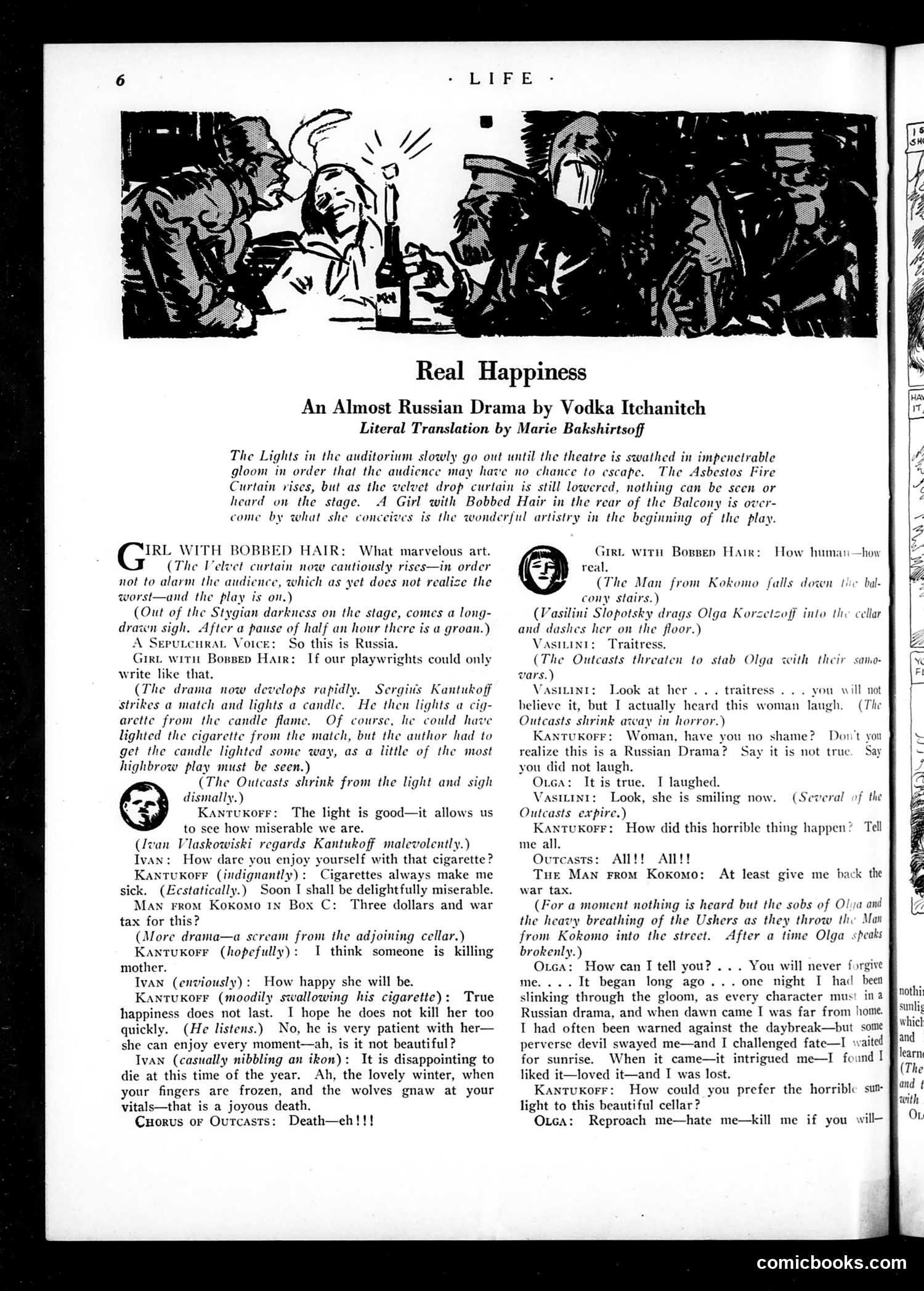
This is a satirical dramatic sketch mocking Russian literature and culture. The cartoon depicts exaggerated Russian characters in what appears to be a melodramatic scene—consistent with 19th-century Russian literary stereotypes popular in American satire. The sketch satirizes both Russian dramatic conventions (excessive emotion, fatalism, dark themes) and Russian drinking culture through the author's absurd pseudonym "Vodka Itchanitch." The dialogue includes stereotypical Russian themes: poverty, despair, and resigned suffering presented as profound philosophy. The humor targets American audiences' perception of Russians as perpetually gloomy, philosophically overwrought, and prone to theatrical displays of emotion—a common comedic trope in early 20th-century American magazines. The "almost Russian Drama" framing itself is the joke.
📄 Transcribed text from this page (OCR, searchable)
Machine-transcribed from the original scan — historical spelling and the odd misread are preserved.
Real Happiness An Almost Russian Drama by Vodka Itchanitch Literal Translation by Marie Bakshirtsoff The Lights in the auditorium slowly go out until the theatre is swathed in impenetrable gloom in order that the audience may have no chance to escape. The Asbestos Fire Curtain rises, but as the velvet drop curtain is still lowered, nothing can be scen or heard on the stage. come by what she con IRL WITH BOBBED HAIR: What marvelous art. (The Velvet curtain now cautiously rises—in order not to alarm the audience, which as yet does not realise the worst—and the play is on.) (Out of the Stygian darkness on the stage, comes a long- drawn sigh, After a pause of half an hour there is a groan.) A A Seputcurat Voice: So this is Russia. Girt witn Bossep Harr: write like that. (The drama now develops rapidly. strikes a match and lights a candle. He then lights a cig- arette from the candle flame. Of course, he could have lighted the cigarette from the match, but the author had to get the candle lighted some way, as a little of the most highbrow play must be seen.) (The Outcasts shrink from the light and sigh dismally.) KantukorF: The light is good—it allows us to sce how miserable we are. (Ivan Vlaskowiski regards Kantukoff malevolently.) Ivan: How dare you enjoy yourself with that cigarette? KantukorF (indignantly): Cigarettes always make me sick. (Ecstatically.) Soon I shall be delightfully miserable. Man From Kokomo 1n Box C: Three dollars and war tax for this? (More drama—a scream from the adjoining cellar.) KantukorFr (hopefully): 1 think someone is killing mother. Ivan (enviously) : How happy she will be. KantukorF (moodily swallowing his cigarette): True happiness does not last. I hope he does not kill her too quickly. (He listens.) No, he is very patient with her— she can enjoy every moment—ah, is it not beautiful? Ivan (casually nibbling an ikon): It is disappointing to die at this time of the year. Ah, the lovely winter, when your fingers are frozen, and the wolves gnaw at your vitals—that is a joyous death. Cuorus or Ourcasts: Death—eh!!! If our playwrights could only Sergius Kantukoff A Girl with Bobbed Hair in the rear of the Balcony is over- ves is the wonderful artistry in the beginning of the play. Girt with Bossep Hair: real. (The Man from Kokomo falls down Wie bal- cony stairs.) (Vasilini Slopotsky drags Olga Korsetzoff into the cellar and dashes her on the floor.) Vasil Traitr (The Outcasts threaten to stab Olga with their sano- How human —how “astLint: Look at her . . . traitress believe it, but I actually heard this woman laugh. (The Outcasts shrink away in horror.) KantukorF: Woman, have you no shame? Don't you realize this is a Russian Drama? Say it is not true. Say you did not laugh. OG. It is true. I laughed. Vasttini: Look, she is smiling now. Outcasts expire.) KantukorF: How did this horrible thing happen? Tell me all. Outcasts: All!! All!! Tue Man From Kokomo: war tax. (For a moment nothing is heard but the sobs of Olya and the heavy breathing of the Ushers as they throw the Man from Kokomo into the street. After a time Olga speaks brokenly.) A: How can I tell you? ... You will never forgive ... It began long ago... one night I had been slinking through the gloom, as every character mus! in 4 Russian drama, and when dawn came I was far from home. I had often been warned against the daybreak—but some perverse devil swayed me—and I challenged fate—I waited for sunrise. When it came—it intrigued me—I found ! liked it—loved it—and I was lost. KantukorF: How could you prefer the horrible sum light to this beautiful cellar? Oca: Reproach me—hate me—kill me if you will . you will not (Several of the At least give me back the comicbooks.com