
Life, 1922-02-16 · page 22 of 34
Life — February 16, 1922 — page 22: what you’re looking at
What you’re looking at
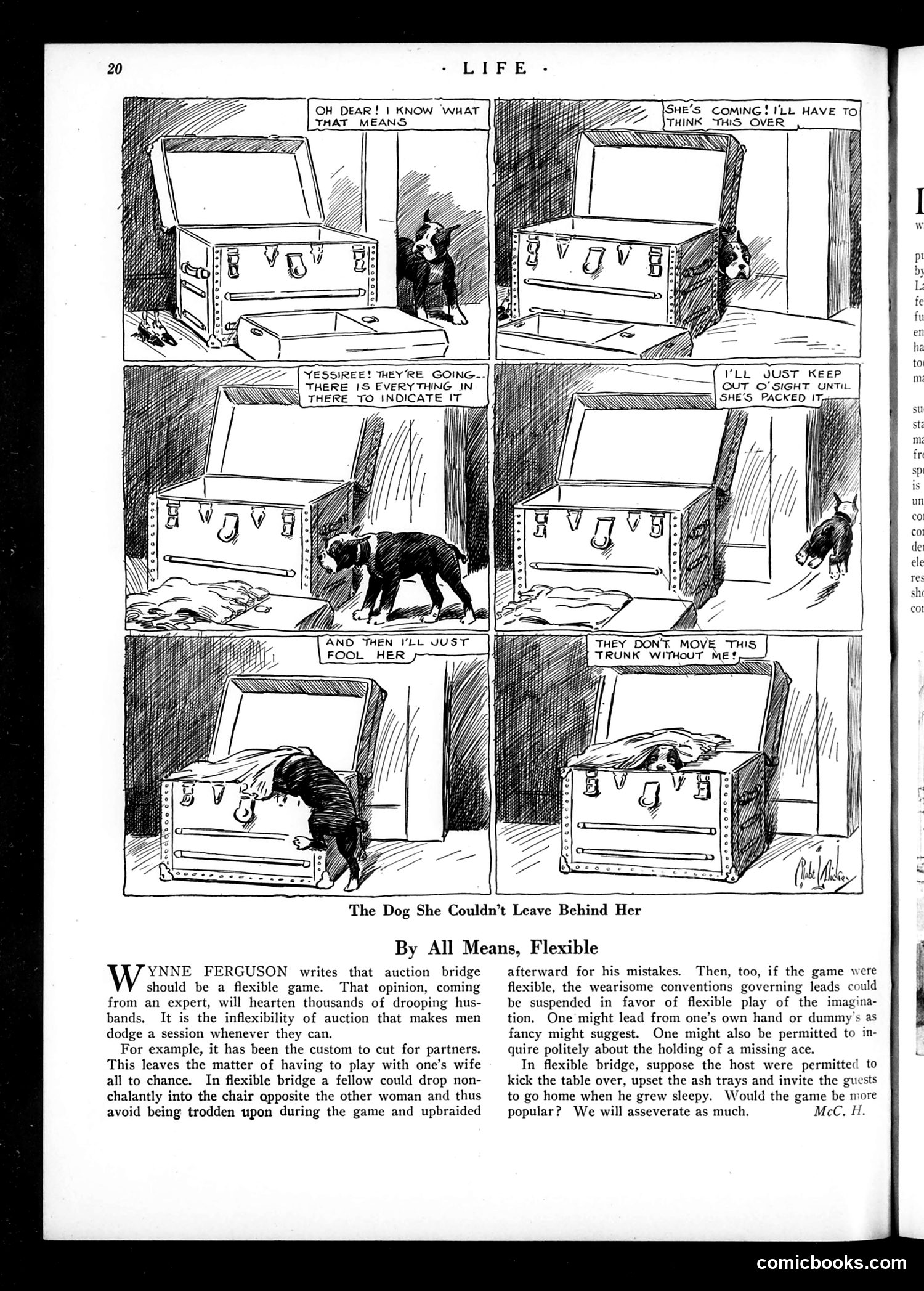
This comic depicts a dog's determination to stow away in a steamer trunk rather than be left behind when her owner travels. The humor escalates through six panels: the dog discovers luggage being packed, hides in the trunk, and ultimately refuses to budge—declaring "THEY DON'T MOVE THIS TRUNK WITHOUT ME!" The accompanying article by Wynne Ferguson satirizes inflexible auction bridge rules, arguing the game would be more popular if flexible. Ferguson humorously suggests allowing players to avoid their spouses as partners, suspend standard conventions, and even kick over tables when tired—advocating absurd flexibility as a solution to widespread male resistance to the card game. Together, the comic and article use comic exaggeration to comment on early 20th-century domestic life: both pet loyalty and married men's reluctance toward their wives' leisure activities.
📄 Transcribed text from this page (OCR, searchable)
Machine-transcribed from the original scan — historical spelling and the odd misread are preserved.
OH DEAR! | KNOW ‘WHAT HAT MEANS ISHE’S COMING! I'LL HAVE To THINK THIS OVER YESSIREE! THEYRE GOING. THERE 1S EVERYTHING IN AA. Zz WK THERE To INDICATE IT VLL JUST KEEP OUT O' SIGHT UNTIL AND THEN ILL JUST FOOL HER THEY DON'T MOVE THIS TRUNK WITHOUT ME! The Dog She Couldn’t Leave Behind Her By All Means, Flexible YNNE FERGUSON writes that auction bridge should be a flexible game. That opinion, coming from an expert, will hearten thousands of drooping hus- bands. It is the inflexibility of auction that makes men dodge a session whenever they can. For example, it has been the custom to cut for partners. This leaves the matter of having to play with one’s wife all to chance. In flexible bridge a fellow could drop non- chalantly into the chair apposite the other woman and thus avoid being trodden upon during the game and upbraided afterward for his mistakes. Then, too, if the game were flexible, the wearisome conventions governing leads could be suspended in favor of flexible play of the imagina- tion. One might lead from one’s own hand or dummy’s as fancy might suggest. One might also be permitted to in- quire politely about the holding of a missing ace. In flexible bridge, suppose the host were permitted to kick the table over, upset the ash trays and invite the guests to go home when he grew sleepy. Would the game be more popular? We will asseverate as much. McC. H. dei ele sh col comicbooks.com