
Life, 1921-10-20 · page 31 of 34
Life — October 20, 1921 — page 31: what you’re looking at
What you’re looking at
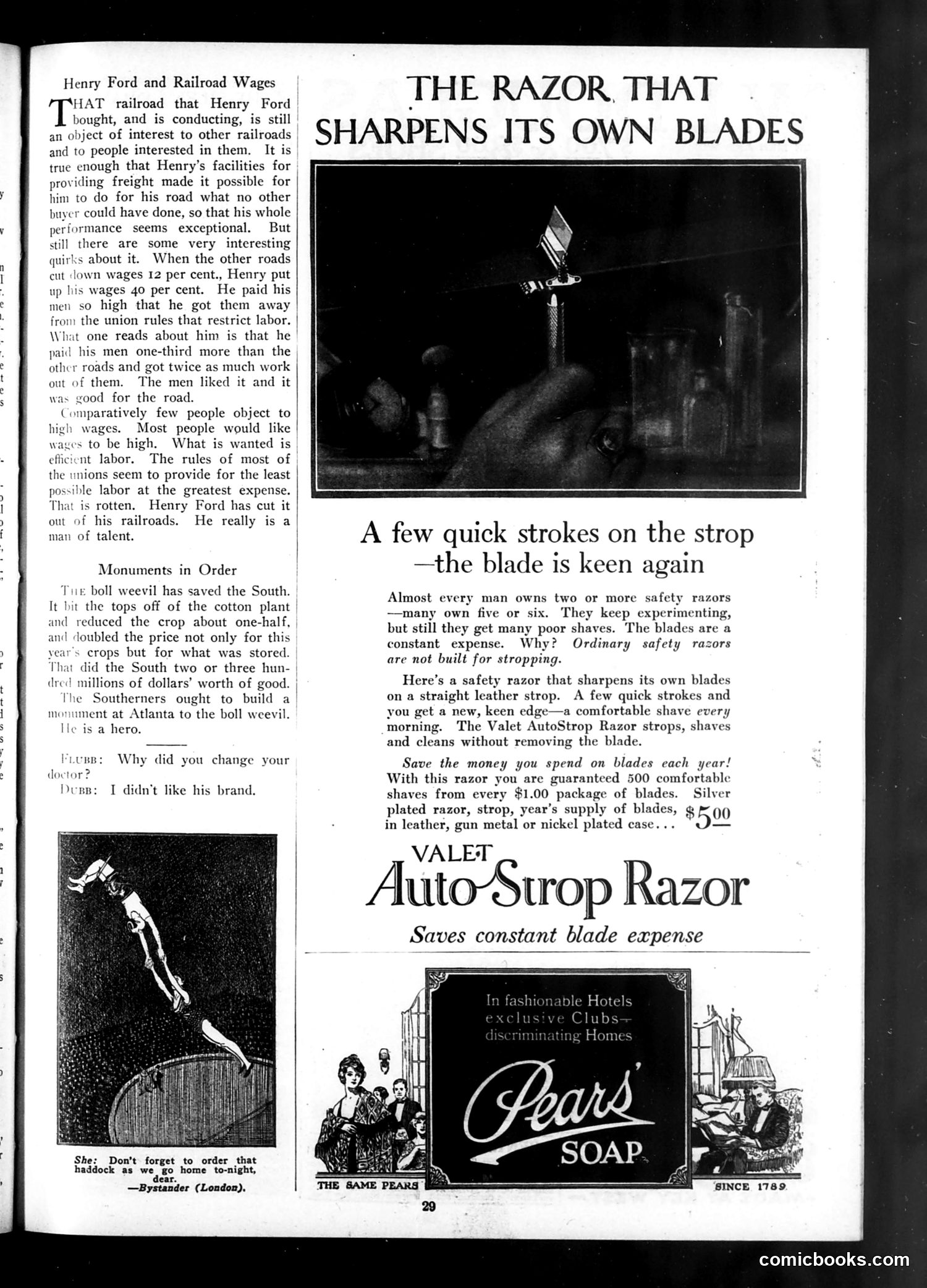
This page contains **editorial commentary and advertisements** rather than political cartoons. The main article criticizes **union labor practices** while praising Henry Ford's railroad management. The piece argues Ford paid workers 40% higher wages than competitors, which allowed him to bypass union restrictions on labor output. The satirical point: Ford proved that high wages combined with freedom from union rules produced both worker satisfaction and greater productivity—implying unions unnecessarily restrict efficiency. A secondary brief item praises the **boll weevil** (a cotton pest) for devastatingly Southern crops, ironically calling it a "hero" because destroying half the harvest doubled prices, enriching farmers overall. The page is primarily **advertisements**: the Valet AutoStrop Razor (a self-sharpening safety razor) and Pears' Soap. These occupy more space than editorial content, typical for Life magazine's business model. The humor and political messaging center on **labor economics and industrial management**—distinctly early-20th-century concerns.
📄 Transcribed text from this page (OCR, searchable)
Machine-transcribed from the original scan — historical spelling and the odd misread are preserved.
Henry Ford and Railroad Wages HAT railroad that Henry Ford bought, and is conducting, is still an object of interest to other railroads and to people interested in them. It is true enough that Henry’s facilities for providing freight made it possible for him to do for his road what no other buyer could have done, so that his whole performance seems exceptional. But still there are some very interesting quirks about it. When the other roads cut own wages 12 per cent., Henry put up his wages 40 per cent. He paid his men so high that he got them away from the union rules that restrict labor. What one reads about him is that he paid his men one-third more than the other roads and got twice as much work out of them. The men liked it and it good for the road. iparatively few people object to x s. Most people would like wages to be high. What is wanted is efficient labor, The rules of most of the unions seem to provide for the least possible labor at the greatest expense. That is rotten. Henry Ford has cut it | out of his railroads. He really is a man of talent. Monuments in Order Tie boll weevil has saved the South. It hit the tops off of the cotton plant and reduced the crop about one-half, and doubled the price not only for this year’s crops but for what was stored. lid the South two or three hun- nillions of dollars’ worth of good. Southerners ought to build a nt at Atlanta to the boll weevil. ¢ is a hero. Fuss: Why did you change your doctor? Denn: I didn't like his brand. She: Don’t forget to order that haddock as we go home to-night, jear. —Bystander (London), THE RAZOR THAT | SHARPENS ITS OWN BLADES A few quick strokes on the strop —the blade is keen again Almost every man owns two or more safety razors —many own five or s They keep experimenting, but still they get many poor shaves. The blades are a constant expense. Why? Ordinary safety razors are not built for stropping. Here’s a safety razor that sharpens its own blades on a straight leather strop. A few quick strokes and you get a new, keen edge—a comfortable shave every morning. The Valet AutoStrop Razor strops, shaves and cleans without removing the blade. Save the money you spend on blades each year! With this razor you are guaranteed 500 comfortable shaves from every $1.00 package of blades. Silver plated razor, strop, year’s supply of blades in leather, gun metal or nickel plated case... VALET AutoStrop Razor Saves constant blade expense ible Hotels clubs omes SINCE 1789. comicbooks.com