
Life, 1921-05-12 · page 10 of 36
Life — May 12, 1921 — page 10: what you’re looking at
What you’re looking at
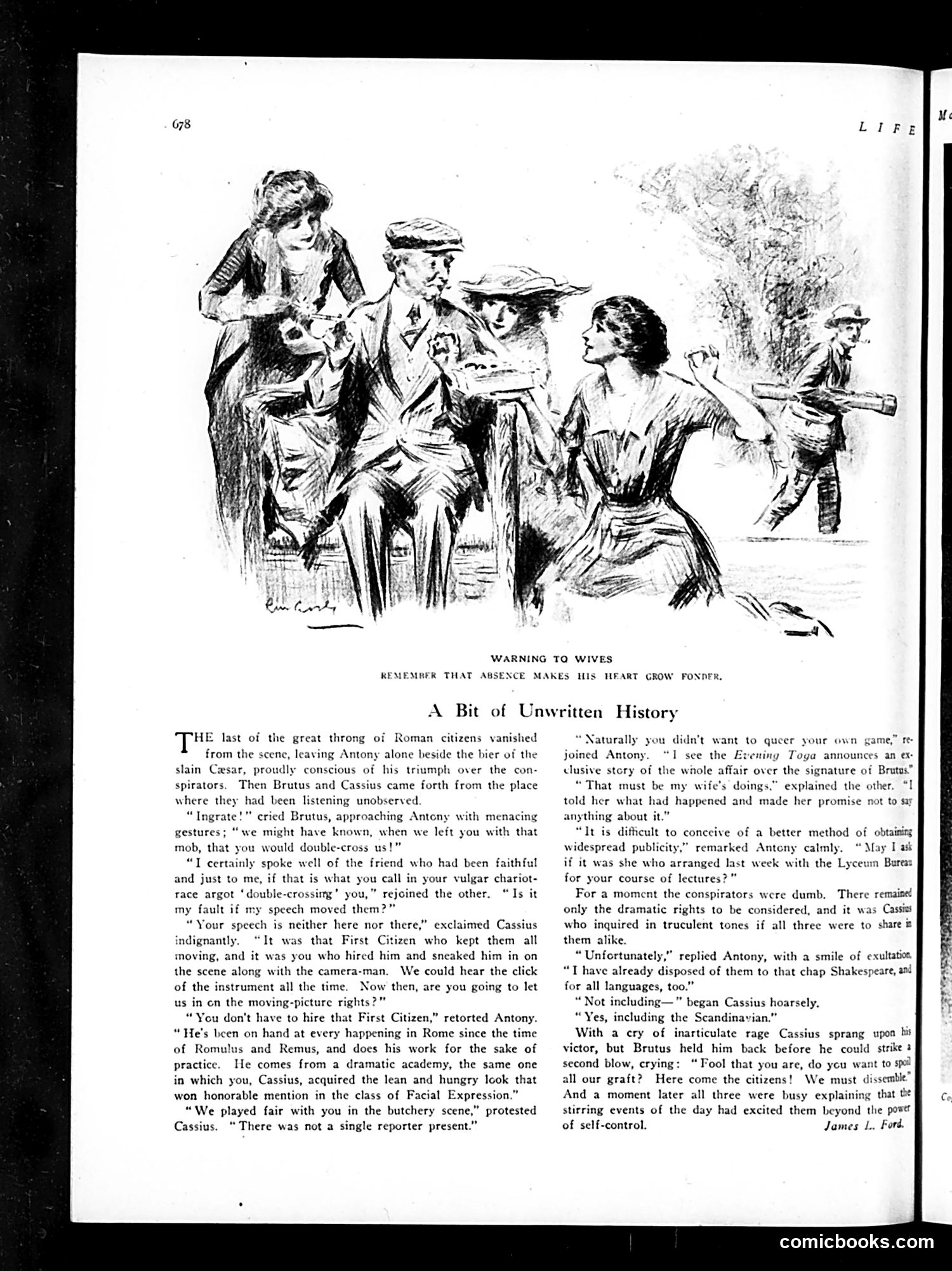
This satirical piece depicts a fictional confrontation between Roman conspirators and a wife of one of them. The cartoon's caption warns wives that "absence makes his heart grow fonder," suggesting infidelity concerns. The narrative mocks dramatic pretensions: when conspirators (appearing to be Brutus and Cassius based on the text) attempt serious justifications for their actions, Antony dismisses their theatrical posturing. He sarcastically notes one conspirator "comes from a dramatic academy" and suggests their "butchery scene" was merely performance art. The satire targets overwrought dramatic acting and self-important political speeches—suggesting real historical events are often less noble than their theatrical reenactments. The jokes emphasize how people justify questionable behavior through elaborate narratives and affected rhetoric.
📄 Transcribed text from this page (OCR, searchable)
Machine-transcribed from the original scan — historical spelling and the odd misread are preserved.
WARNING TQ WIVES REMEMAER THAT ABSENCE MAKES HIS HEART GROW FONDFR, A Bit of Unwritten History HE last of the great throng of Roman citizens vanished from the scene, leaving Antony alone beside the bier of the slain Cesar, proudly conscious of his triumph over the con- spirators. Then Brutus and Cassius came forth from the place where they had been listening unobserved “Ingrate! gestures; “we might have known, when we left you with that mob, that you would double-cross us!” “T certainly spoke well of the friend who had been faithful and just to me, if that is what you call in your vulgar chariot- race argot ‘double-crossimg’ you,” rejoined the other, “Is it my fault if my speech moved them?” “Your speech is neither here nor there,” exclaimed Cassius indignantly. “It was that First Citizen who kept them all moving, and it was you who hired him and sneaked him in on the scene along with the camera-man. We could hear the click of the instrument all the time. Now then, are you going to let us in cn the moving-picture rights?” “You don't have to hire that First Citizen,” retorted Antony. “He's been on hand at every happening in Rome since the time of Romulus and Remus, and does his work for the sake of practice. He comes from a dramatic academy, the same one in which you, Cassius, acquired the lean and hungry look that won honorable mention in the class of Facial Expression.” “We played fair with you in the butchery scene,” protested Cassius. “There was not a single reporter present.” " cried Brutus, approaching Antony with menacing “Naturally you didn't want to queer your own game,” re joined Antony, “1 ing Toga announces an ex elusive story of the whole affair over the signature of Brutus” “That must be my wife's doings,” explained the other. “I told her what had happened and made her promise not to sa anything about it.” “It is dificult to conceive of a better method of obtaining widespread publicity,” remarked Antony calmly. “ May I ask with the Lyceum Bares see the E if it was she who arranged last w for your course of lectures?” For a moment the conspirators were dumb. There remaine only the dramatic rights to be considered, and it was Cassie) who inquired in truculent tones if all three were to share ® them alike. “Unfortunately,” replied Antony, with a smile of exultation “T have already disposed of them to that chap Shakespeare, and for all languages, too.” “Not including—"” began Cassius hoarsely. “Yes, including the Scandinavian.” With a cry of inarticulate rage Cassius sprang upon his victor, but Brutus held him back before he could strike 4 second blow, crying: “Fool that you are, do you want to spol all our graft? Here come the citizens! We must dissemble” And a moment later all three were busy explaining that & stirring events of the day had excited them beyond the powe of self-control. James L.. Ford, comicbooks.com C