
Life, 1921-04-14 · page 5 of 36
Life — April 14, 1921 — page 5: what you’re looking at
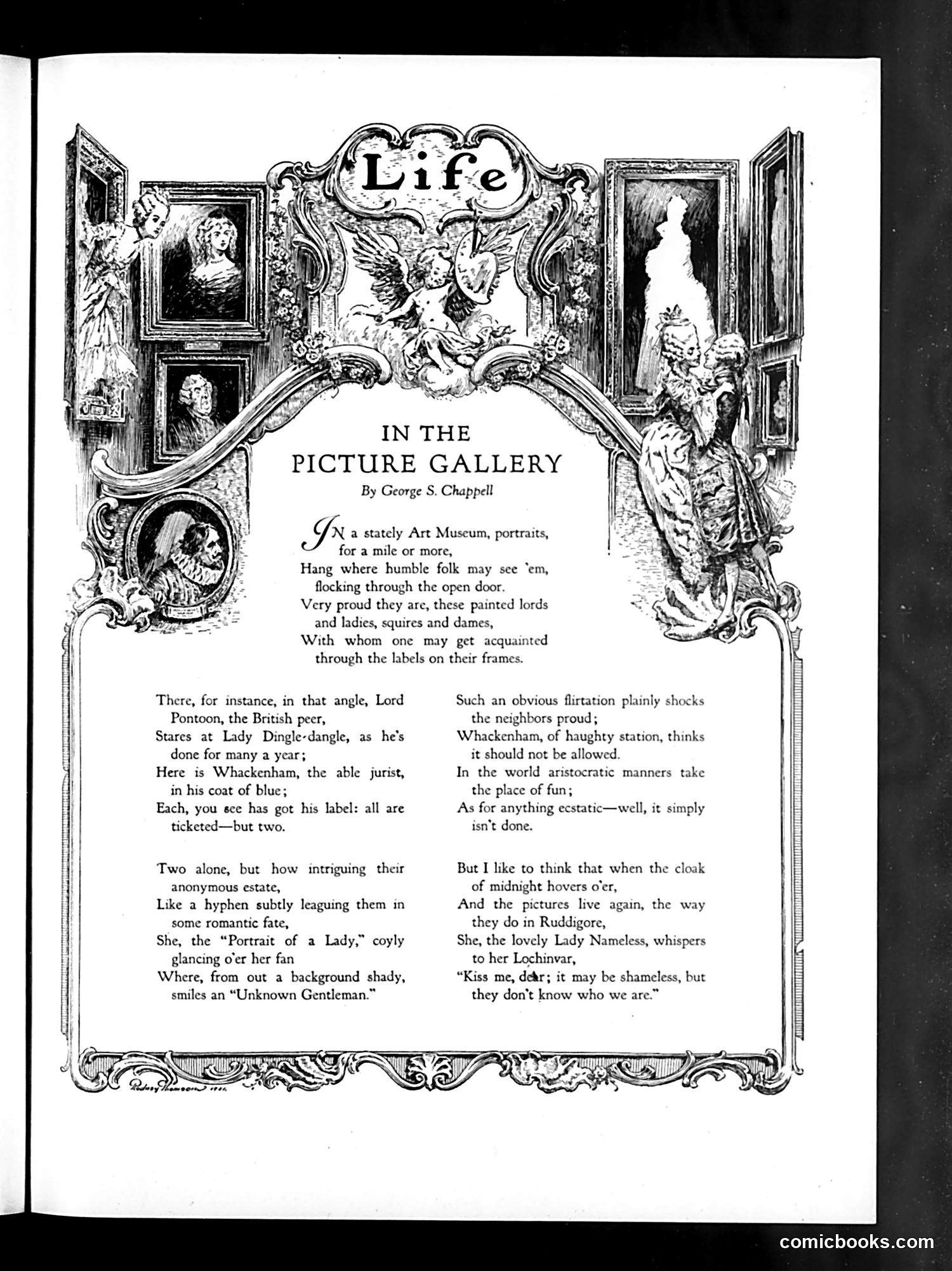
What you’re looking at
This satirical poem mocks the pretensions of wealthy art patrons in a museum setting. The verse names specific aristocratic figures—Lord Pontoon, Lady Dingle-dangle, Whackenham—who are portrayed as absurdly proud despite their questionable character. The satire targets the hypocrisy of "haughty" elites adopting refined aesthetic manners while behaving poorly in society. The poem suggests that paintings "live again" at midnight, implying the artworks are more genuine than the vain people viewing them. Lady Nameless and Lochinvar become characters in an imagined romantic scene, contrasting authentic emotion with the affected posturing of actual gallery visitors. The overall joke: art museum visitors perform sophistication while remaining fundamentally shallow and ridiculous.
📄 Transcribed text from this page (OCR, searchable)
Machine-transcribed from the original scan — historical spelling and the odd misread are preserved.
PICTURE GALLERY By George S. Chappell IX a stately Art Museum, portraits, for a mile or more, Hang where humble folk may see ‘em, flocking through the open door. Very proud they are, these painted lords and ladies, squires and dames, With whom one may get acquainted through the labels on their frames. There, for instance, in that angle, Lord Pontoon, the British peer, Stares at Lady Dingle-dangle, as he's done for many a year; Here is Whackenham, the able jurist, in his coat of blue; Each, you see has got his label: all are ticketed—but two. Two alone, but how intriguing their anonymous estate, Like a hyphen subtly leaguing them in some romantic fate, She, the “Portrait of a Lady,” coyly glancing o'er her fan Where, from out a background shady, smiles an “Unknown Gentleman.” Such an obvious flirtation plainly shocks the neighbors proud; Whackenham, of haughty station, thinks it should not be allowed. In the world aristocratic manners take the place of fun; As for anything ecstatic—well, it simply isn’t done. But I like to think that when the cloak of midnight hovers o'er, And the pictures live again, the way they do in Ruddigore, She, the lovely Lady Nameless, whispers to her Lochinvar, “Kiss me, dear; it may be shameless, but they don’t know who we are.” comicbooks.com