
Life, 1921-01-06 · page 32 of 44
Life — January 6, 1921 — page 32: what you’re looking at
What you’re looking at
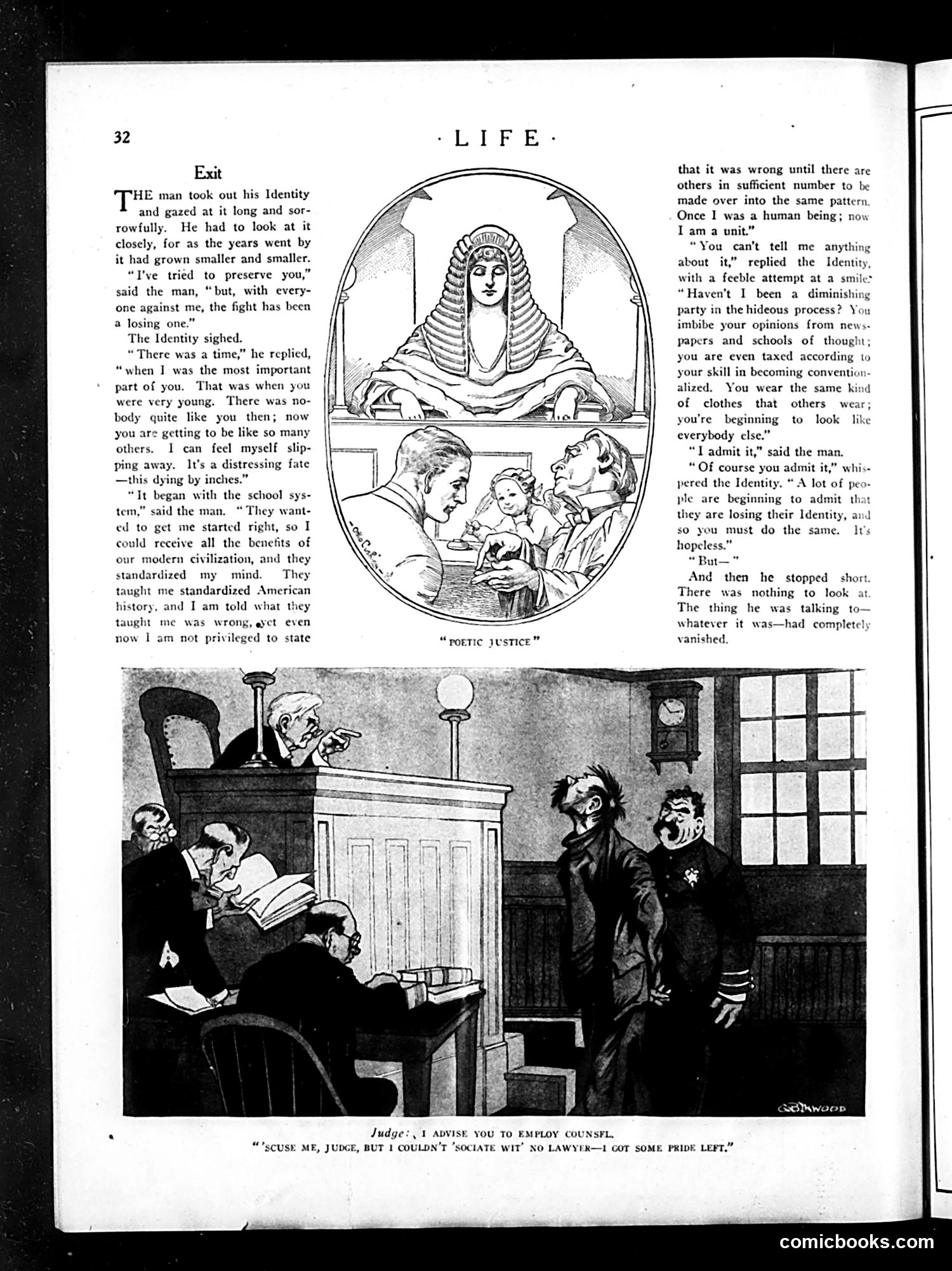
This page presents two satirical pieces critiquing early-20th-century American standardization and conformity. **"Exit"** (top): A man watches his "Identity" literally shrink and disappear. The story blames standardized education, newspaper-driven opinions, standardized fashion, and taxation policies for eroding individual uniqueness. The allegory suggests that conformist pressures—from schools teaching standardized history to wearing identical clothes—gradually eliminate personal identity until nothing remains. The illustration of an Egyptian pharaoh presiding over diminishing figures reinforces themes of dehumanization. **"Poetic Justice"** (bottom cartoon): A defendant refuses legal counsel, claiming he has "some pride left." The judge advises hiring a lawyer. The satire targets class attitudes: the poor man won't associate with lawyers (suggesting lawyers are disreputable or unaffordable), yet the legal system pressures him toward representation he cannot afford or refuses. The irony is that pride—his only remaining asset—prevents him from accessing justice. Both pieces critique how modern systems (education, commerce, law) strip away individual agency.
📄 Transcribed text from this page (OCR, searchable)
Machine-transcribed from the original scan — historical spelling and the odd misread are preserved.
Exit HE man took out his Identity and gazed at it long and sor- rowfully. He had to look at it closely, for as the years went by it had grown smaller and smaller. “T've tried to preserve you,” said the man, “but, with every- one against me, the fight has been a losing one.” The Identity sighed. “There was a time,” he replied, “when I was the most important part of you. That was when you were very young. There was no- body quite like you then; now you are getting to be like so many others. I can feel myself slip- ping away. It’s a distressing fate —this dying by inches.” “It began with the school sys- tem,” said the man. “ They want- ed to get me started right, so I could receive all the benefits of our modern civilization, and they standardized my mind. They taught me standardized American history, and I am told what they taught me was wrong, eyct even now I am not privileged to state Judge: , SE YOU TO EMPLOY COUNSFL, that it was wrong until there are others in sufficient number to be made over into the same pattern Once I was a human being; now Tam a onit.” “You can’t tell me anything about it,” replied the Identity with a feeble attempt at a sm “Haven't I been a diminishing party in the hideous process? You imbibe your opinions from news- papers and schools of thought; you are even taxed according to your skill in becoming convention- alized. You wear the same kind of clothes that others wear; you're beginning to look like everybody else.” “I admit it,” said the man. “ Of course you admit it,” whis- pered the Identit, A lot of peo- ple are beginning to admit that they are losing their Identity, and so you must do the same. It's And then he stopped short. There was nothing to look at. The thing he was talking to— whatever it was—had completely vanished. Gmwoon “’SCUSE ME, JUDGE, BUT 1 COULDN'T ’SOCIATE WIT’ NO LAWYER—1 GOT SOME PRIDE LEFT.” comicbooks.com