
Life, 1920-11-18 · page 27 of 44
Life — November 18, 1920 — page 27: what you’re looking at
What you’re looking at
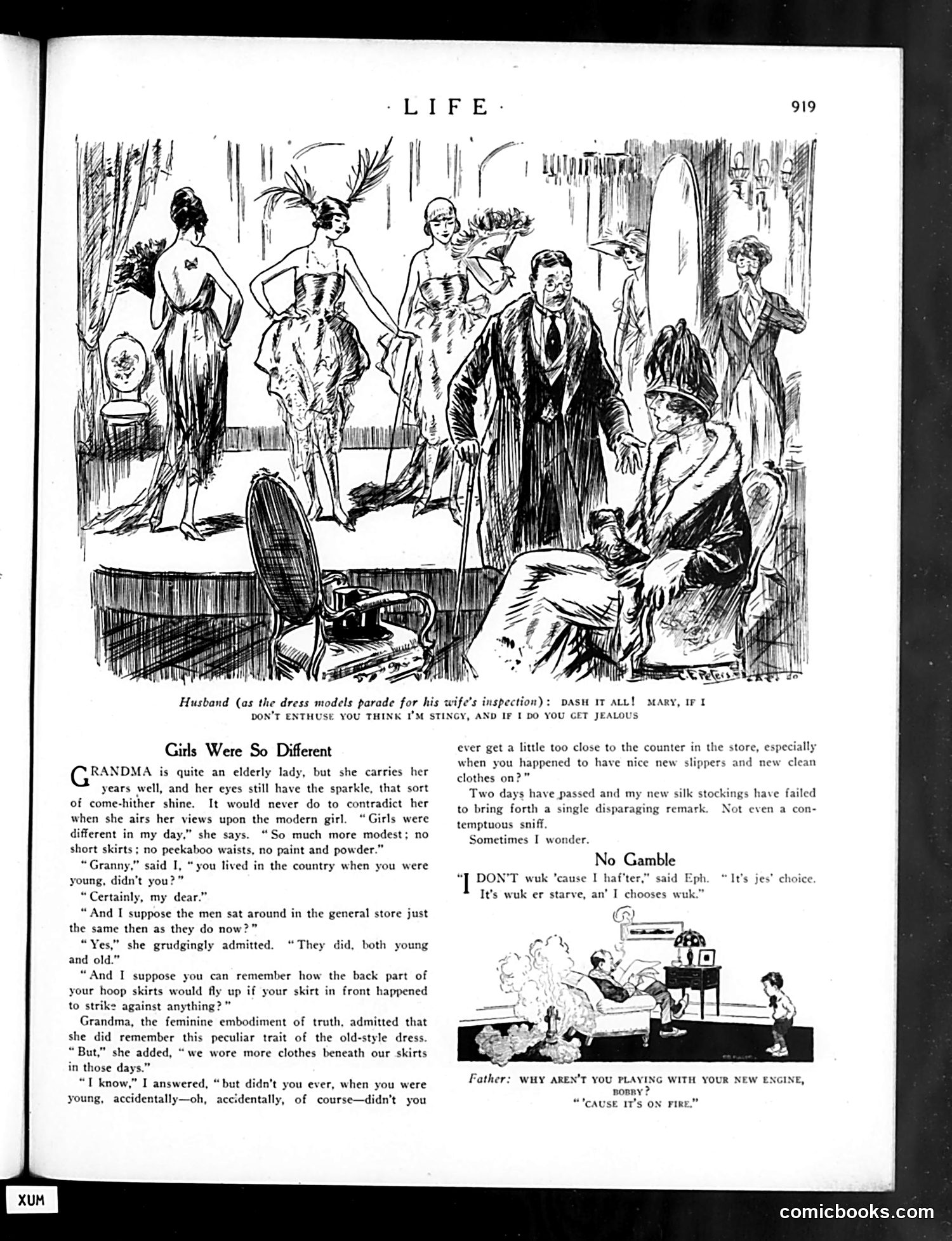
This page contains two satirical pieces typical of early 20th-century American humor: **Top Cartoon**: Shows a husband caught in a no-win situation with his wife during a fashion show. The satire critiques marital dynamics—he's damned either way: enthusiasm for the models makes him appear stingy if he doesn't buy, but showing interest risks accusations of jealousy. It mocks the tension between demonstrating affection through spending and appearing fiscally responsible. **"Girls Were So Different"**: A grandmother claims modern girls lack modesty compared to her youth. The narrator cleverly reveals her hypocrisy through dialogue, suggesting old-fashioned women in hoop skirts deliberately exposed themselves ("accidentally") to display new clothing. The joke undercuts nostalgia by showing women's behavior was essentially unchanged—only fashion differed. **"No Gamble"**: A brief comic about an impoverished man (dialect suggests rural/working-class) choosing between starvation and labor. Dark humor about economic desperation. All pieces use gentle satire to examine gender relations, generational conflict, and class.
📄 Transcribed text from this page (OCR, searchable)
Machine-transcribed from the original scan — historical spelling and the odd misread are preserved.
lil tli py H | ih ar Husband (as the dress models parade for his w ife’s inspection): DASH IT ALL! MARY, IF I DON'T ENTHUSE YOU THINK I'M STINGY, AND IF I DO YOU GET JEALOUS Girls Were So Different RANDMA is quite an elderly lady, but she carries her years well, and her eyes still have the sparkle, that sort of come-hither shine. It would never do to contradict her when she airs her views upon the modern girl. “Girls were different in my day,” she says. “So much more modest; no short skirts; no peekaboo waists, no paint and powder.” “Granny,” said I, “you lived in the country when you were young, didn’t you?” “Certainly, my dear.” “And I suppose the men sat around in the general store just the same then as they do now?” “Yes,” she grudgingly admitted. and old.” “And I suppose you can remember how the back part of your hoop skirts would fly up if your skirt in front happened to strike against anything?” Grandma, the feminine embodiment of truth, admitted that she did remember this peculiar trait of the old-style dress. “But,” she added, “we wore more clothes beneath our skirts in those days.” “T know,” I answered, “but didn't you ever, when you were young, accidentally—oh, accidentally, of course—didn’t you “They did, both young ever get a little too close to the counter in the store, especially when you happened to have nice new slippers and new clean clothes on?” Two days have passed and my new silk stockings have failed to bring forth a single disparaging remark. Not even a con- temptuous sniff. Sometimes I wonder. No Gamble “T DON'T wuk ’cause I haf'ter,” said Eph. It’s wuk er starve, an’ I chooses wuk.” “It's jes’ choice. Father: WHY AREN'T YOU PLAYING WITH YOUR NEW ENGINE, poppy ? “'CAUSE IT's ON FIRE.” comicbooks.com