
Life, 1920-10-28 · page 7 of 46
Life — October 28, 1920 — page 7: what you’re looking at
What you’re looking at
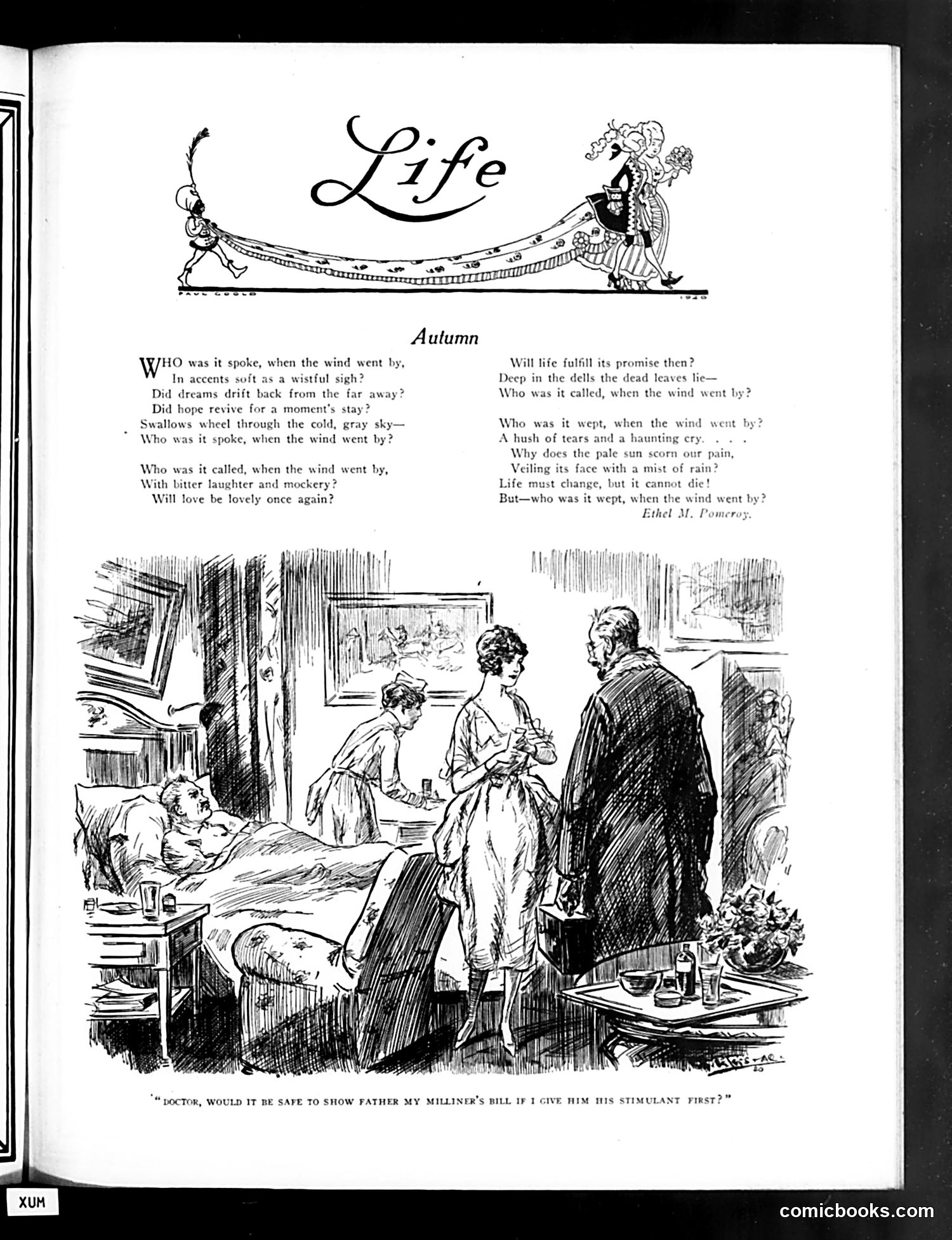
This page features a poem titled "Autumn" by Ethel M. Pomeroy exploring life's transience through autumn imagery—themes of change, death, and loss personified by wind and falling leaves. Below is a satirical cartoon showing a sickbed scene. A doctor stands with family members attending to an ill patient. The caption reads: "Doctor, would it be safe to show father my milliner's bill if I give him his stimulant first?" The joke satirizes both medical practice and domestic finances: the cartoon suggests giving the father alcohol ("stimulant") before revealing expensive millinery bills to cushion the financial shock. It mocks both the era's medical reliance on alcohol and the assumption that wives' spending habits would distress husbands—reflecting early 20th-century gender attitudes toward money and consumption.
📄 Transcribed text from this page (OCR, searchable)
Machine-transcribed from the original scan — historical spelling and the odd misread are preserved.
HO was it spoke, when the wind went by, In accents soft as a wistful sigh? Did dreams drift back from the far away? Did hope revive for a moment's stay? Swallows wheel through the cold, gray sky— Who was it spoke, when the wind went by? Who was it called, when the wind went by, With bitter laughter and mockery? Will love be lovely once again? Autumn Will life fulfill its promise then? Deep in the dells the dead leaves lie— Who was it called, when the wind went by? Who was it wept, when the wind went by? A hush of tears and a Why does the pale sun scorn ou Veiling its face with a mist of rain Life must change, but it cannot die! nting ery But—who was it wept, when the wind went by? Ethel M. Pomeroy. “ DOCTOR, WOULD IT BE SAFE TO SHOW FATHER MY MILLINER’S BILL IF I GIVE HIM IIS STIMULANT First?” comicbooks.com