
Life, 1920-10-21 · page 16 of 44
Life — October 21, 1920 — page 16: what you’re looking at
What you’re looking at
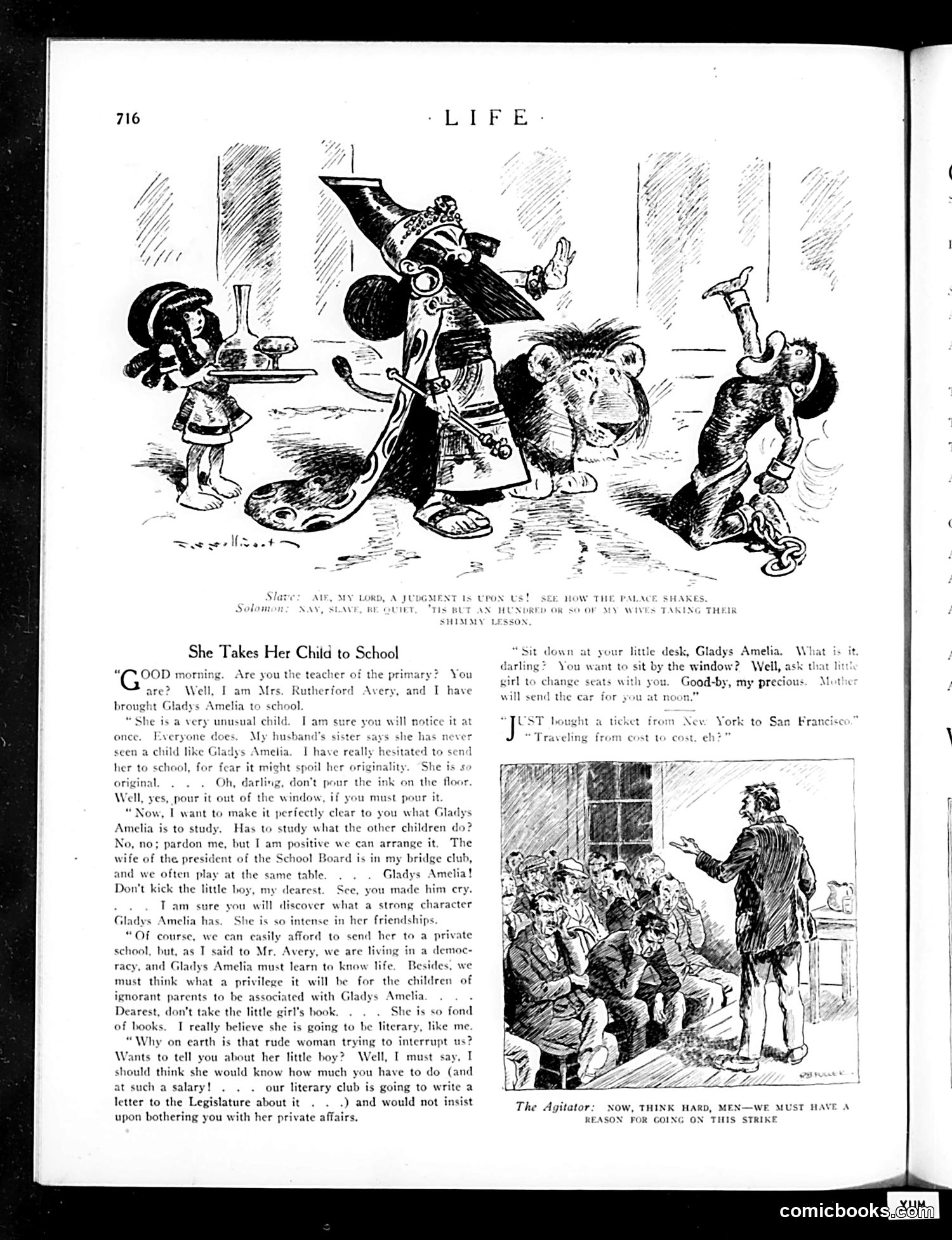
This page contains two distinct pieces. The upper section is a fairy-tale illustration showing a wizard or magician figure with child characters—likely a visual joke about children's literature, though the specific reference is unclear from context alone. The lower section, titled "She Takes Her Child to School," presents a satirical dialogue between a mother and a schoolteacher about sending a child named Gladys Amelia to primary school. The humor targets upper-class parental anxieties: the mother worries the school will damage her daughter's "originality," while making references to the family's wealth (private schools, a president of the school board). The satire mocks pretentious parents who regard public education suspiciously while simultaneously demanding their children receive special treatment. The right illustration captioned "The Agitator" appears to reference labor strikes, though context is limited.
📄 Transcribed text from this page (OCR, searchable)
Machine-transcribed from the original scan — historical spelling and the odd misread are preserved.
MIF, MY LORD, ATL ENT IS UPON US! SEE HOW THE PALACE SHAKES. NAY, SLAVE, RE QUIET IS BUT AN HUNDRED OR SO OF MY WIVES TAKING 7 SHIMMY LESSON She Takes Her Child to School “Sit down at your little desk, Gladys Amelia. darling? You want to sit by the window? Well, ask t! girl to change s th you. Good-by, my precious. Mother will send “(OOD morning. Are you the teacher of the prir are? Well, I am Mrs. Rutherford brought Gladys Amelia to school “She is a very unusual child. Tam sure you will notice it at * once. Everyone does. My husband's sister says she has never J seen a child like Gl Amelia. I have really hesitated to send her to school, for fear it might spoil he ty. “She is so Oh, darling, don’t pour the ink on the floor ¢s, pour it out of the window, if you must pour it , L want to make it perfectly clear to you what Gladys is to study. Has to study what the other children di no; pardon me, but I am positive we can arrange it. The e of the president of chool Board is in my bridge club, and we often play at the same table... . Gladys Amelia! Don't kick the little boy, my dearest. S you made him cry. Tam sure you will discover what a strong character Gladys Amelia has. She is so intense in her friendships “OF course, we can casily afford to send her to a private school, but, I said to Mr. Avery, we are living in a democ- racy, and Gladys Amelia must learn to know life. Besides, we must think what a privilege it will he for the children of ignorant parents to be associated with Gladys Amelia Dearest, don’t take the little girl's book. . . She is so fond of books. I really believe she is going to he literary, like me. “Why on earth is that rude woman trying to interrupt us? Wants to tell you about her little boy? Well, I must say, should think she would know how much you have to do at such a salary! . . . our literary club is going to write a letter to the Legislature about it. . .) and would not insist The Agitator: Now, THINK HARD, MEN—WE MUST HAVE upon bothering you with her private affairs. . REASON FOR GOING ON THIS STRIKE