
Life, 1920-06-10 · page 9 of 44
Life — June 10, 1920 — page 9: what you’re looking at
What you’re looking at
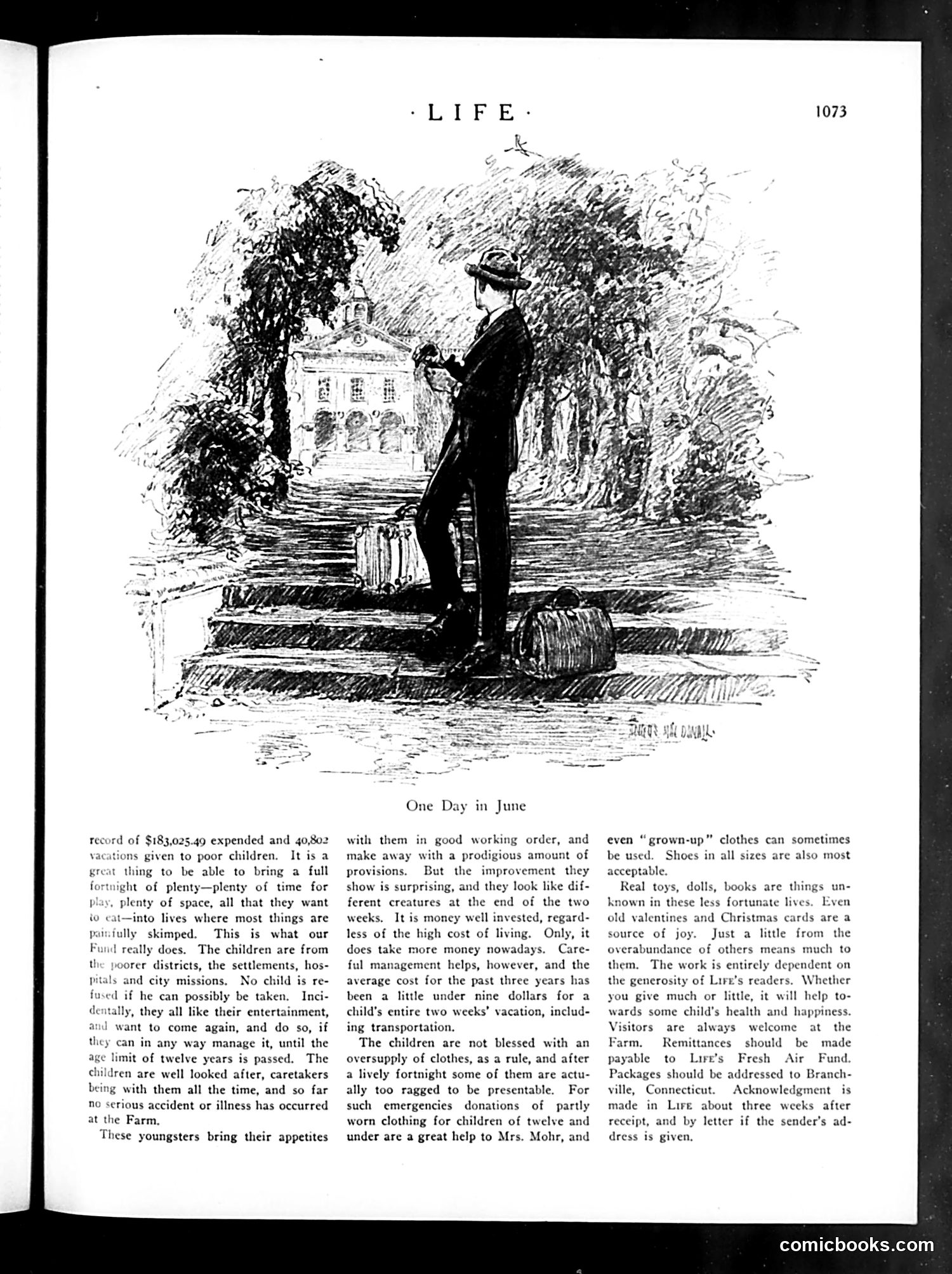
This illustration depicts a well-dressed man in formal attire and hat standing on railroad tracks, gazing toward a distant building (likely an institution or estate) framed by trees. The title "One Day in June" suggests a specific moment of reflection or anticipation. The accompanying text discusses charitable work for impoverished children, mentioning a farm operation that provides clothing, food, and recreation. The passage emphasizes that even modest donations help—children don't need fancy clothes, just practical ones. It references donations of "partly worn clothing" and mentions acknowledgments made through Life magazine, with contributions directed to "Mrs. Mohr" in Branchville, Connecticut. The illustration likely romanticizes charitable giving or institutional care for disadvantaged youth.
📄 Transcribed text from this page (OCR, searchable)
Machine-transcribed from the original scan — historical spelling and the odd misread are preserved.
record of $183,025.49 expended and 40,802 s given to poor children. It is a t thing to be able to bring a full ight of plenty—plenty of time for play, plenty of space, all that they want io cat—into lives where most things are paisfully skimped. This is what our ly does. The children are from oorer districts, the settlements, hos- ls and city missions, No child is re- fused if he can possibly be taken. Inci- dentally, they all like their entertainment, and want to come again, and do so, if they can in any way manage it, until the age limit of twelve years is passed. The idren are well looked after, caretakers g with them all the time, and so far No serious accident or illness has occurred at the Farm, These youngsters bring their appetites One Day in June with them in good working order, and make away with a prodigious amount of provisions. But the improvement they show is surprising, and they look like dif- ferent creatures at the end of the two weeks. It is money well invested, regard- less of the high cost of living. Only does take more money nowadays. Care- ful management helps, however, and the average cost for the past three years has been a little under nine dollars for a child's entire two weeks’ vacation, includ- ing transportation. The children are not blessed with an oversupply of clothes, as a rule, and after a lively fortnight some of them are actu- ally too ragged to be presentable. For such emergencies donations of partly worn clothing for children of twelve and under are a great help to Mrs. Mohr, and even “grown-up” clothes can sometimes be used. Shoes in all sizes are also most acceptable. Real toys, dolls, books are things un- known in these less fortunate lives. Even old valentines and Christmas cards are a source of joy. Just a little from the overabundance of others means much to them. The work is entirely dependent on the generosity of Lire’s readers. Whether you give much or little, it will help to- wards some child’s health and happiness. V rs are always welcome at the Farm. Remittances should be made payable to Luire’s Fresh Air Fund. Packages should be addressed to Branch- ville, Connecticut. Acknowledgment is made in Lire about three weeks after receipt, and by letter if the sender's ad- dress is given, comicbooks.com