
Life, 1920-05-20 · page 10 of 48
Life — May 20, 1920 — page 10: what you’re looking at
A restored page from Life, 1920-05-20. Page through the whole issue in the reader above.
📄 Transcribed text from this page (OCR, searchable)
Machine-transcribed from the original scan — historical spelling and the odd misread are preserved.
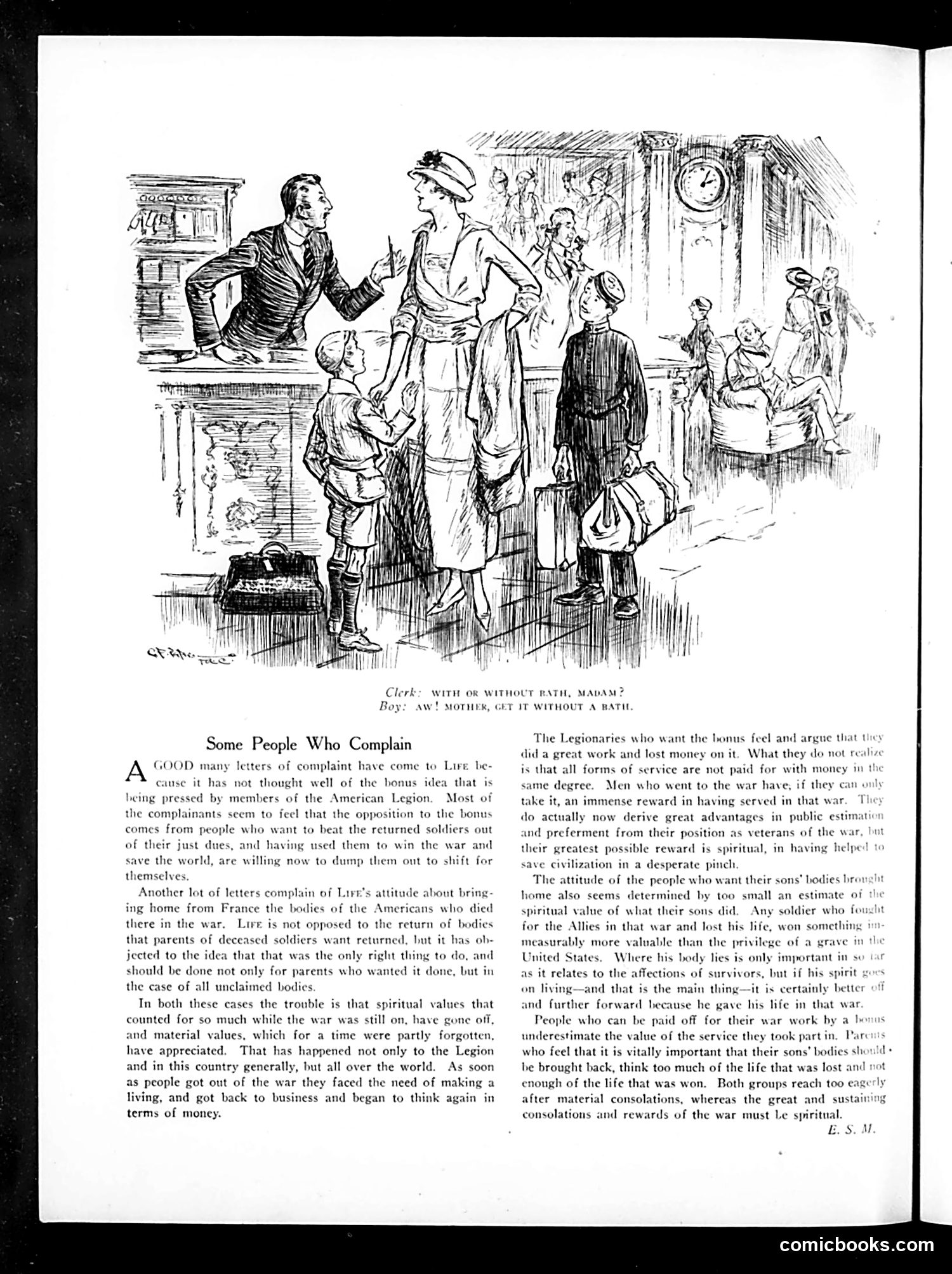
Hy i | at BRR See TAM Clerk WITH OR WITHOUT BATH, MADAM ? Boy: aw! Morurk, Get 1T WITHOUT A BATH Some People Who Complain A GOOD many letters of complaint have come to Lire be- cause it has not thought well of the bonus idea that is heing pressed by members of the American Legion. Most of the complainants seem to feel that the opposition to the bonus comes from people who want to beat the returned soldiers out of their just dues, and having used them to win the war and save the world, are willing now to dump them out to shift for themselves. Another lot of letters complain of Lire’s attitude about bring- ing home from France the bodies of the Americans who died there in the war. that parents of deceased soldiers want returned, but it has ob- Lire is not opposed to the return of bodies jected to the idea that that was the only right thing to do, and should be done not only for parents who wanted it done, but in the case of all unclaimed bodies. In both these cases the trouble is that spiritual values that counted for so much while the war was still on, have gone off, and material values, which for a time were partly forgotten, have appreciated. That has happened not only to the Legion and in this country generally, but all over the world. As soon as people got out of the war they faced the need of making a living, and got back to business and began to think again in terms of money. The Legionaries who want the bonus feel and argue that Uicy did a great work and lost money on it. What they do not re is that all forms of service are not paid for with money in t! same degree. Men who went to the war have, if they can « take it, an immense reward in having served in that war. TI do actually now derive great advantages in public estimatior and preferment from their position as veterans of the war, their greatest possible reward is spiritual, in having helped | save civilization in a desperate pinch The attitude of the people who want their sons’ bodies brow home also seems determined by too small an_ estimate spiritual value of what their sons did. Any soldier who f for the Allies in that war and lost his life, won somethit measurably more valuable than the privilege of a grave in tli United States. Where his body lies is only important in s« as it relates to the affections of surviv on living s, but if his spirit ¢ nd that is the main thin; tis certainly better and further forward because he gave his life in that war People who can be paid off for their war work by a ln underestimate the value of the service they took part in, Parc who feel that it is vitally important that their sons’ bodies sly be brought back, think too much of the life that was lost and enough of the life that was won. Both groups reach too e: after material consolations, whereas the great and sustainin consolations and rewards of the war must Le spiritual. ESM comicbooks.com