
Life, 1920-04-01 · page 28 of 60
Life — April 1, 1920 — page 28: what you’re looking at
What you’re looking at
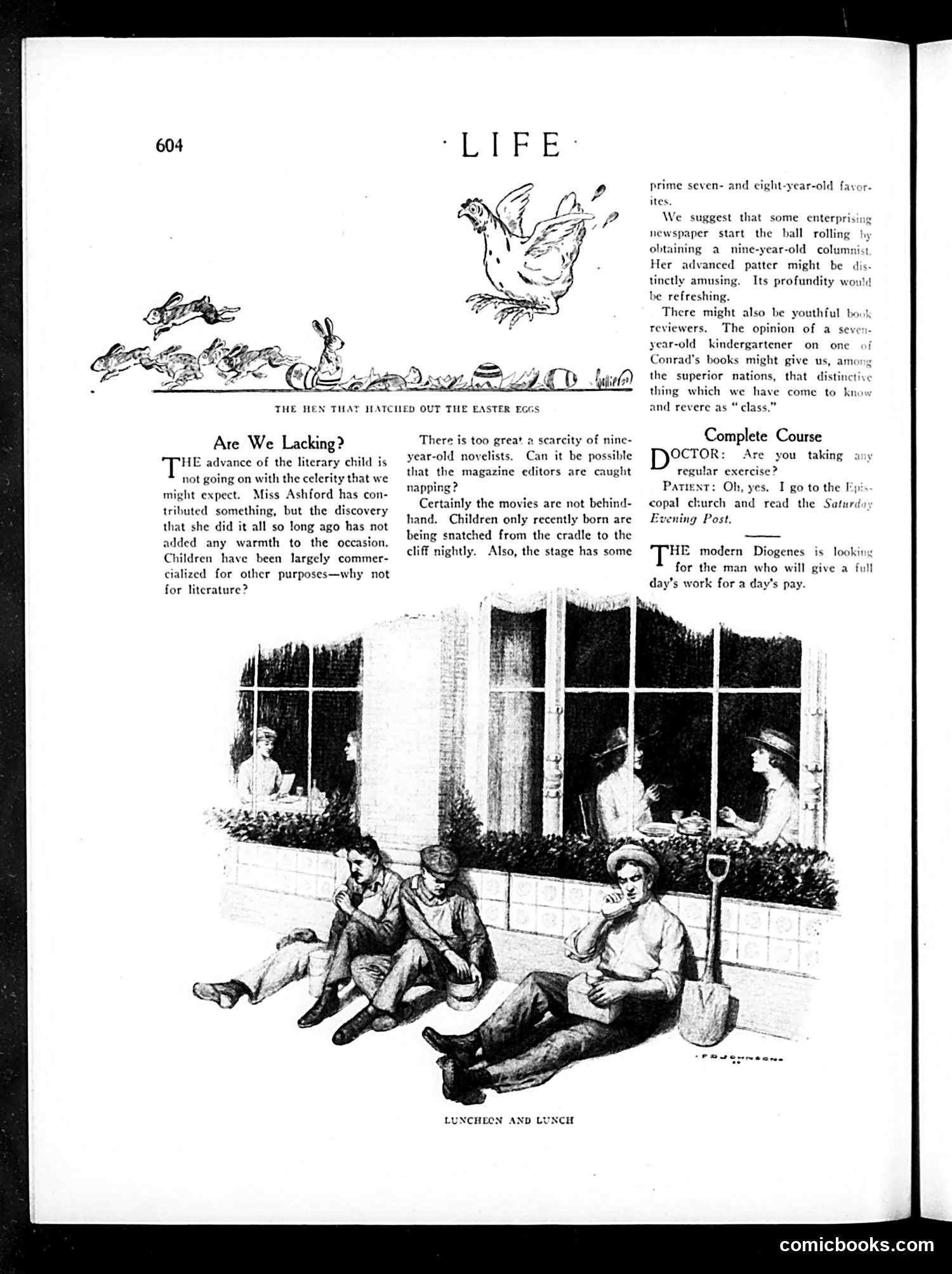
This page contains three distinct satirical pieces mocking early 20th-century American culture: 1. **"The Hen That Hatched Out the Easter Eggs"** (top illustration): A whimsical drawing satirizing the commercialization of childhood. The text argues that children are exploited for profit in movies and theater but neglected as literary contributors—sarcastically proposing newspapers hire nine-year-old columnists. 2. **"Are We Lacking?"** (main article): Critiques magazine editors for failing to discover child novelists, while film and stage industries eagerly exploit child performers. References Miss Ashford (likely the young author Daisy Ashford), mocking the gap between children's labor exploitation and their literary underutilization. 3. **"Complete Course"** and **"Luncheon and Lunch"** (brief jokes): Mock modern life—one suggests church and reading the *Saturday Evening Post* as exercise; the other jokes about the rarity of honest work-for-pay labor. The **"Luncheon and Lunch"** illustration shows working-class children at rest, contrasting the text's concerns about child labor commercialization.
📄 Transcribed text from this page (OCR, searchable)
Machine-transcribed from the original scan — historical spelling and the odd misread are preserved.
THE HEN THAT HATCHED OUT THE EASTER EGGS Are We Lacking? HE advance of the literary child is not going on with the celerity that we might expect. Miss Ashford has con- tributed something, but the discovery that she did it all so long ago has not added any warmth to the occasion. Children have been largely commer- cialized for other purposes—why not for literature? There is too great 2 scarcity of nine- year-old novelists. Can it be possible that the magazine editors are caught nappii Certainly the movies are not behind- hand. Children only recently born are being snatched from the cradle to the cliff nightly. Also, the stage has some LUNCHEON AND LUNCH prime seven- and cight-year-old favor- ites, We suggest that some enterpri newspaper start the ball rolling obtaining a nine-year-old columr Her advanced patter might be dis- tinctly amusing. be refreshing. There might also be youthful boot reviewers. Its profundity would The opinion of a seve year-old kindergartener on one Conrad's books might give us, amc the superior nations, that distinctiy thing which we have come to know and revere as “ class.” Complete Course OCTOR: regular exercise? Patient: Oh, yes. I go to the Epis copal church and read the Saturd Evening Post. Are you taking any "Pe modern Diogenes is looking for the man who will give a full day's work for a day's pay. 7 comicbooks.com