
Life, 1920-03-18 · page 18 of 54
Life — March 18, 1920 — page 18: what you’re looking at
What you’re looking at
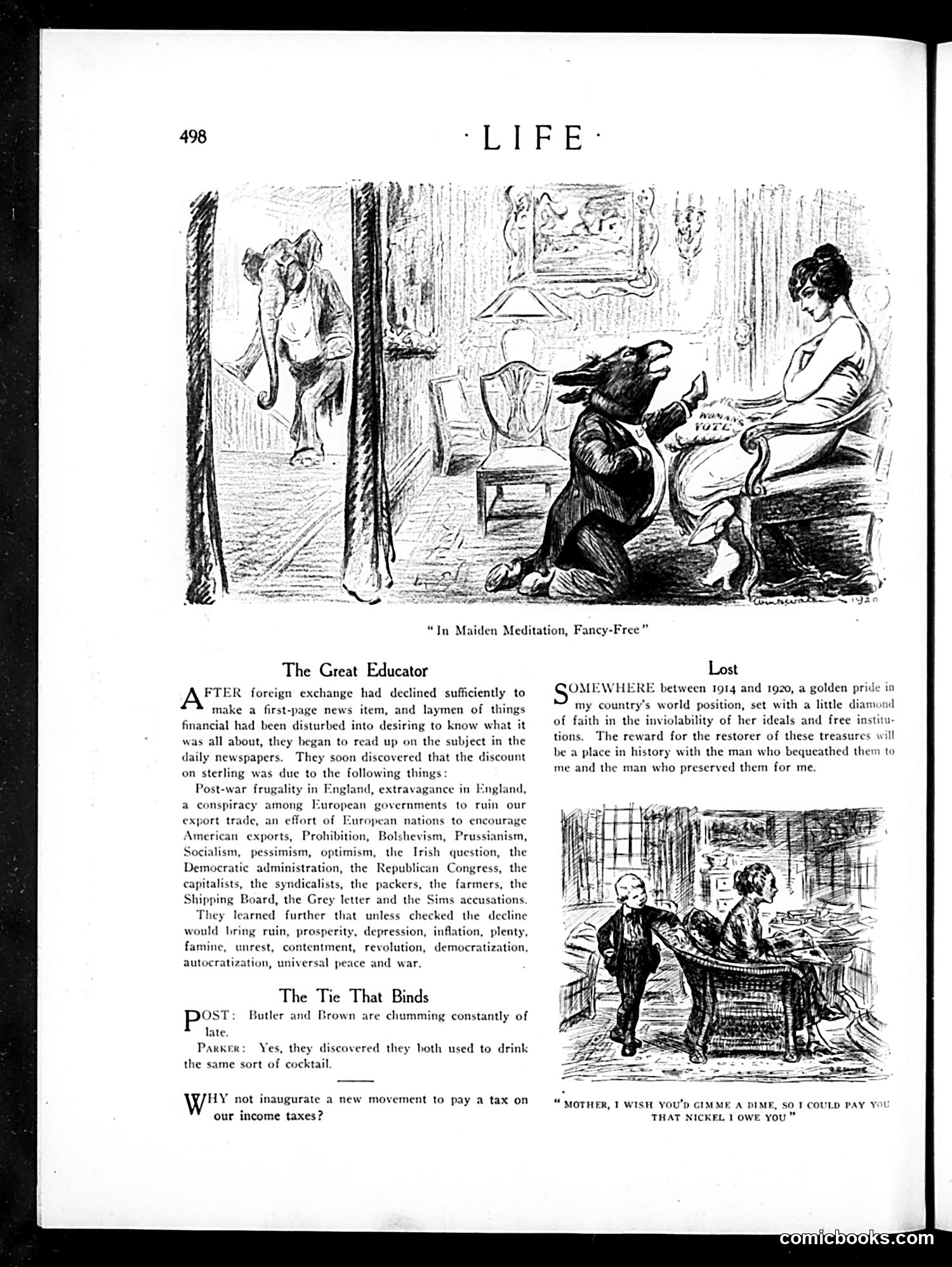
**"The Great Educator"** mocks how ordinary citizens became amateur economists after the 1914-1920 period. As foreign exchange rates became news, laypeople rushed to newspapers seeking explanations, only to encounter contradictory, mutually-exclusive causes: England was simultaneously too frugal AND extravagant; various ideologies and political groups all received blame (Prohibition, Bolshevism, Democrats, Republicans). The satire highlights how post-war economic confusion spawned competing, self-canceling explanations in the press. **"The Tie That Binds"** is a brief joke about two men bonding over drinking the same cocktail—likely satirizing either Prohibition-era bootlegging culture or the shallow basis for wealthy male friendships. **"Lost"** is a nostalgic lament for pre-1914 American prestige and faith in democratic ideals, lost during the war years. The author seeks their return as a historical treasure. **The bottom cartoon** depicts a child asking their mother for money to pay a debt, illustrating absurd circular logic—mirroring perhaps the tangled post-war debt situation between nations.
📄 Transcribed text from this page (OCR, searchable)
Machine-transcribed from the original scan — historical spelling and the odd misread are preserved.
“In Maiden Meditation, Fancy-Free” The Great Educator FTER foreign exchange had declined sufficiently to make a first-page news item, and laymen of things financial had been disturbed into desiring to know what it was all about, they began to read up on the subject in the daily newspapers. They soon discovered that the discount on sterling was due to the following things: Post-war frugality in England, extravagance in England, a conspir among European governments to ruin our export trade, an effort of European nations to encourage American exports, Prohibition, Bolshevism, Prussianism, Socialism, pessimism, optimism, the Irish question, the Democratic administration, the Republican Congress, the capitalists, the syndicalists, the packers, the farmers, the Shipping Board, the Grey letter and the Sims accusations. They learned further that unless checked the decline would bring ruin, prosperity, depression, inflation, plenty, famine, unrest, contentment, revolution, democratization, autocratization, universal peace and war. The Tie That Binds OST: Butler and Brown are chumming constantly of late. Parker: Yes, they discovered they both used to drink the same sort of cocktail. HY not inaugurate a new movement to pay a tax on our income taxes? Lost OMEWHERE between 1914 and 1920, a golden pride in my country’s world position, set with a little diamond of faith in the inviolability of her ideals and free institu- tions. The reward for the restorer of these treasures will be a place in history with the man who bequeathed them to me and the man who preserved them for me. “ MOTHER, T WISH YOU'D GIMME A DIME, SO T COULD PAY YOU THAT NICKEL 1 OWE You”