
Life, 1920-01-22 · page 7 of 36
Life — January 22, 1920 — page 7: what you’re looking at
What you’re looking at
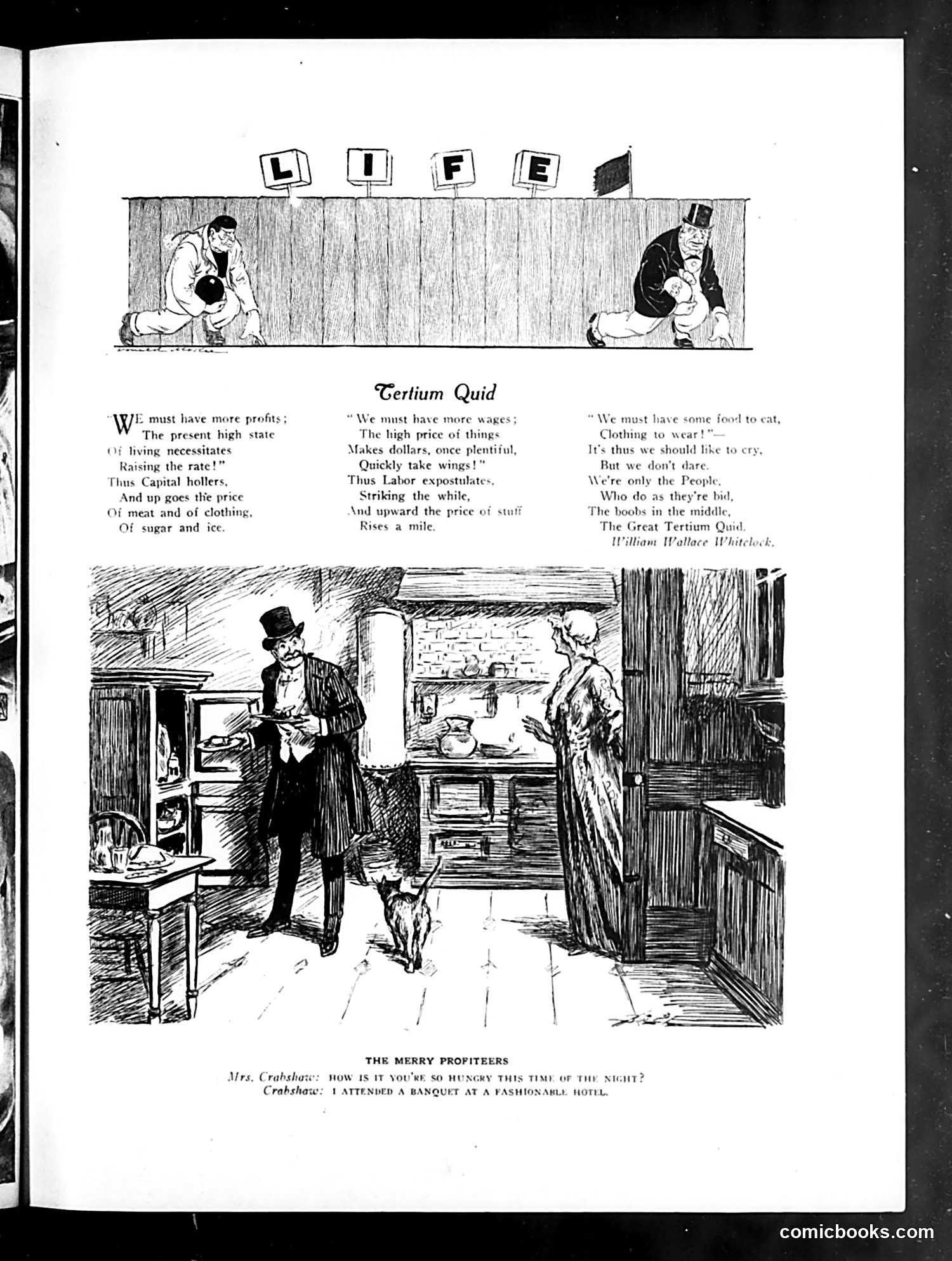
This page presents two satirical pieces about class conflict and economic inequality, likely from the early 20th century. **"Tertium Quid"** (Latin: "a third thing") uses three parallel verses to mock competing claims: capitalists demand higher profits, workers demand higher wages, and the poor demand basic food and clothing. The accompanying illustration shows two men crouching over a wooden fence labeled "LIFE"—suggesting both groups are positioned above ordinary people. **"The Merry Profiteers"** below depicts a well-dressed businessman returning home after attending a fashionable hotel banquet while his wife stands hungry in their modest kitchen. The satire targets the hypocrisy of the wealthy enjoying lavish meals while claiming ignorance of the poor's deprivation—a critique of Gilded Age inequality and indifference.
📄 Transcribed text from this page (OCR, searchable)
Machine-transcribed from the original scan — historical spelling and the odd misread are preserved.
E must have more profits ; The present high state Of living necessitates Raising the rate!” Thus Capital hollers, And up goes the price Of meat and of clothing, Of sugar and ice. Mrs. Crabshaw: Crabshaw Certium Quid “We must have more wages; The high price of things Makes dollars, once plentiful, Quickly take wings!" Thus Labor expostulates, Striking the while, And upward the price of stuff Rises a mile. THE MERRY PROFITEERS “We must have some food to eat, Clothing to wear!” It's thus we should like to cry, But we don't dare We're only the People, Who do as they're bid, The boobs in the middle, The Great Tertium Quid William Wallace Whitelock. HOW IS IT YOU'RE SO HUNGRY THIS TIME OF THE NIGHT? ATTENDED A BANQUET AT A FASHIONABLE HOTEL, comicbooks.com