
Life, 1920-01-01 · page 26 of 48
Life — January 1, 1920 — page 26: what you’re looking at
What you’re looking at
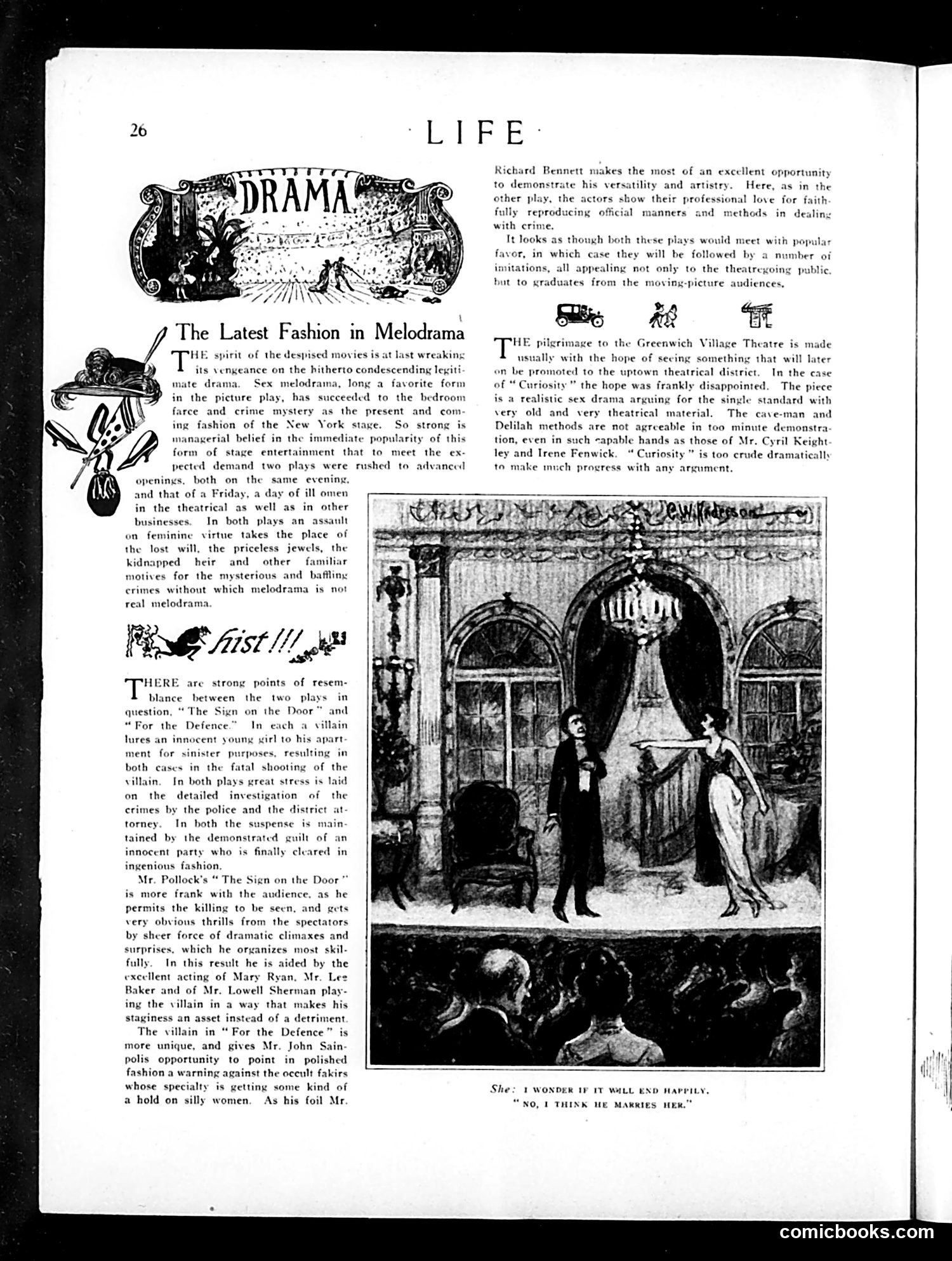
This page critiques the Broadway theater's recent adoption of "sex melodrama"—a genre previously associated with lowbrow motion pictures. Life's satirical point: legitimate theater, long considered superior to movies, is now desperate enough to copy Hollywood's sensational formulas. Two plays opened simultaneously that evening—"The Sign on the Door" and "For the Defence"—both featuring nearly identical plots: a villain lures an innocent young woman to his apartment with criminal intent, resulting in his death. The review notes both plays rely on crude dramatic devices (assault on virtue replacing traditional melodrama's stolen jewels or kidnapped heirs) and police investigation suspense. Life mocks this desperation while acknowledging the plays may succeed, spawning imitators appealing to "graduates from the moving-picture audiences"—a backhanded insult suggesting theater now courts former moviegoers. The small cartoon caption jokes cynically about marriage prospects given this theatrical environment.
📄 Transcribed text from this page (OCR, searchable)
Machine-transcribed from the original scan — historical spelling and the odd misread are preserved.
“LIFE™ Richard Bennett makes the most of an excellent opportunity f) The Latest Fashion in Melodrama HE. spirit of the despised movies is at last wreaking its vengeance on the hitherto condescending legiti mate drama. Sex melodrama, long a favorite form in the picture play, has succeeded to the bedroom farce and crime mystery as the present and com ing fashion of the New York staye. So strong is managerial belief in the immediate popularity of this form of stage entertainment that to meet the ex- pected demand two plays were rushed to advanced openings, both on the same evening, to demonstrate his versatility and artistry. Here, as in the other play, the actors show their professional love fully reproducing official manners and methods in with crime. It looks as though both these plays would meet with popular favor, in which case they will be followed by a number of ations, all appealing not only to the theatrexoing public. t to graduates from the moving-picture audiences, Ss eh EE HE pilgrin ¢ to the Greenwich Village Theatre is made usually with the hope of seeing something that will later on be promoted to the uptown theatrical district. In the case of “ Curiosity" the hope was frankly disappointed. The piece is a realistic sex drama arguing for the single standard with very old and very theatrical material. The cave-man and Delilah methods are not agreeable in too minute demonstra tion, even in such capable hands as those of Mr. Cyril Keight ley and Irene Fenwick. “ Curiosity ” is too crude dramatically to make much progress with any argument. and that of a Friday, a day of ill omen in the theatrical as well as in other businesses. In both plays an assault on feminine virtue takes the place of the lost will, the priceless jewels, the kidnapped heir and other familiar motives for the mysterious and bafiliny crimes without which melodrama is not real melodrama. PR BAIS gi HERE are strong points of resem- blance between the two plays in question, “The Sign on the Door” and “For the Defence.” In each a villain lures an innocent young girl to his apart ment for sinister purposes, resulting in both cases in the fatal shooting of the villain. In both plays great stress is laid on the detailed investigation of the crimes by the police and the district at- torney. In both the suspense is main tained by the demonstrated guilt of an innocent party who is finally cleared in ingenious fashion. Mr. Pollock’s “ The Sign on the Door” is more frank with the audience, as he permits the killing to be seen, and gets very obvions thrills from the spectators by sheer force of dramatic climaxes and surprises, which he organizes most skil- fully. In this result he is aided by the excellent acting of Mary Ryan, Mr. L Baker and of Mr. Lowell Sherman play- ing the villain in a way that makes his staginess an asset instead of a detriment The villain in “ For the Defence” is more unique, and gives Mr. John polis opportunity to point in polished fashion a warning against the occult fakirs whose specialty is getting some kind of a hold on silly women. As his foil Mr She: 1 Wonder iF rv Wate EN “NO, 1 THINK ME MARRIES 1 comicbooks.com