
Life, 1920-01-01 · page 19 of 48
Life — January 1, 1920 — page 19: what you’re looking at
What you’re looking at
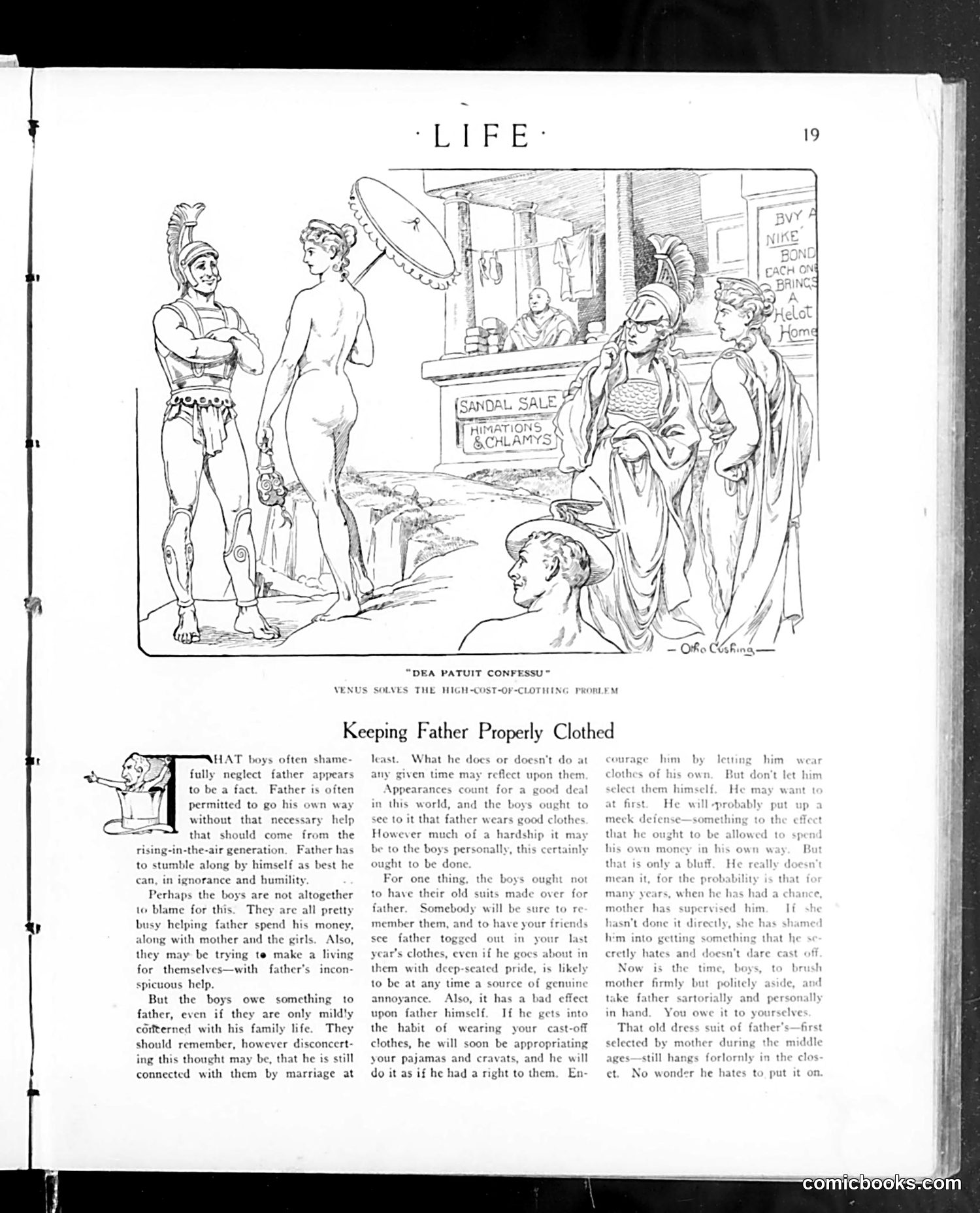
## The Cartoon ("Dea Patuit Confessu") The top illustration depicts Venus, the Roman goddess of love, in a classical marketplace setting among clothed figures. The Latin caption translates roughly to "the goddess confesses." The satire suggests that even Venus—traditionally depicted nude—acknowledges the necessity of proper clothing in modern society. This is a clever visual pun on the era's "high cost of clothing" problem. ## The Article ("Keeping Father Properly Clothed") The accompanying text addresses a common domestic problem: fathers neglecting their appearance and sons being reluctant to help maintain their father's wardrobe. The author argues that boys owe their fathers respect through ensuring paternal proper dress, warning that if fathers adopt the habit of wearing hand-me-downs and cast-off clothes, they'll soon appropriate sons' pajamas and cravats. ## Context This reflects early 20th-century middle-class anxieties about generational respect, masculine appearance, and family financial management during a period of rising living costs.
📄 Transcribed text from this page (OCR, searchable)
Machine-transcribed from the original scan — historical spelling and the odd misread are preserved.
VENUS SOLVES THE HIGH-COST-OF-CLOTHING 1 “DEA PATUIT CONFESSU” OMLEM Keeping Father Properly Clothed HAT boys often shame fully neglect father appears fact permitted to go h without that n that. she to be Father is often own way help from the Father ha essary Id come rising-in-the-air generation. orance and humility Perhaps the boys are not altogether to blame for this. They are all pretty busy helping father spend his money, along with mother and the girls. Also, they may be trying te make a living for themselves—with spicuous help. But the boys owe father, even if they are only mildly corfterned with his family life. They should remember, however disconcert- ing this thought may be, that he is still connected with them by marriage at father’s incon- something to least. What he does or doesn't do at any given time may reflect u: Appearances count in this world, and the see to it that father wears goc er muck Howe of a hardship it may be to the boys personally, this certainly ought to be done For one thing, the to have their c over for father. Somebody will be sure to re member them, and to have your f sce father tog year’s clothes, even if he goc in them with deep-seated pride, is likely to be at any time a so Also, it h upon father himself the habit of clothes, ce of genuine a bad effect If he gets in annoyance. wearing your ca he will soon be appropriating your pajamas and cravats, and he will do it as if he had a right to them. En him into ge cretly hate er firmly but take father sartor in hand. Ye That old dress s selected by moth ages—still hangs forlorr et. No wonder he hates to