
Life, 1919-11-06 · page 24 of 36
Life — November 6, 1919 — page 24: what you’re looking at
What you’re looking at
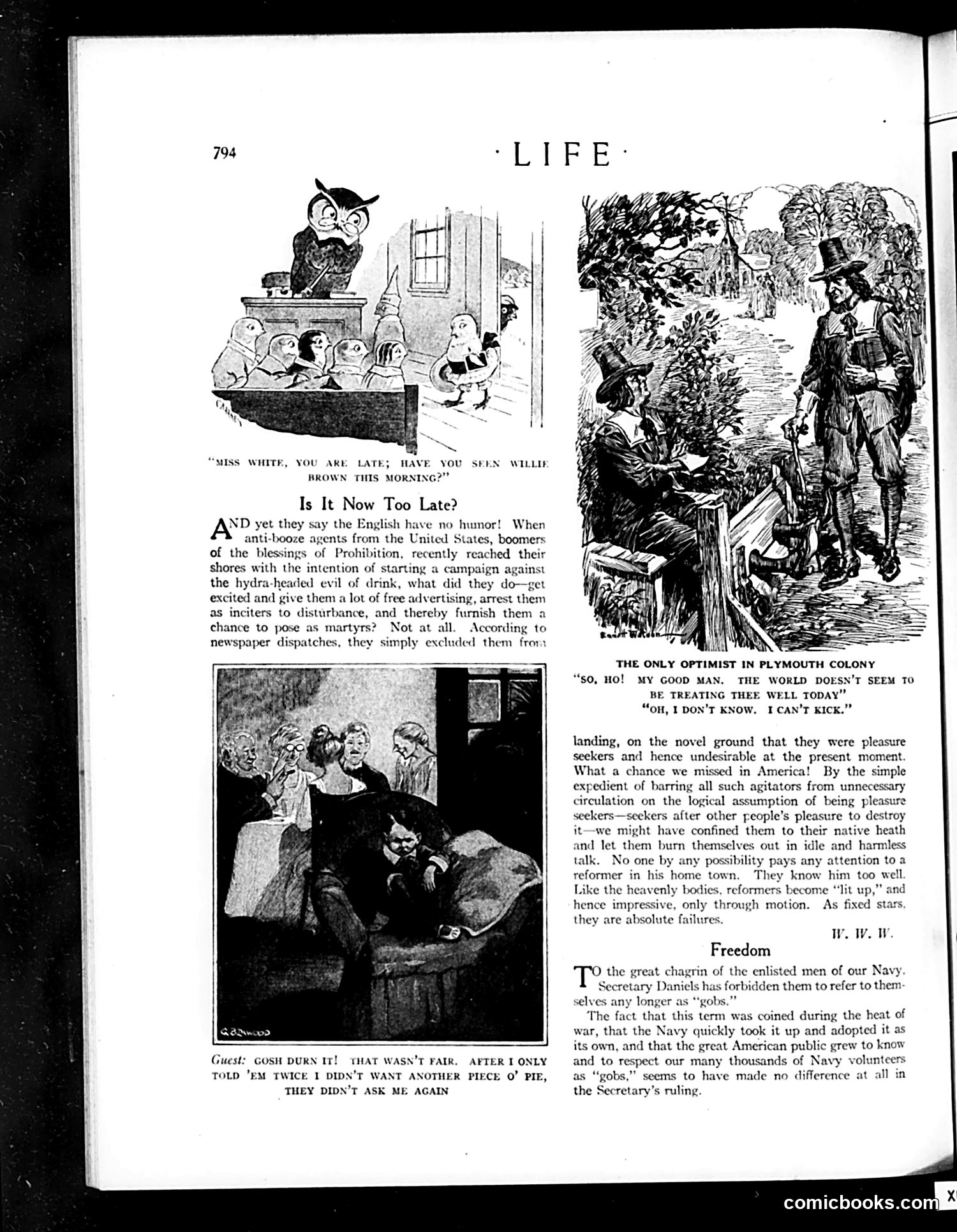
This page contains three satirical cartoons mocking American social reform efforts circa the Prohibition era. **Top cartoon**: Shows American Prohibition agents being rejected entry to England. The satire praises British pragmatism—rather than arrest the activists (giving them martyrdom publicity), Britain simply excluded them as "pleasure seekers," denying them the attention reformers crave. **Middle cartoon ("Plymouth Colony")**: A Pilgrim optimist refuses to complain despite hardship, captioned "I can't kick." The irony satirizes how reformers gain power through grievances; deny them an audience, they fade away. **Bottom section ("Freedom")**: Criticizes Navy Secretary Daniels for forbidding sailors to use the term "gobs" (slang the Navy had embraced). The satire questions this unnecessary linguistic policing of a term that had gained public respect and military tradition. All three pieces ridicule American reformers' ineffectiveness through contrast with pragmatism or critique of petty authoritarianism.
📄 Transcribed text from this page (OCR, searchable)
Machine-transcribed from the original scan — historical spelling and the odd misread are preserved.
“MISS WHITE, YOU ARE LATE; HAVE YOU SEEN WILLIE BROWN THIS MORNING?” Is It Now Too Late? &? yet they say the English have no hwnor! When anti-booze agents from the United States, boomers of the blessings of Prohibition, recently reached their shores with the intention of starting a campaign against the hydra-headed evil of drink, what did they do—get excited and give them a lot of free advertising, arrest them as inciters to disturbance, and thereby furnish them a chance to pose as martyrs? Not at all. According to newspaper dispatches, they simply excluded them froma THE ONLY OPTIMIST IN PLYMOUTH COLONY “sO, HO! MY GOOD MAN, THE WORLD DOESN'T SEEM TO BE TREATING THEE WELL TODAY” “on, I DON’T KNOW. I CAN'T KICK.” landing, on the novel ground that they were pleasure seekers and hence undesirable at the present moment. What a chance we missed in America! By the simple expedient of barring all such agitators from unnecessary circulation on the logical assumption of being pleasure seekers—seckers after other people’s pleasure to destroy it—we might have confined them to their native heath and let them burn themselves out in idle and harmless talk. No one by any possibility pa y attention to a reformer in his home town. They know him too well Like the heavenly bodies, reformers become “li ” and hence impress only through motion. they are absolute failures. Freedom the great chagrin of the enlisted men of our Navy retary Daniels has forbidden them to refer to them selves any longer as “gobs. The fact that this term was coined during the heat of war, that the Navy quickly took it up and adopted it as its own, and that the great American public grew to know SOSH DURN IT! THAT WASN’T FAIR. AFTER I ONLY and to respect our many thousands of Navy volunteers TOLD ’EM TWICE I DIDN’T WANT ANOTHER PIECE 0? PIE, as “gobs,” seems to have made no difference at all in THEY DIDN’T ASK NE AGAIN the Secretary's ruling. comicbooks.com)