
Life, 1919-10-16 · page 20 of 36
Life — October 16, 1919 — page 20: what you’re looking at
What you’re looking at
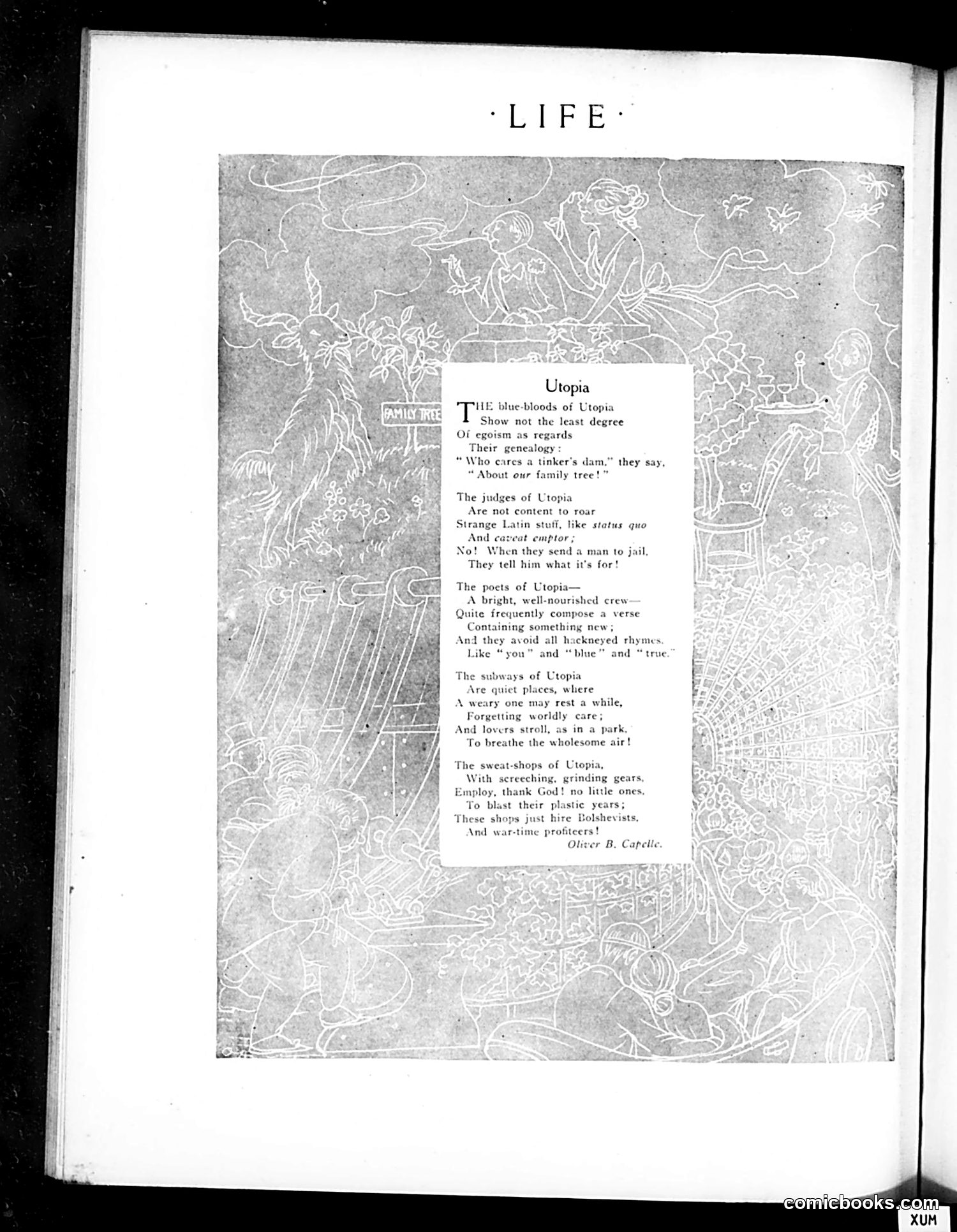
This satirical poem uses an idealized society called "Utopia" to critique contemporary American institutions and social problems. The satire works by describing what Utopia *does right*, thereby exposing what America does *wrong*: **Key targets:** - **Aristocratic pretension**: Utopian blue-bloods don't obsess over genealogy, contrasting with American social climbing - **Judicial opacity**: Utopian judges explain why they jail people; American courts apparently don't - **Literary mediocrity**: Utopian poets avoid clichés and hackneyed rhymes (like "you/blue/true") - **Urban pollution**: Utopian subways are peaceful; American ones are presumably noisy and crowded - **Child labor**: Utopian sweatshops don't employ children—implying American ones did The accompanying ornate illustration (likely a fantastical cityscape) provides visual contrast to the poem's social commentary. This is classic early-20th-century American satirical critique of labor conditions, class structures, and judicial transparency.
📄 Transcribed text from this page (OCR, searchable)
Machine-transcribed from the original scan — historical spelling and the odd misread are preserved.
Utopia HE blue-bloods of Utopia Show not the least degree Of egoism as regards cir genealogy tinker’s About our family tree The judges of Ute Are not content to roar status quo emptor ; When they send a man to jail They tell him what it’s for © poets of Utopi A bright, well-nou frequently. co somethin void all hackne: "and “bl \ weary ¢ ay rest a while, worldly care; Forgetting And lovers stroll, as in To breathe the wholesome air! With screeching, grinding ¢ nk God! no little ones h ir plastic years; Employ, th