
Life, 1919-10-02 · page 17 of 48
Life — October 2, 1919 — page 17: what you’re looking at
What you’re looking at
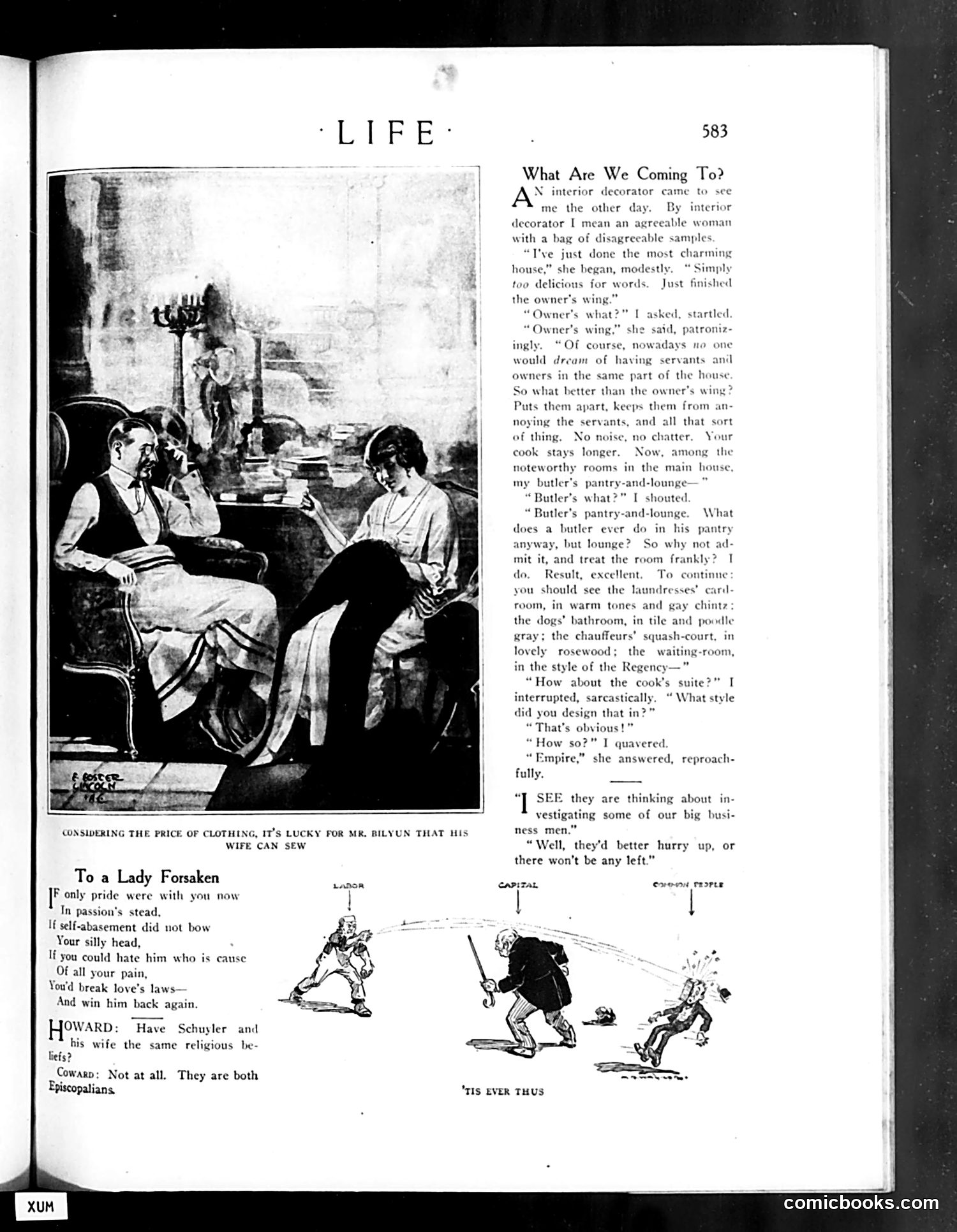
This page contains three distinct satirical pieces: **"To a Lady Forsaken"** is a sentimental poem about romantic pride and reconciliation—typical of early 20th-century magazine verse. **The Schuyler/Coward dialogue** is a brief, cutting joke about hypocrisy: when asked if a couple shares religious beliefs, the response "Not at all. They are both Episcopalians" mocks how nominal faith had become among the wealthy elite. **"What Are We Coming To?"** is the main satire, attacking the pretentiousness of interior design and the absurd class anxieties of the wealthy. An interior decorator justifies segregating servants' quarters and then absurdly applies pseudo-sophisticated naming to rooms (a "butler's pantry-and-lounge," a "dogs' bathroom"). The punchline—that the cook's kitchen is designed in "Empire" style (cheap and mass-produced)—deflates the decorator's snobbery. The humor targets both nouveau-riche affectation and the era's rigid servant hierarchies. The cartoons at bottom appear to show a tug-of-war labeled "Labor," "Capital," and "Everyday People," illustrating class conflict—a recurring Life magazine theme.
📄 Transcribed text from this page (OCR, searchable)
Machine-transcribed from the original scan — historical spelling and the odd misread are preserved.
WIFE CAN To a Lady Forsaken F only pride were with you now In passion’s stead, If self-abasement did not bow Your silly head, If you could hate him who is cause Of all your pain, You'd break love's laws— And win him back again. OWARD: Have Schuyler and his wife the same religious be- liefs? Cowaro: Not at all. They are both 583 What Are We Coming To? A’ interior decorator came to see me the other day, By interior decorator [ mean an agreeable woman with a bag of disagreeable samples. “T've just done the most charming house,” she began, modestly.“ Simply too delicious for words. Just finished the owner's wing.” “Owner's what?" [ asked, startled “Owner's wing,” she said, patroniz- ingly. “Of course, nowadays no one would dream of having servants anil wners in the same part of the hi So what better than the owner's wir Puts them apart, keeps them from an- noying the servants, and all that sort f thing. No noise, no chatter. Your cook stays longer. Now, among the noteworthy rooms in the main house. my butler’s pantry-and-lounge “Butler’s wha I shouted “Butler's pantry-and-lounge. What does a butler ever do in his pantry anyway, but lounge? So why not ad- mit it, and treat the room frankly? 1 do, Result, excellent. To continue you should see the laundresses’ card- room, in warm tones and gay chintz the dogs’ bathroom, in tile and poodle gr the chauffeurs’ squash-court, in lovely rosewood; the waiting-room, in the style of the Regency—” “How about the cook's suite?" I interrupted, sarcastically. “ What style did you design that in That's obvious!” “How so?" I quavered. “Empire,” she answered, reproach- fully, they are thinking about in- vestigating some of our big busi- ness men.” “Well, they'd better hurry up, or there won't be any left.” CAPITAL cree Proper ‘Opalians, "TIS EVER THUS comicbooks.com