
Life, 1919-09-18 · page 10 of 48
Life — September 18, 1919 — page 10: what you’re looking at
What you’re looking at
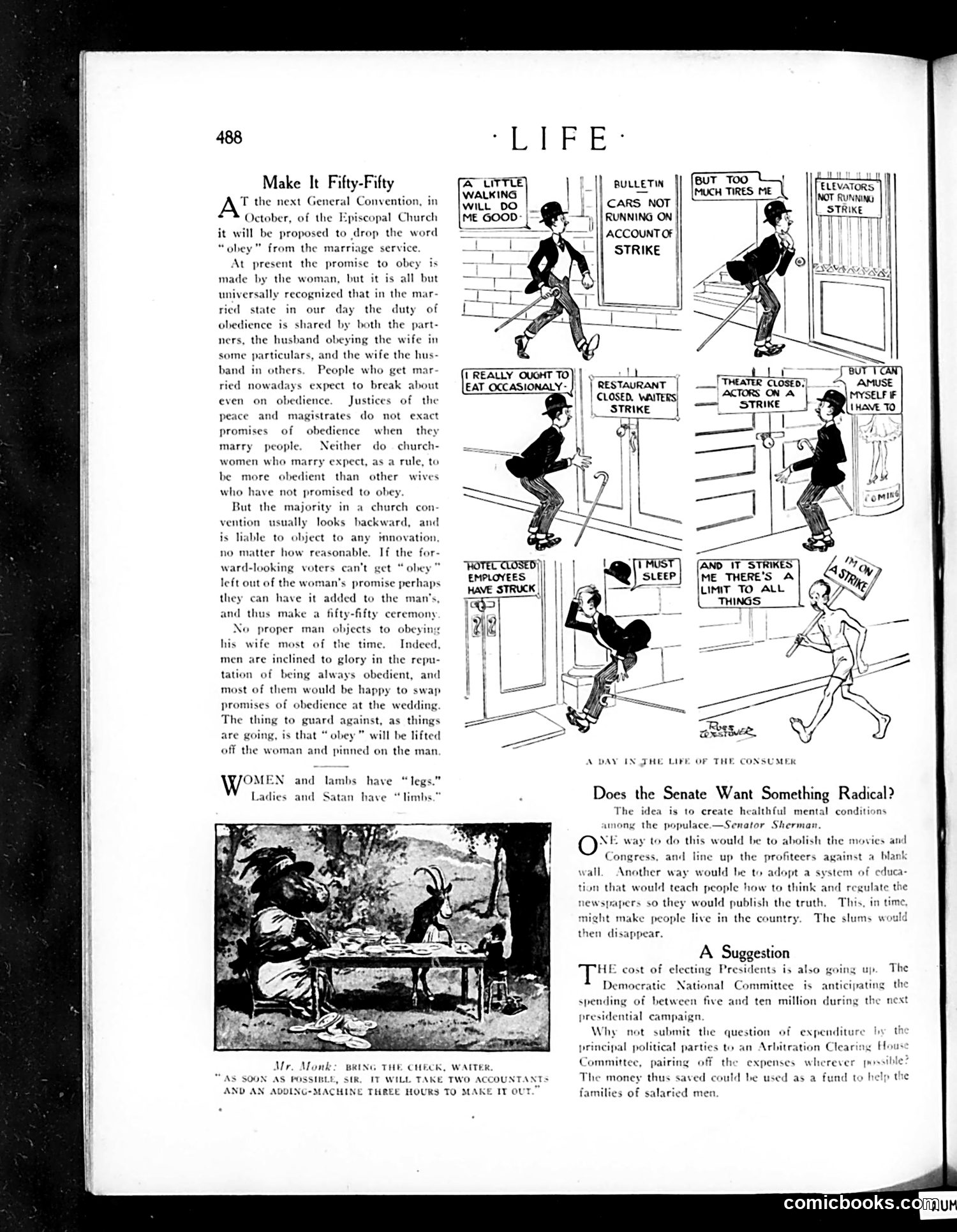
This multi-panel cartoon satirizes the widespread strikes affecting 1920s America. A man encounters closed businesses throughout his day—elevators, trolleys, restaurants, theaters, hotels—all shuttered due to labor strikes. Each panel shows him frustrated by a different service disruption, with workers' strike notices visible. The satire targets both labor organizers and the ripple effects of strikes on ordinary citizens. The "consumer" (ordinary person) becomes collateral damage, unable to access basic services. The cartoon suggests strikes, while perhaps justified, cause hardship for the working public who depend on these services. The accompanying articles discuss marriage obedience and Senate proposals for social reform, linking labor unrest to broader Progressive-era social anxieties about social order and change.
📄 Transcribed text from this page (OCR, searchable)
Machine-transcribed from the original scan — historical spelling and the odd misread are preserved.
488 Make It Fifty-Fifty T the next General Convention, in October, of the Episcopal Church it will be proposed to drop the word “obey from the marria; ervic At present the promise to obey is made by the woman, but it is all but universally recognized that in the mar- ried state in our day the duty of obedience is shared by both the part- ners, the husband obeying the wife in some particulars, and the wife the hus- band in others. People who get mar ried nowadays expect to break about even on obedience. Justices of the peace and magistrates do not exact promises of obedience when they marry people. Neither do church- women who marry expect, as a rule, to be more ient than other wives who have not promised to obey. But the majority in a church con- vention usually looks backward, and is liable to object to any innovation, no matter how reasonable. If the for- ward-looking voters can't get “obey” left out of the woman's promise perhaps they can have it added to the man’s, and thus make a fifty-fifty ceremony proper man objects to obeying “LIFE” a trina | |} succeTin BuT Too t_; WALKING MUCH TIRES ME iL DO. | CARS NOT “2; =) || RUNNING ON ¢. ACCOUNT OF ‘ STRIKE UREALLY OUGHT TO} | »—+!1__ EAT OCCASIONALY- } | | RESTAURANT | | CLOSED, WAITERS) “ROTEL CLOSED})) | EMPLOYEES || | | HAVE STRUCK || | jaye | De) [AND IT STRIKES ME THERE'S A lure To ALL | _ Cotes ELEVATORS INOT RUNNING his wife most of the time. Indeed, men are inclined to glory in the repu- tation of being always obedient, and most of them would be happy to swap promises of obedience at the wedding. The thing to guard against, as things are going, is that “c will be lifted off the woman and pinned on the man W' IME Ladies and Satan have “limbs.” and lambs have “legs.” Mr. Monk: BRING THE CHECK, WAITER, “AS SOON AS POSSIBLE, SIR, IT WILL TAKE TWO AC AND AN ADDING-MACHINE THREE HOURS TO MAKE IT OUT DAY IN JHE LIFE OF THE CONSUMER Does the Senate Want Something Radical? The idea is to create healthful mental conditions mong the populace —Senator Sherman. OX way Congress, and line up the profiteers against a bl Ii. Another way would be to do this would be to abolish the movies and ppt a system of educa- ion that would teach people how to think and regulate the wspapers so they would publish the truth. Th i ight make people live in the country. The slums we then dis A Suggestion HE cost of electing Presidents is also going up. The Democratic National Committee is anticijating spending of between five and ten million during the t presidential campaign Why not submit the question of expendite principal political parties to an Arbiteg Committee, pairing off the expenses wherever The money thus saved could be used as a fund t families of salaried men comicbooks.comm;