
Life, 1919-07-17 · page 12 of 40
Life — July 17, 1919 — page 12: what you’re looking at
What you’re looking at
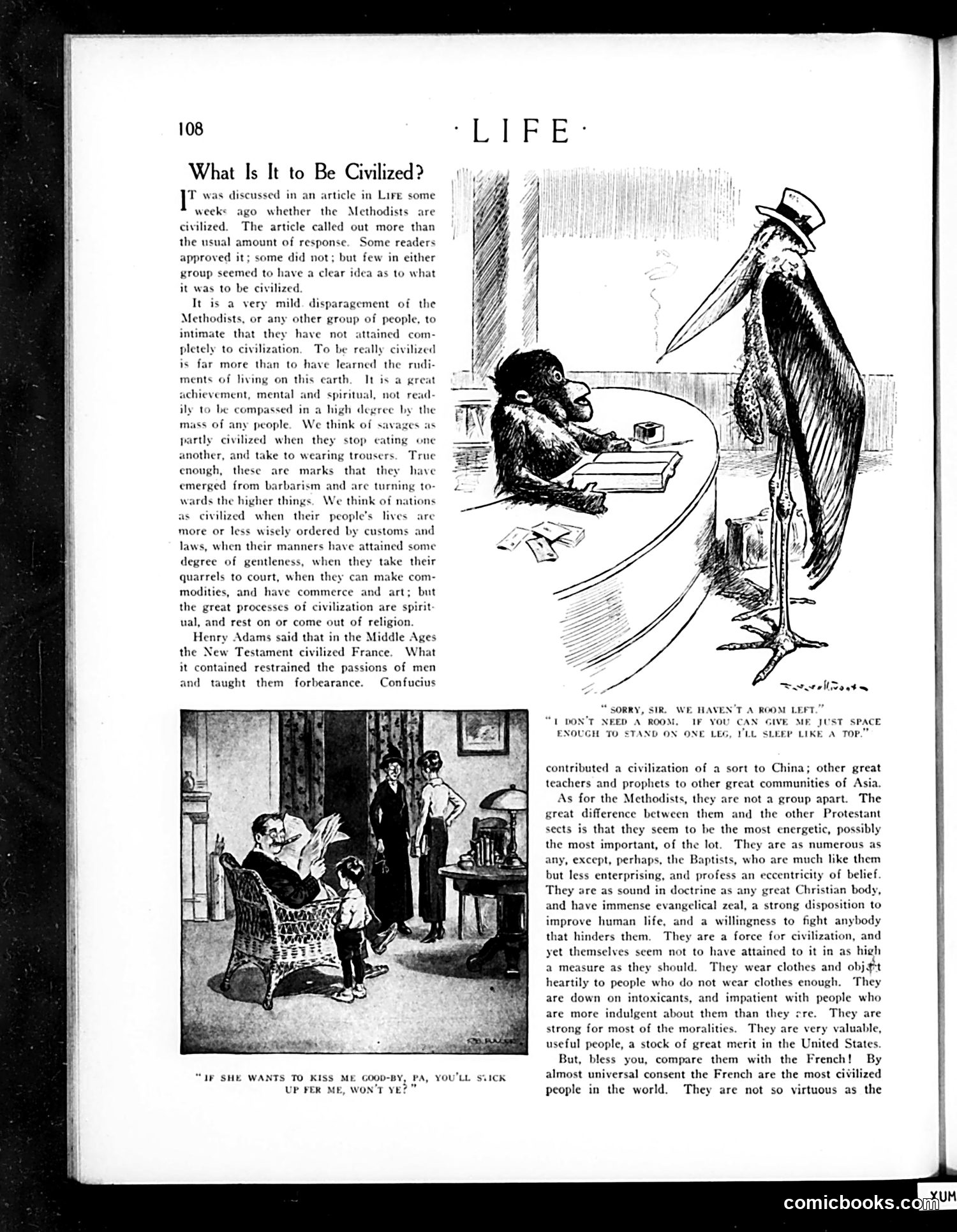
This page satirizes definitions of "civilization" through two cartoons mocking Victorian-era social pretensions. The **top cartoon** shows a shabby man being evicted by an elegant gentleman, with the caption about lacking room. The joke ridicules how "civilized" people value superficial etiquette (standing room, proper dress) over basic human compassion. The **bottom cartoon** depicts a mother refusing to kiss her son goodbye ("If she wants to kiss me good-by, Pa, you'll sick up me, won't ye?"), illustrating how rigid Victorian propriety suppresses natural human affection—parents avoiding physical contact with children to maintain "civilized" decorum. Both cartoons mock how contemporary society equates civilization with artificial constraints and emotional coldness, rather than genuine kindness or human connection. The accompanying text supports this critique of Methodist and other cultural standards.
📄 Transcribed text from this page (OCR, searchable)
Machine-transcribed from the original scan — historical spelling and the odd misread are preserved.
108 What Is It to Be Civilized? T was discussed in an article in Lire some weeks ago whether the Methodists are civilized. The article called out more than the usual amount of response. Some readers approved it; some did not; but few in either group seemed to have a clear idea as to what it was to be civilized. It is a very mild. disparagement of the Methodists, or any other group of people, to intimate that they have not attained com- pletely to civilization. To be really civilized is far more than to have learned the rudi- ments of living on this earth. It is a great achievement, mental and spiritual, not read- ily to be compassed in a high degree by the mass of any people. We think of savages as partly civilized when they stop eating one another, and take to wearing trousers. True enough, these are marks that they have emerged from barbarism and are turning to- wards the higher things. We think of nations as civilized when their people's lives are more or less wisely ordered by customs and laws, when their manners have attained some degree of gentleness, when they take their quarrels to court, when they can make com- modities, and have commerce and art; but the great processes of civilization are spirit ual, and rest on or come out of religion. Henry Adams said that in the Middle Ages the New Testament civilized France. What it contained restrained the passions of men and taught them forbearance. Confucius “IF SHE WANTS TO KISS ME GOOD-BY, YOU'LL SvICK UP FER ME, WON'T YE? ewer rlliants “SORRY, SIR. WE HAVEN'T A ROOM LEFT.” “1 DON'T NEED A ROOM, IF YOU CAN GIVE ME JUST SPACE ENOUGH TO STAND ON ONE LEG, I'LL SLEEP LIKE A TOP.” contributed a civilization of a sort to China; other great teachers and prophets to other great communities of Asia. As for the Methodists, th ¢ not a group apart. The great difference between them and the other Protestant sects is that they seem to be the most energetic, possibly the most important, of the lot. They are as numerous as any, except, perhaps, the Baptists, who are much like them but less enterprising, and profess an eccentricity of belief They are as sound in doctrine as any great Christian body, and have immense evangelical zeal, a strong disposition to improve human life, and a willingness to fight anybody that hinders them. They are a force for civilization, and yet themselves seem not to have attained to it in as high a measure as they should. They wear clothes and obj gt heartily to people who do not wear clothes enough. They are down on intoxicants, and impatient with people who are more indulgent about them than they ere. They are strong for most of the moralities. They are very valuable, useful people, a stock of great merit in the United States. But, bless you, compare them with the French! By almost universal consent the French are the most civilized people in the world. They are not so virtuous as the comicbooks.com