
Life, 1919-05-29 · page 10 of 42
Life — May 29, 1919 — page 10: what you’re looking at
What you’re looking at
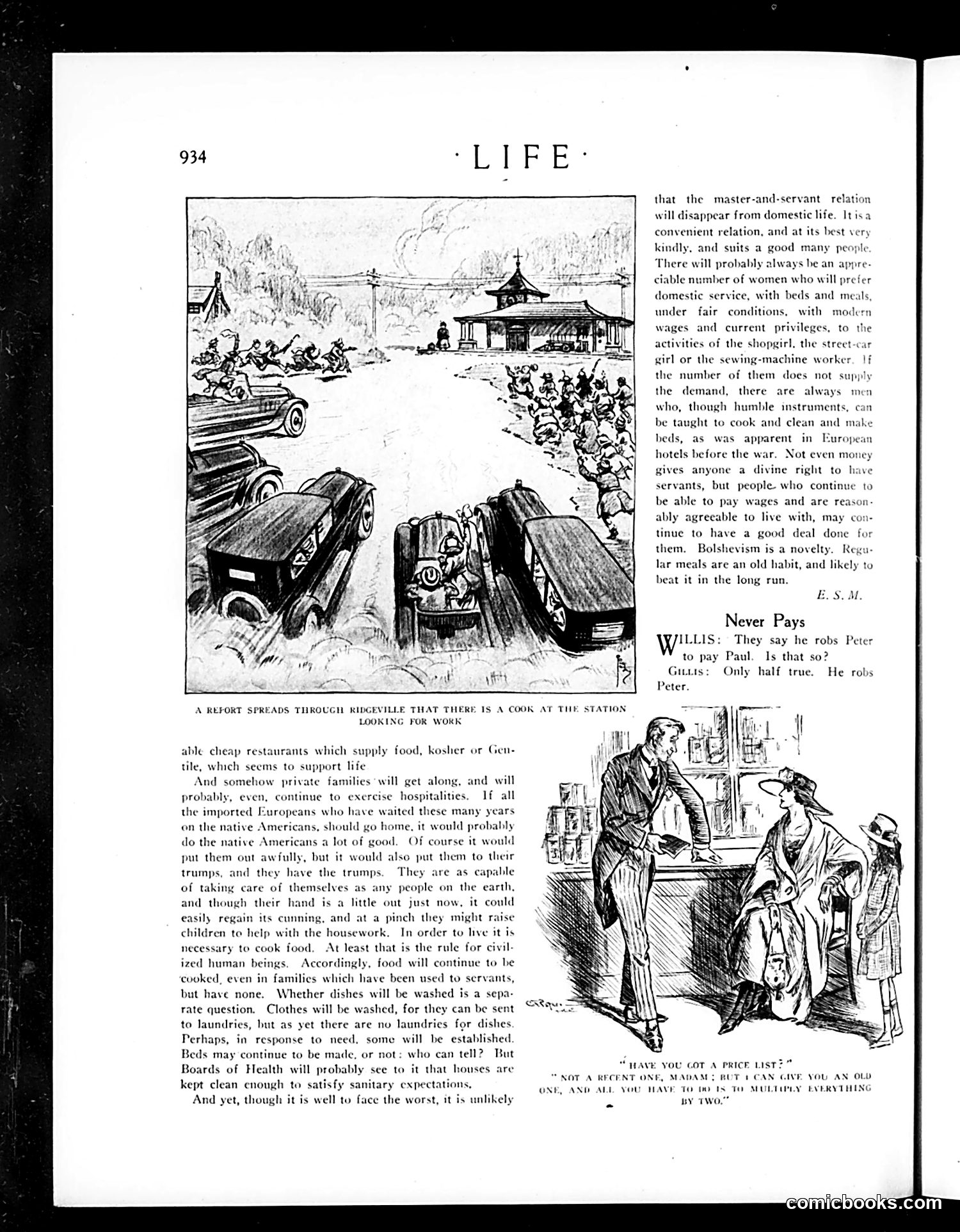
The top illustration depicts a rural train station scene with automobiles and people, captioned "A REPORT SPREADS THROUGH RIDGEVILLE THAT THERE IS A COOK AT THE STATION LOOKING FOR WORK." This satirizes post-WWI labor shortages, particularly domestic servants. The accompanying text discusses how traditional master-servant relationships may disappear, as workers demand better wages and conditions. It references how European immigrants previously filled these roles. The lower cartoon shows a domestic interaction about pricing, with the caption "HAVE YOU GOT A PRICE LIST?" The dialogue joke ("NOT A RECENT ONE, MADAM; BUT I CAN GIVE YOU AN OLD ONE, AND ALL YOU HAVE TO DO IS ADD FIFTY PERCENT EVERY DAY BY TWO") satirizes rapid inflation and wage increases of the post-war period. The humor lies in mocking the constant upward wage adjustments servants could now demand.
📄 Transcribed text from this page (OCR, searchable)
Machine-transcribed from the original scan — historical spelling and the odd misread are preserved.
A REFORT SPREADS THROUGH RIDGEVILLE THAT THERE IS A COOK LOOKING FOR WORK able cheap restaurants which supply food, kosher or Gen- tile, which seems to support life And somehow private families will get along probably, even, continue to exercise hospitalities. the imported Europeans who have waited these mar on the native Americans, should go home, it would probably do the Of course it would put them out awfully, but it would also put them to their trumps, and they have the trumps. They are as capable of taking care of themselves as and though their hand is a little out just now, it could easily regain its cunning, and at a pinch they might raise children to help with the housework. In order to hve it is necessary to cook food, At least that is the rule for civil ized human beings. Accordingly, food will continue to be cooked, even in families which have been used to servants, but have none. Whether dishes will be washed is a sepa- rate question. Clothes will be washed, for they can be sent to laundries, but as yet there are no laundries for dishes. Perhaps, in response to need, some will he established Beds may continue to be made, or not; who can tell? But Boards of Health will probably see to it that houses are kept clean cnough to satisfy sanitary expectations, And yet, though it is well to face the worst, it is unlikely and will If all cars ative Americans a lot of good. y people on the earth, ONE, AND ALI that the master-and-servant relation will disappear from domestic life. Itisa convenient relation, and at its best very kindly, and suits a good many people There will probably always be an appre- ciable number of women who will prefer domestic service, with beds and meals, under fair conditions, with modern wages and current privileges, to the activities of the shopgirl. the street-car girl or the sewing-machine worker. If the number of them does not supply the who, though humble instruments, be taught to cook and clean and demand, there are always men beds, as was apparent in Europes hotels before the war. Not even mone: gives anyone a divine right to have servants, but people who continue to be able to pay wages and are reason- ably agreeable to live with, may con- tinue to have a good deal done them. Bolshevism is a novelty. Re lar meals are an old habit, and likely to beat it in the long run. Never Pays They say he robs Peter Is that so? Only half true. to pay Paul He robs “WAVE YOU GOT A PRICE List? * “NOT A RECENT ONE, MADAM: RUT 1 CAN GIVE YOU AN OLD you TO OO TS TO MULTIPLY EVERYTHING BY Two,” HAVE