
Life, 1919-04-24 · page 26 of 46
Life — April 24, 1919 — page 26: what you’re looking at
What you’re looking at
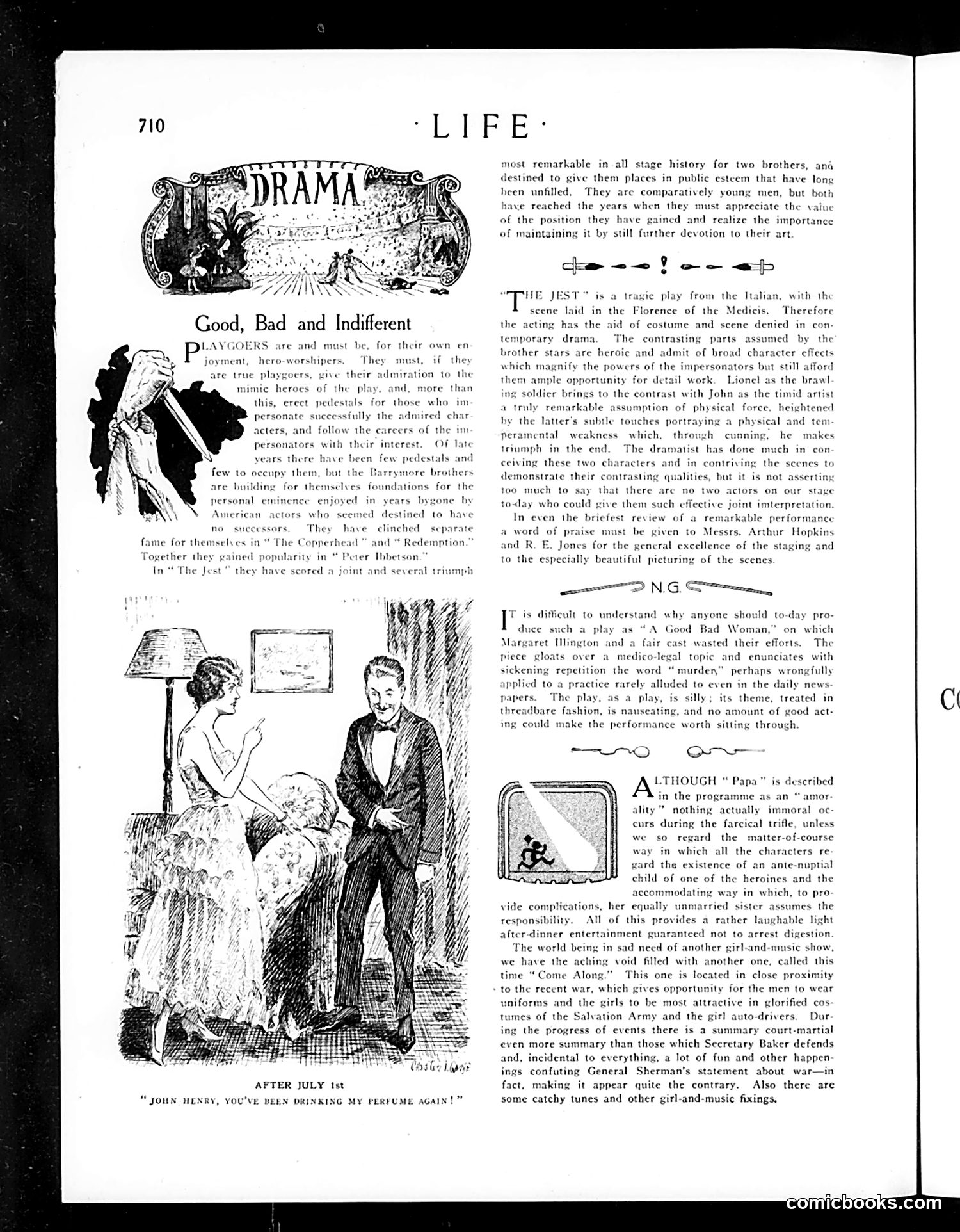
This page reviews several Broadway plays, focusing primarily on **"The Jest,"** a tragic Italian play set in Renaissance Florence starring **the Barrymore brothers** (Lionel and John). The review praises their "remarkable" joint performance, with Lionel playing a "brawling soldier" and John a "timid artist," showcasing contrasting physical and emotional acting styles. The page criticizes two other plays: **"A Good Bad Woman"** (with Margaret Illington), which the reviewer finds morally objectionable for its repeated use of the word "murder" in discussing a medical-legal topic, and **"Papa,"** dismissed as silly farce with forgettable music. The cartoon illustration shows a domestic scene with the caption "JOHN HENRY, YOU'VE BEEN DRINKING MY PERFUME AGAIN!"—likely satirizing frivolous theater content or advertising perfume to readers.
📄 Transcribed text from this page (OCR, searchable)
Machine-transcribed from the original scan — historical spelling and the odd misread are preserved.
‘LPPE* Good, Bad and Indifferent LAYGOERS are and must be, for their own en They must, if they r admiration to the joyment, hero-worshipe: re true playgoers, mimic heroes of the play, and, more this, erect pedestals for those who personate successiully the admired char acters, and follow the careers of the ators with their interest. Of late ars there have been few to occupy them, but the are building for themselves foundations for the ew pedestals and arrymore brothers personal eminence enjoyed in years bygone by American actors who seemed destined to have no successors. They have clinched sep: head “and “R n “Peter Tbbetson.” fame for themselves The ( mption.” Together they gained popularit In“ The Jest" they have scored a joint and several tri SS Se AFTER JULY Ist “ JOMN HENRY, YOU'VE BEEN DRINKING MY PERFUME AGAIN!” most remarkable in all stage history for two brothers, ana destined to give them places in public esteem that have long heen unfilled. They are comparatively young men, but both have reached the years when they must appreciate the vaiue of the position they have gained and realize the importance of maintaining it by still further devotion to their art “THE JEST scene laid in the Florence of the Medicis. Th the acting has the aid of costume and scene denied in con * is a tragic play from the Italian, with the temporary drama, The contrasting parts assumed by the brother stars are heroic and admit of broad character effects which magnify the powers of the impersonators but still affo: them ample opportunity for detail work ing soldier brings to the contrast with John as the timid artist Lionel as the brawl 1 truly remarkable assumption of physical force. he by the latter's subtle touches portrayi! Peramental weakness which, through cunning, he makes triumph in the end physical The dramatist has done much in con ceiving these two characters and in contriving the scenes demonstrate their contrasting qualities, but it is not assert too much to say that there are no two actors on our st to-day who could give them such effective join In even the briefest review of a rer imterpretation able performance a word of praise must be given to Messrs, Arthur Hopki and R. E. Jones for the gencral excellence of the staging and to the especially beautiful picturing of the scenes. OD ONG ee, » understand why anyone should to-day pro- [' is difficult duce such a play as “A od Bad Woman,” Margaret Ilington and a fair cast wasted their efforts. The on which piece gloats over a medico-legal topic and enunciates with sickening repetition the word “murder” perhaps wrongfully applied to a practice rarely alluded to even in the daily news is silly; its theme, treated in {bare fashion, is nauseating, and no amount of good act- ing could make the performance worth sitting through Ooo LTHOUGH “ Papa” in the programme as an ality" nothing actually immoral oc- curs during the farcical trifle, unless we so regard the matter-of-course way in which all the characters re gard the existence of an ante-nuptial child of one of the heroines and the y in which, to pro papers. The play, as a pla —O is described mor- accommodating w vide complications, her equally unmarried responsibility. All of this provides a rather laughable light after-dinner entertainment guaranteed not to arrest digestion The world being in sad need of another girl-and-music show, we have the aching void filled with another one, called this time “Come Along.” This one is located in close proximity to the recent war, which gives opportunity for the men to wear uniforms and the girls to be most attractive in glorified cos tumes of the Salvation Army and the git! auto-drivers. Dur- ing the progress of events there is a summary court-martial even more summary than those which Secretary Baker defends and, incidental to everything, a lot of fun and other happen- ings confuting General Sherman's statement about war—in fact. making it appear quite the contrary. Also there are some catchy tunes and other girl-and-music fixings, ster assumes the