
Life, 1919-04-17 · page 30 of 46
Life — April 17, 1919 — page 30: what you’re looking at
What you’re looking at
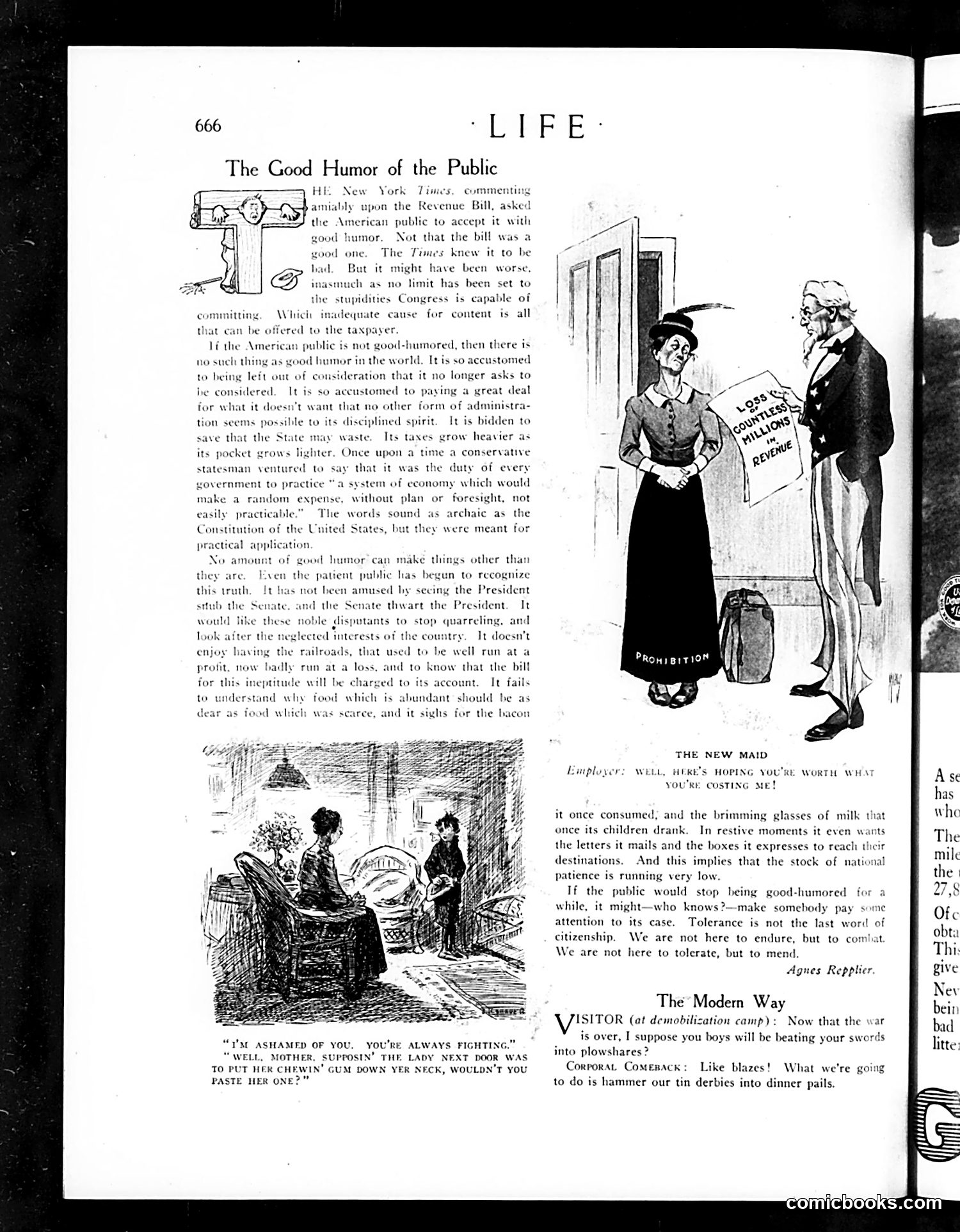
This page contains commentary on public patience with government taxation and inefficiency. The main article criticizes the Revenue Bill, noting Americans accept bad legislation with resigned humor rather than protest. **Key cartoons:** 1. **Top right ("The New Maid")**: An employer interviews a new maid while Prohibition looms in the background. The joke plays on labor costs during Prohibition—servants were expensive, and the caption sardonically hopes she's "worth what you're costing." 2. **Bottom ("The Modern Way")**: A post-WWI demobilization scene. A visitor naively expects soldiers to "beat swords into plowshares" (biblical peace imagery). The soldier's reply—converting military caps into dinner pails—cynically suggests veterans will return to struggling, low-wage labor rather than prosperity. **Overall theme**: The page satirizes American public docility toward economic hardship, unfair taxation, and post-war unemployment. Citizens endure injustice passively rather than demanding reform.
📄 Transcribed text from this page (OCR, searchable)
Machine-transcribed from the original scan — historical spelling and the odd misread are preserved.
666 The Good Humor of the Public HE New York pon the Revenue Bill, aske« Times, commen amiably the American public to accept it with good humor. Not that the bill was a good one. The Tones knew it to be BD had But it might have been worse, GF inast ) as no limit has been set to the stupidities Congress is capable of tting, Which inadequate cause for content is all hat can be offered to the taxpayer. wublic is not good-humored, then there is vod humor in the world, [tis so accustomed to being left out of consideration that it no longer asks to he considered. It is so accustomed to paying a great deal for what it doesn’t want that no other form of administra- li the Americar no such thing as tion seems possible to its disciplined spirit. It is bidden to save that the State may waste. Its taxes grow heavier as its pocket grows lighter, Once upon a time a conservative statesman ventured to say that it was the duty of every 1 system of economy which would sight, not government to practice make a random expense, without plan or f easily practicable.” The words sound as archaic as the Constitution of the Un States, but they were meant for No ame hey are. ood humor can make things other than ent public has begun to recognize this truth. [t has not been amu ly seeing the President tub the Senate, and the Senate thwart the President. It € these noble dlisputants to stop quarreling, and the cted interests of the ce Tt doesn’t cr to know that the bill It fails profit, now badly run at a loss, at for this ineptitude will be charged to its account, which is abundant should be as to understand why food dear as food which was scarce, and it sighs for the bacon “YM ASHAMED OF YOU. YOU'RE ALWAYS FIGHTIN WELL, MOTHER, SUPPOSIN’ THR LADY DOOR WAS. TO PUT HER CHEWIN’ GUM DOWN YER NECK, WOULDN'T YOU PASTE HER ONE?” “EB. ° THE NEW MAID WELL, HERE'S HOPING YOU'RE WoRTH WH YOU'RE COSTING ME! Employer: it once consumed, and the brimming glasses of milk that once its children drank. In restive moments it even wants the letters it mails and the boxes it expresses to reach their destinations. And this implies that the stock of natic patience is running very low. If the public would stop being good-humored for while, it might—who knows ?. attention to its case. citizenship. We are not here to endure, but to comlat. We are not here to tolerate, but to mend. Agnes Reppli The Modern Way V SITOR (at demobilization camp): Now that the wat is over, I suppose you boys will be beating your swords into plowshares? Corporat Comenack : What we're going to do is hammer our tin derbies into dinner pails. make somebody pay Tolerance is not the last word of