
Life, 1919-04-10 · page 26 of 46
Life — April 10, 1919 — page 26: what you’re looking at
What you’re looking at
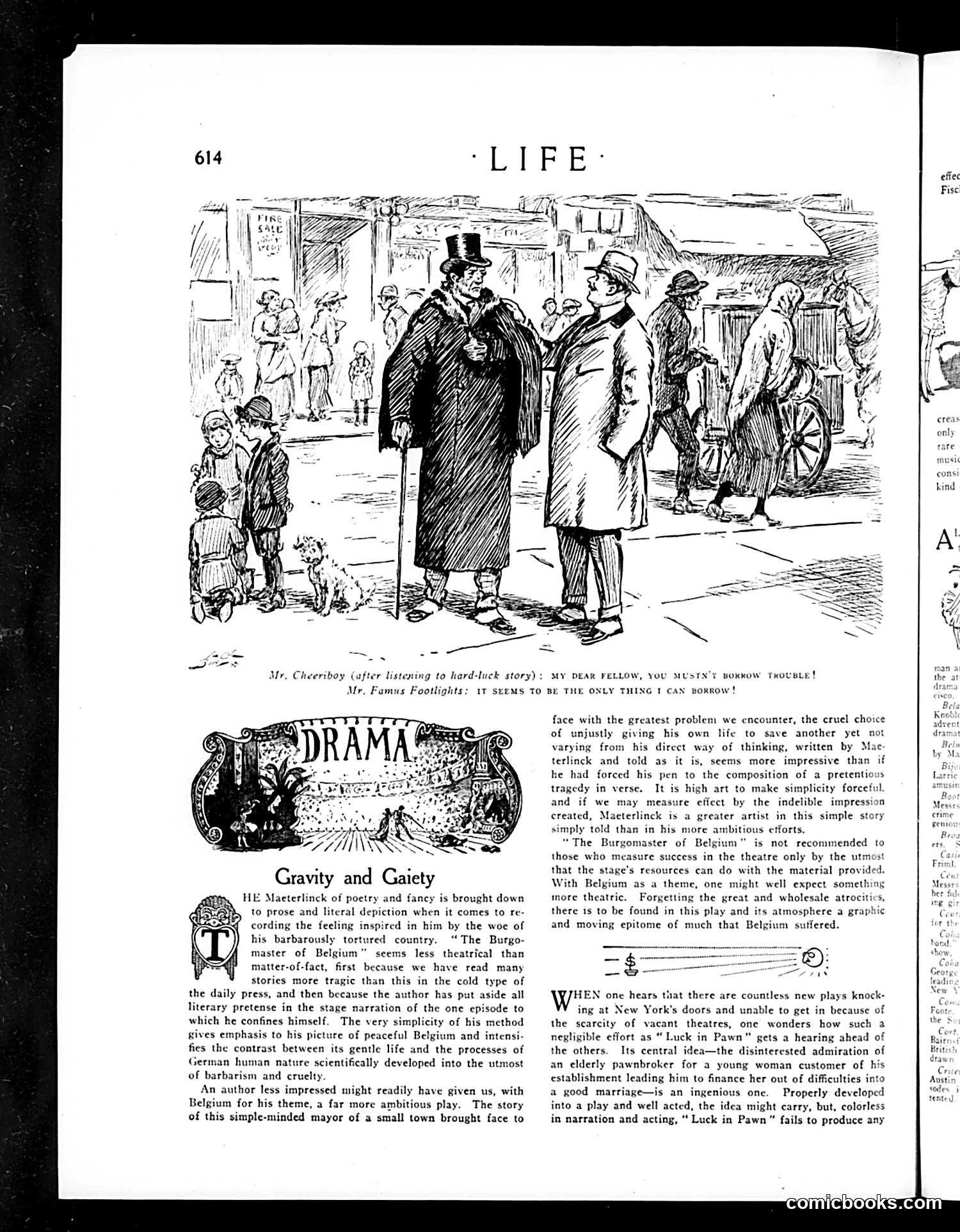
This page contains two theatrical reviews from Life magazine, likely from the early 20th century. The cartoon at top depicts a street scene where a man in a top hat (labeled "Mr. Famous Footlights," appearing to be an actor or theater personality) tells another gentleman that borrowing trouble is "the only thing I can borrow"—a joke about actors' financial struggles and perpetual debt. Below, two play reviews discuss: 1. **"The Burgomaster of Belgium"** — praised for its simplicity in depicting Belgian suffering during what appears to be WWI. The reviewer argues that Maeterlinck's restrained, matter-of-fact approach to the mayor's moral dilemma is more powerful than theatrical grandstanding. 2. **"Luck in Pawn"** — criticized as negligible and colorless, despite an ingenious premise about a pawnbroker financing a young woman's marriage. The reviewer finds it lacks compelling execution. Both reviews exemplify early 20th-century theater criticism's concern with artistic restraint versus spectacle.
📄 Transcribed text from this page (OCR, searchable)
Machine-transcribed from the original scan — historical spelling and the odd misread are preserved.
i Mr. Cheeriboy (after listening to hard-luck story): MY DEAR FELLOW, YoU MUSTN'T BOKKOW TROUBLE! Mr. Famus Footlights: 11 Stems To BE THE ONLY THING 1 CAN BoRROW! Gravity and Gaiety HE Maeterlinck of poetry and fancy is brought down to prose and literal depiction when it comes to re- cording the feeling inspired in him by the woe of his barbarously tortured country. “The Burgo- master of Belgium” seems less theatrical than matter-of-fact, first because we have read many stories more tragic than this in the cold type of the daily press, and then because the author has put aside all literary pretense in the stage narration of the one episode to which he confines himself. The very simplicity of his method gives emphasis to his picture of peaceful Belgium and intensi- fies the contrast between its gentle life and the processes of German human nature scientifically developed into the utmost of barbarism and cruelty An author less impressed might readily have given us, with Belgium for his theme, a far more ambitious play. The story of this simple-minded mayor of a small town brought face to face with the greatest problem we encounter, the cruel choice of unjustly giving his own life to save another yet not varying from his direct way of thinking, written by Mac terlinck and told as it is, seems more impressive than if he had forced his pen to the composition of a pretentious tragedy in verse. It is high art to make simplicity forceful, and if we may measure effect by the indelible impression created, Maeterlinck is a greater artist in this simple story simply told than in his more ambitious etforts. “The Burgomaster of Belgium" is not recommended to those who measure success in the theatre only by the utmost that the stage’s resources can do with the material provided. With Belgium as a theme, one might well expect something more theatric. Forgetting the great and wholesale atrocitics, there is to be found in this play and its atmosphere a graphic and moving epitome of much that Belgium suffered. =$= HEN one hears that there are countless new plays knock- ing at New York's doors and unable to get in because of the scarcity of vacant theatres, one wonders how such a negligible effort as “Luck in Pawn” gets a hearing ahead of the others. Its central idea—the disinterested admiration of an elderly pawnbroker for a young woman customer of his establishment leading him to finance her out of difficulties into a good marriage—is an ingenious one. Properly developed into a play and well acted, the idea might carry, but, colorless in narration and acting, “ Luck in Pawn” fails to produce any