
Life, 1919-04-03 · page 44 of 60
Life — April 3, 1919 — page 44: what you’re looking at
What you’re looking at
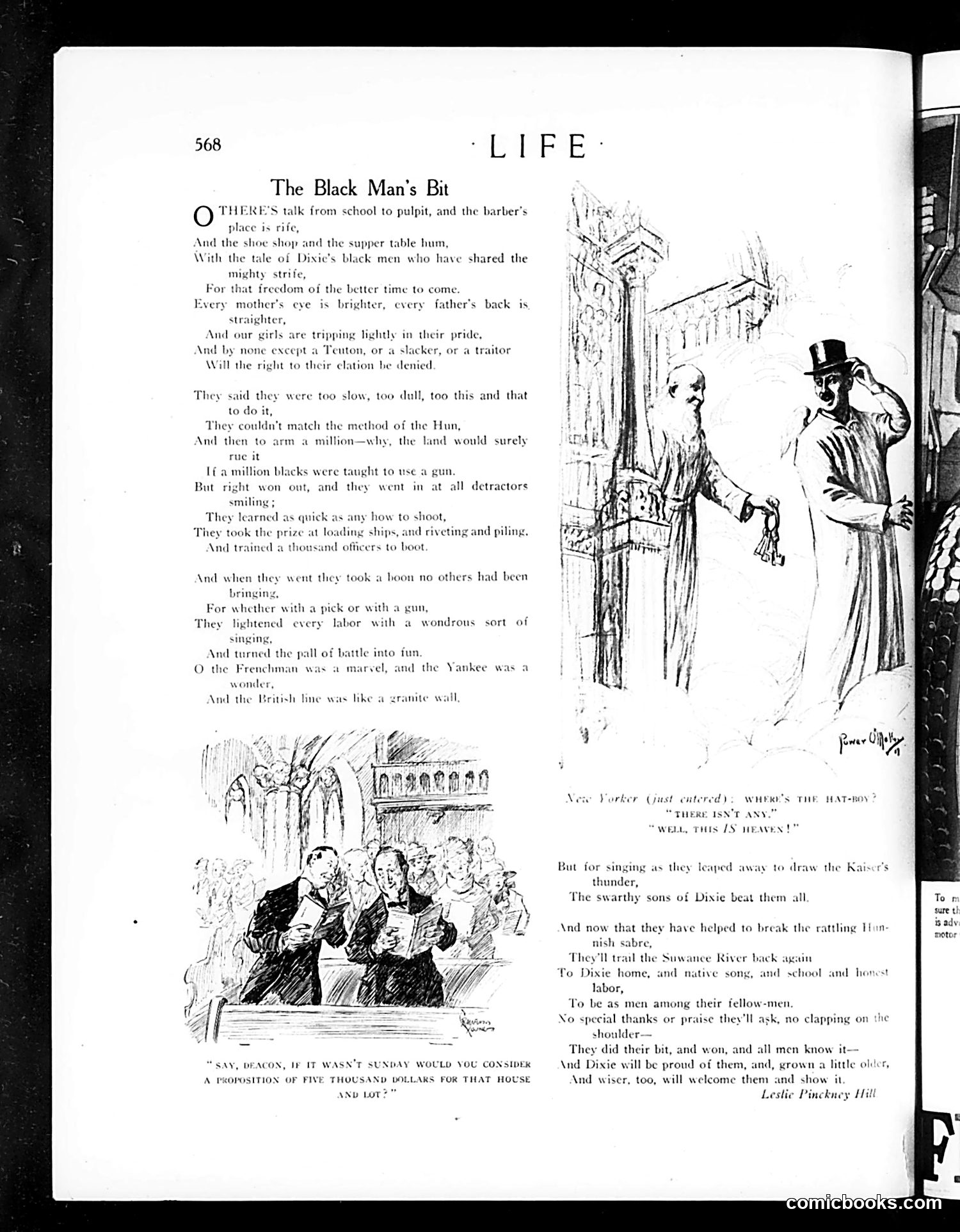
This WWI-era poem by Leslie Pinckney Hill celebrates African American soldiers' contributions to the war effort. The page includes two cartoons with period humor. **Main content:** The poem argues that Black soldiers—long stereotyped as "too slow, too dull"—proved themselves capable fighters and laborers. It emphasizes their singing, morale-boosting, and skilled contributions (loading ships, riveting, training officers). Hill suggests they earned respect and should return home as equals ("as men among their fellow-men"), expecting no special praise but deserving integration into society. **Cartoons:** - Top: A New Yorker entering heaven asks where the hat-boy is; told there isn't one—a joke about American class distinctions disappearing in the afterlife. - Bottom: A deacon proposes buying a house for $5,000—period financial humor about property values. The page reflects 1918 optimism that wartime service would improve race relations, though history shows this hope was largely unfulfilled.
📄 Transcribed text from this page (OCR, searchable)
Machine-transcribed from the original scan — historical spelling and the odd misread are preserved.
CU TAESE ° The Black Man's Bit THERE’S talk from school to pulpit, and the barber's place is rife, And the shoe shop and the supper table hum, With the tale of Dixie's black men who have shared the mighty strife, For that freedom of the better time to come. Every mother’s eye is brighter, every father’s back is. straighter, And our girls are tripping lightly in their pride, And by none except a Teuton, or a slacker, or a traitor Will the right to their clation he denied They said they were too slow, too dull, too this and that to do it, They couldn't match the method of the Hun, And then to arm a million—why, the land would surely ruc it [fa million blacks were taught to use a gun. But right won out, and they went in at all detractors smiling ; They learned as quick as any how to shoot, They took the prize at loading ships, and riveting and piling. And trained a thousand officers to boot And when they went they took a hoon no others had been bringing, For whether with a pick or with a gun, They lightened every labor with a wondrous sort of singing, And turned the pall of battle into fun. O the Frenchman was a marvel, and the Yankee was a wonder, And the British line was like a granite wall “SAY, DEACON, IF IT WASN'T SUNDAY WOULD YOU CONSIDEK THOUSAND DOLLARS FOR THAT HOUSE AND Lot?” A PROPOSITION OF FIVE New Yorker (just entered): WHERE'S THE “THERE ISN'T ANY.” “WELL, THIS 1S HEAVEN E But for singing as they leaped away to draw the Kaisce’ thunder, The swarthy sons of Dixie beat them all \nd now that they have helped to break the rattling Hf nish sabre, They'll trail the Suwanee River back asain fo Dixie home, and native song, and school and hor labor, To be as men among their fellow-men, No special thanks or praise they'll ask, no clapping on 1! shoulder— They did their bit, and won, and all men know it— And Dixie will be proud of th And wiser, too, will welcome them and show it , and, grown a little ol: Leslie Pinckney Hill HAT-ROY ?