
Life, 1919-02-06 · page 11 of 38
Life — February 6, 1919 — page 11: what you’re looking at
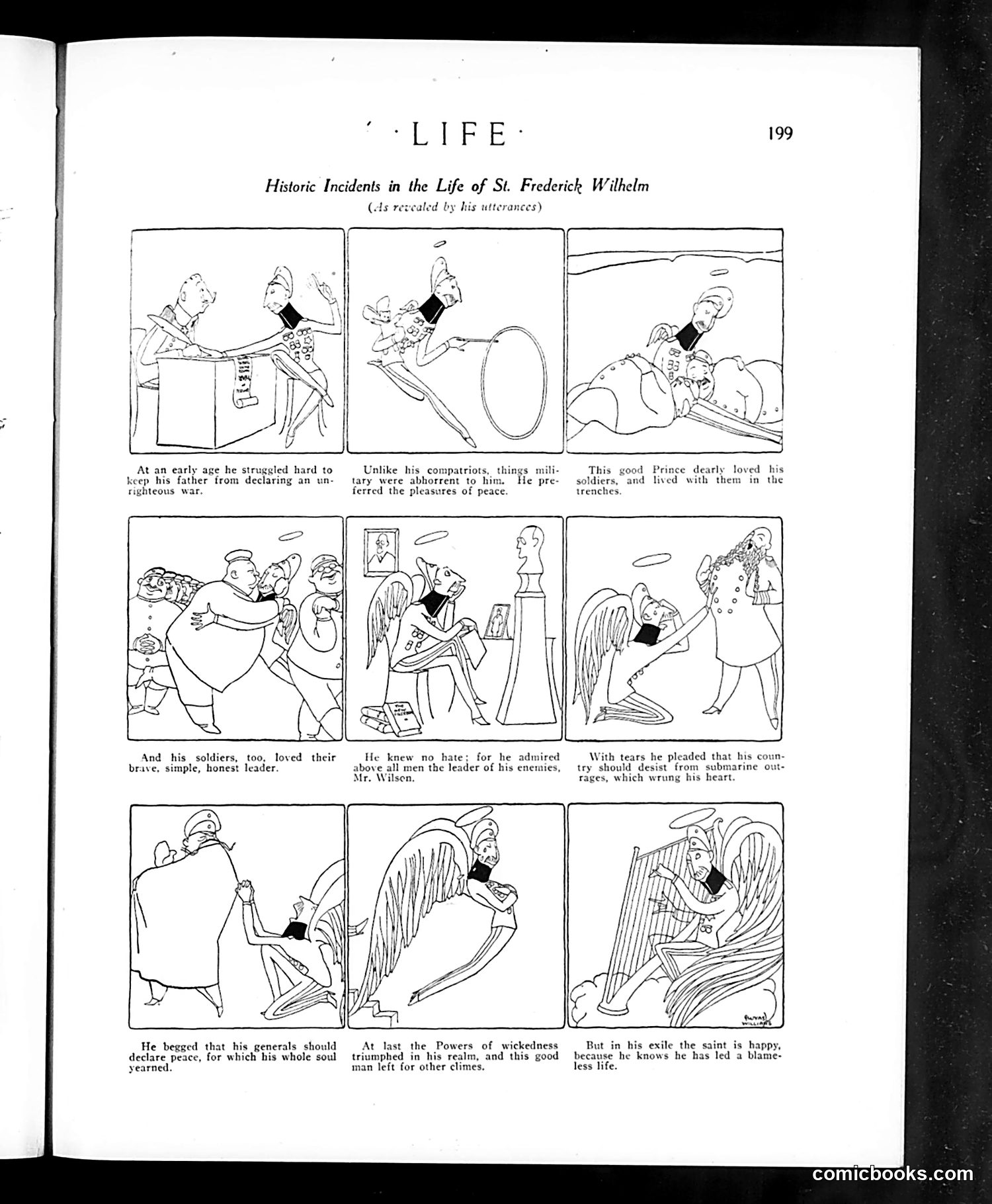
What you’re looking at
This satirical comic strip presents Frederick Wilhelm (likely a European royal figure) as a saint, mocking his character through nine panels. The narrative arc suggests he: - Struggled to prevent his father's unrighteous war - Preferred peace over military matters - Loved soldiers and lived among troops - Was admired by his soldiers as an honest leader - Showed no hatred, even of enemies - Pleaded tearfully against submarine warfare - Begged generals to declare peace - Eventually triumphed over "wickedness" - Lived happily in exile, having led a "blameless life" The heavy irony—treating him as saintly—suggests the cartoonist views Frederick Wilhelm as delusional or hypocritical about his actual wartime role and responsibility, likely criticizing a German royal's claimed pacifism during World War I.
📄 Transcribed text from this page (OCR, searchable)
Machine-transcribed from the original scan — historical spelling and the odd misread are preserved.
*=*LIPE: Historic Incidents in the Life of St. Frederick Wilhelm At an early age he struggled hard to keep his father from declaring an un- righteous war. (As revealed by his utterances) gs_mili- He pre- Unlike his compatriots, th tary were abhorrent to him. ferred the pleasures of peace. This good Prince dearly loved his soldiers, and lived with them in the trenches. And his soldiers, too, loved their brave, simple, honest leader: He knew no hate; for he admired above all men the leader of his enemies, Mr. Wilson. He begged that his generals should declare peace, for which his whole soul yearned. At last the Powers of wickedness triumphed in his realm, and this good man left for other climes, With tears he pleaded that his coun- try should desist from submarine out- rages, which wrung his heart. But in his exile the saint is happy, because he knows he has led a blame- less life. comicbooks.com