
Life, 1919-01-23 · page 12 of 42
Life — January 23, 1919 — page 12: what you’re looking at
What you’re looking at
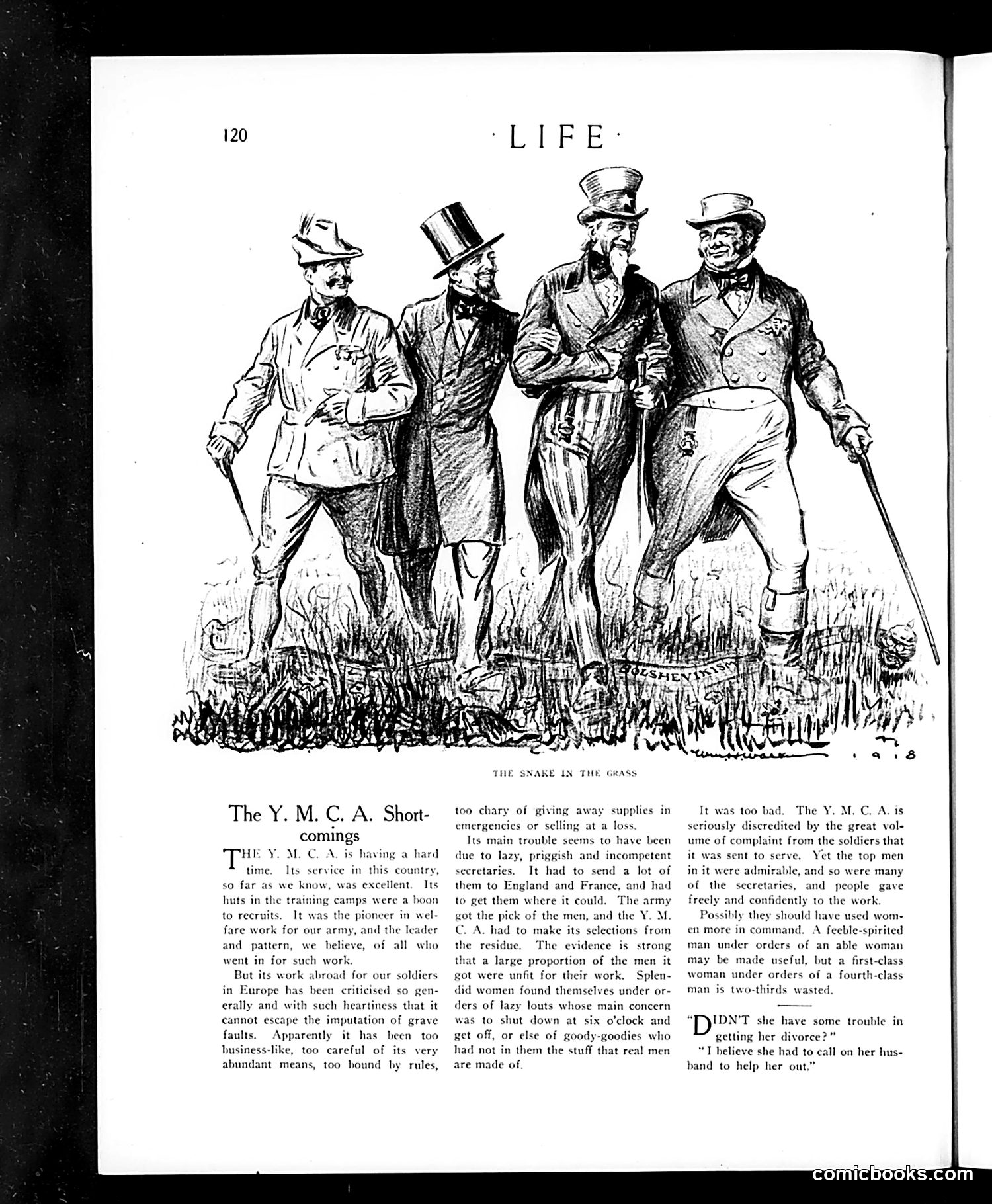
This satirical cartoon criticizes the Young Men's Christian Association (YMCA) during World War I. The illustration shows four military officers discovering a snake in grass, captioning it "THE SNAKE IN THE GRASS." The accompanying article attacks the YMCA's wartime operations, alleging incompetence and poor judgment in managing supplies and selecting personnel. The text charges the organization with sending unsuitable secretaries to support troops, being "too businesslike" and wasteful, and failing soldiers' trust. The "snake" metaphor suggests the YMCA's leadership was treacherous or deceptive—presenting itself as helpful to the military effort while actually undermining it through bungling administration and corrupt practices. This reflects broader Progressive Era skepticism of large institutional failures during the war.
📄 Transcribed text from this page (OCR, searchable)
Machine-transcribed from the original scan — historical spelling and the odd misread are preserved.
The Y. M. C. A. Short- comings TH ¥. Me Gra. time. Its service in this country, so far as we know, was excellent. Its is having a hard huts in the training camps were a boon to recruits, It was the pioncer in wel- fare work for our army, and the leader and pattern, we believe, of all who went in for such work. But its work abroad for our soldiers in Europe has been criticised so gen- erally and with such heartiness that it cannot escape the imputation of grave faults. Apparently it has been too business-like, too careful of its very abundant means, too hound by rules, THE SNAKE IN THE GRASS too chary of giving away supplies in emergencies or selling at a loss. Its main trouble seems to have been priggish and incompetent secretaries. It had to send a lot of them to England and France, and had to get them where it could. The army got the pick of the men, and the Y. M. C. A. had to make its sele: the residue. The evidence is strong that a large proportion of the men it got were unfit for their work. Splen- did women found themselves under or- ders of lazy louts whose main concern was to shut down at six o'clock and get off, or else of goody-goodies who had not in them the stuff that real men are made of. due to lazy, ions from The Y. M. C. Avis seriously discredited by the great vol- ume of complaint from the soldiers that it was sent to serve. Yet the top men in it were admirable, and so were many of the secretaries, and people gave freely and confidently to the work. Possibly they should en more in command. Tt was too bad. ave used wom- \ fe man under orders of an able woman may be made useful, but a first-class woman under orders of a fourth-class man is two-thirds wasted. le-spirited she have some trouble in getting her divorce? “T believe she had to call on her hus- band to help her out.” “TDyIDN'T