
Life, 1919-01-02 · page 20 of 34
Life — January 2, 1919 — page 20: what you’re looking at
What you’re looking at
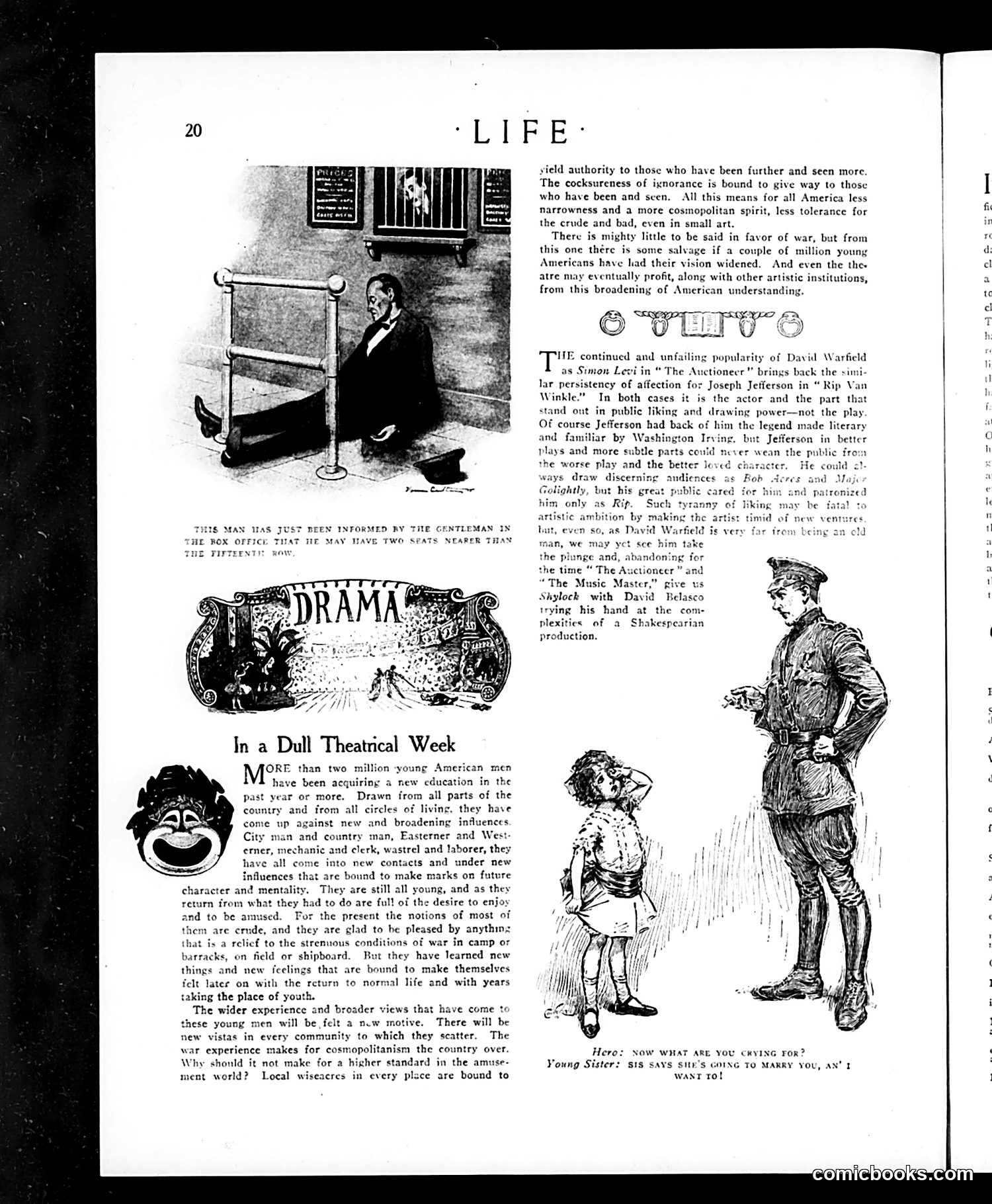
This page discusses theatrical entertainment during what appears to be the World War I era, when millions of American servicemen gained broader cultural exposure through military service. **The Top Cartoon:** Shows a man at a box office being told he may have two seats closer than the fifteenth row—a joke about theater seating accessibility during high demand. **Main Content:** The article argues that returning soldiers' expanded worldviews will elevate American cultural standards, including theater. It specifically praises actor David Warfield's continued popularity in "The Auctioneer," comparing his appeal to Joseph Jefferson's long run in "Rip Van Winkle." **The Bottom Illustration:** A military officer and young girl with dialogue: she's crying because her older sister says she'll marry him. This appears to be satirizing wartime romance or separation anxiety among civilians. The page's central argument: war experience, while harsh, could modernize American taste and reduce provincial attitudes toward the arts.
📄 Transcribed text from this page (OCR, searchable)
Machine-transcribed from the original scan — historical spelling and the odd misread are preserved.
7 BEEN INFORMED RY TILE GENTLEMAN IN AT TIE MAY MAVE TWO SPATS NEARER THAN S MAN TAS THE ROX OFFICH E FIFTEENTI: RAW In a Dull Theatrical Week ORE than two million young Ameri have been acquiring a new cducation in the past year or more. Drawn from all parts of the country and from all circles of living, they have come up against new and broadening influences City man and country man, Easterner and We: erner, mechanic and clerk, wastrel and laborer, they have all come into new contacts and under new influences that are bound to make marks on future character and mentality. They are still all young, and as they return from what they had to do are full of the desire to enjoy and to be amused. For the present the notions of most of them are crude, and they are glad to be pleased by anythr that is a relief to the strenuous conditions of war in camp barracks, on field or shipboard. But they have learned new things and new feelings that are bound to make themselves felt later on with the return to normal life and with years taking the place of youth. The wider experience and broader views that have come to these young men will be felt a new motive. There will be new vistas in every community to which they scatter. The war experience makes for cosmopolitanism the country ove Why shonld it not make for a higher standard in the a ment world? Local wiseacres in every place are bound to “LIFE- yield authority to those who have been further and seen more. The cocksureness of ignorance is bound to give way to those who have been and seen. All this means for all America less narrowness and a more cosmopolitan spirit, less tolerance for the crude and bad, even in small art. There is mighty little to be said in favor of war, but from this one thére is some salvage if a couple of million young Americans have had their vision widened. And even the thee atre may eventually profit, along with other artistic institutions, from this broadening of American understanding. inued and unfailing popularity of David Warfield as Simon Levi in “ The Auctioneer” brings back the simi- lar persistency of affection for Joseph Jefferson in “ Rip V Winkle.” In both cases it is the actor and the part that stand out in public liking and drawing power—not the play Of course Jefferson had back of him the legend made literary and familiar by Washington Irvi but Jefferson in better plays and more subtle parts cou wean the lic from the worse play and the bette: ways draw discern ndie ightly, but his great p im only as Rip. nbition by n king may be tist timid of new vent David Warfield is very en so, the time “ The ¢ “The Music Master,” give Shylock with David Belasi irying his hand at the com: plexities of a Shakespearian production. Hero: Now WHAT ARE YOU CRYING FoR? Young Sister: S18 SAVS Sitv's GOING TO MARRY YoU, aN’ T