
Life, 1918-12-05 · page 45 of 76
Life — December 5, 1918 — page 45: what you’re looking at
What you’re looking at
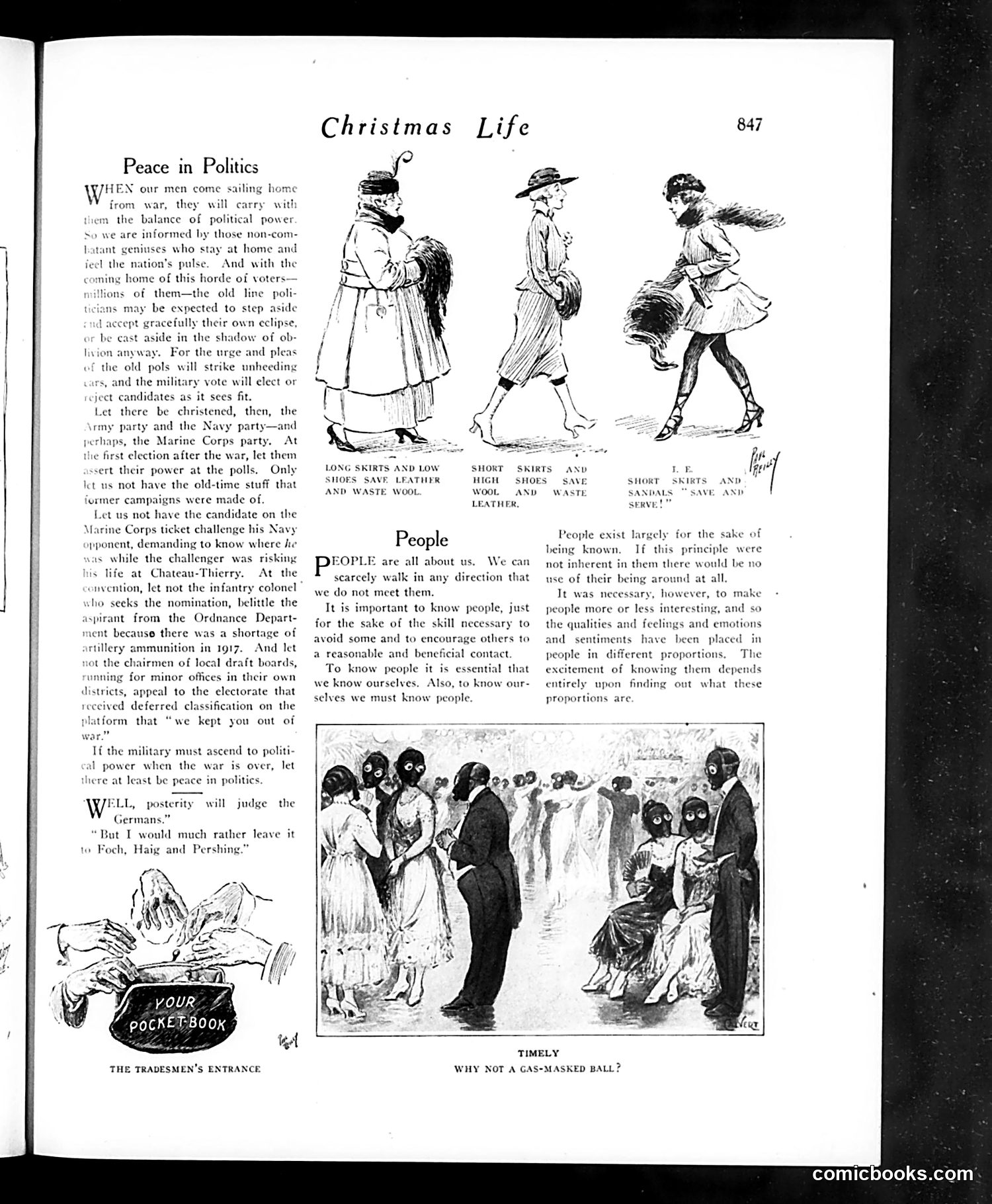
This page contains two satirical pieces addressing post-WWI concerns: **"Peace in Politics"** warns against returning soldiers dominating post-war elections. The article cautions that newly organized "Army party" and "Navy party" candidates shouldn't rehash war grievances or attack each other's wartime service records (referencing real WWI battles like Chateau-Thierry). The cartoon "The Tradesmen's Entrance" likely mocks politicians treating military votes as back-door power grabs rather than legitimate democratic participation. **Fashion cartoons** at top show women's wartime clothing conservation—long skirts and low shoes versus short skirts and sandals—illustrating fabric rationing efforts. **"People" section** and the cartoon "Why Not a Gas-Masked Ball?" satirize post-war social life. The gas-masked figures suggest society was still obsessed with war imagery and protective measures, even as civilians attempted normal activities. The sardonic title questions whether gas masks had become fashionable party accessories, mocking the lingering trauma and paranoia of chemical warfare.
📄 Transcribed text from this page (OCR, searchable)
Machine-transcribed from the original scan — historical spelling and the odd misread are preserved.
Peace in Politics Wie Y our men come sailing home om war, they will carry with them the balance of political power So we are informed by those non-com- hatant geniuses who stay at home anc the nation’s pulse. And with the coming home of this horde of voters— Nions of them—the old line poli- ns may be expected to step aside ccept gracefully their own ecli ¢ aside in the shadow of ob- anyway. For the urge and ple: of the old pols will strike unheedin s, and the military vote will elect ot ject candidates as it sees fit. Let there be christened, then, the rmy party and the Navy party—and perhaps, the Marine Corps party. At the first election after the war, let them sert their power at the polls, Only lct us not have the old-time stuff that urmer campaigns were made of. Let us not have the candidate on the Marine Corps ticket challenge his Navy pponent, demanding to know where h is while the challenger was risking s life at Chateau-Thierry. At the onvention, let not the infantry colonel who seeks the nomination, belittle the aspirant from the Ordnance Depart- ment because there was a shortage of rtillery ammunition in 1917. And let ot the chairmen of local draft boards, for minor offices in their own districts, appeal to the electorate that received deferred classification on the platform that “we kept you out of war.” If the military must ascend to politi- al power when the war is over, let rere at least be peace in polities V ELL German! “But I would much rather leave it unning posterity will judge the to Foch, Haig and Pershing. THE TRADESMEN’S ENTRANCE Christmas fe) LONG SKIRTS AND LOW SHOES SAVE LEATHER AND WASTE WOOL. SHORT HIGH Woot. LEATHER, People EOPLE are all about us. We can searcely walk in any direction that we do not meet them. It is important to know people, just for the sake of the skill necessary to avoid some and to encourage others to a reasonable and bene To know people it is essential that we know ourselves. Also, to know our- contact selves we must know people. SKIRTS SHOES AND AND SAVE WASTE SKIRTS. AND AND SHORT SANDAL SERVE SAVE People exist largely for the sake of being known. If this principle were not inherent in them there would be no being around at all, ary, however, to make use of the Tt was ne people more or less interesting, and so the qualities and feelings and emotions placed in people in dif The excitement of knowing them depends entirely upon finding out what these have been rent proportions. and senti: proportions are TIMELY WHY NOT A GA MASKED BALL? comicbooks.com