
Life, 1918-10-31 · page 9 of 34
Life — October 31, 1918 — page 9: what you’re looking at
What you’re looking at
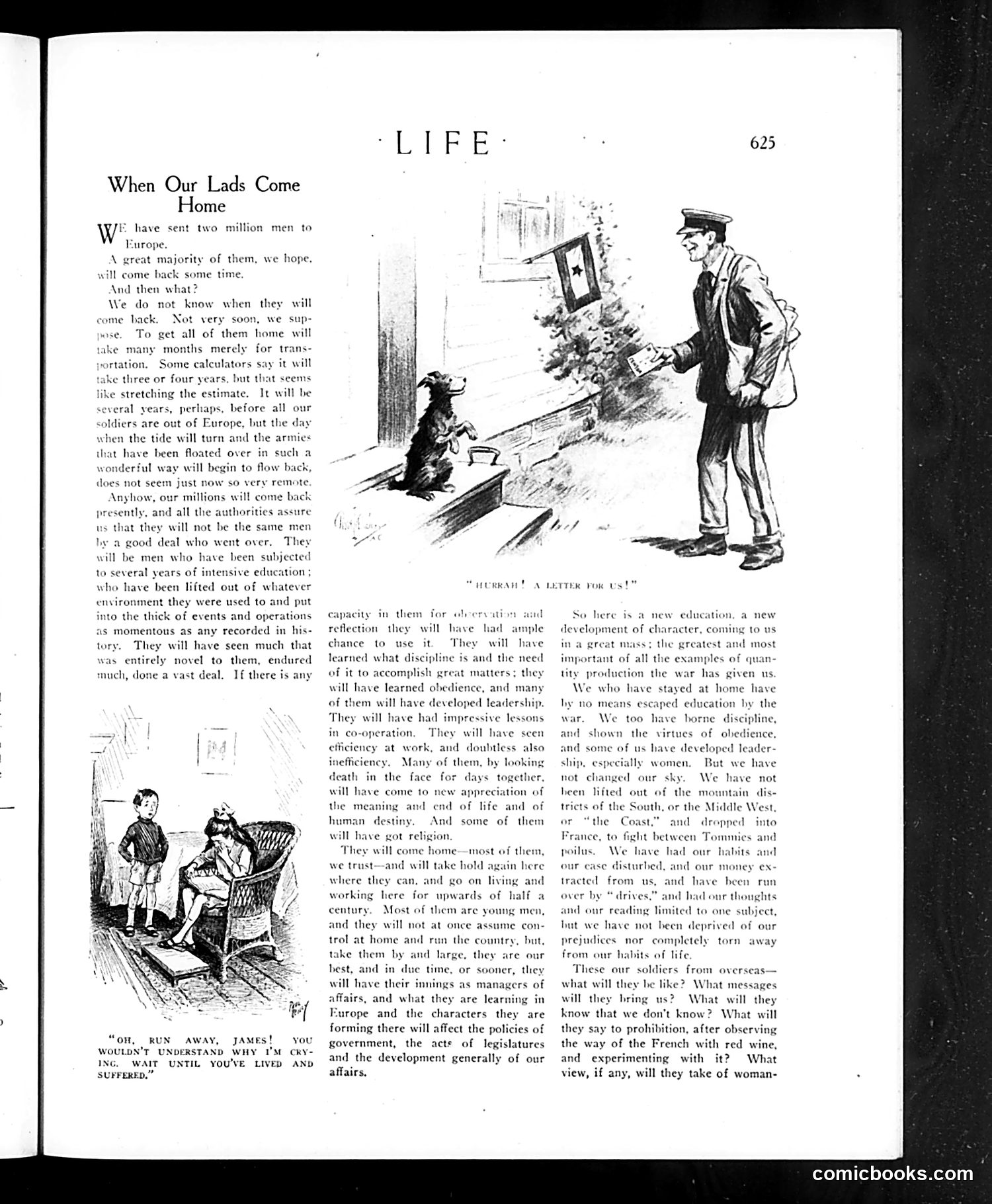
This page presents two related illustrations about soldiers returning from World War I. The article discusses the anticipated homecoming of two million American troops sent to Europe, expressing uncertainty about reintegration timelines and the soldiers' changed character after years of warfare and military discipline. The top cartoon shows a dog greeting a returning soldier at a doorway, captioned "Hurrah! A letter for us!" The bottom illustration depicts two women (likely wives or mothers) discussing the soldiers' return. The satire addresses anxiety about how war-hardened veterans—now trained in obedience, leadership, and having witnessed death—would readjust to civilian life and whether they'd accept civilian authority or struggle with displacement and changed perspectives after their transformative wartime experiences.
📄 Transcribed text from this page (OCR, searchable)
Machine-transcribed from the original scan — historical spelling and the odd misread are preserved.
When Our Lads Come Home sent million \ great majority have two men to of them, we hope. will come back some time. And then what? We do not know when they will come back. Not To get all of them home will very soon, we sup- © many months merely for trans- vortation, Some calculators say it will take three or four years, but that seems like stretching the estimate. It will be several years, perhaps, before all our soldiers are out of Europe, but the when the tide will turn and the armie that have been floated over in such a wonderful way will begin to flow back, does not seem just now so very remote Anyhow, our millions will come back presently, and all the authorit hat they will not be the same men by a good deal who went over. They will be men who have heen subjected es assure to several years of intensive education ; who have been lifted out of whatever environment they were used to and put into the thick of events and operations as momentous as any recorded in his- They will have seen much that was entirely novel to them, endured much, done a vast deal. If there is tory. AWAY, JAMES! WOULDN'T UNDERSTAND WHY I'M ING. WAIT UNTIL YOU'VE LIVED SUFFERED.” you cry AND HURRAH! A capacity in them for oleervation aud reflection they chance to use it will have had ample will have learned what discipline is and the need They of it to accomplish great matters ; they will have learned obedience, and many of them will have developed leadership. They will have had impressive lessons will have seen ciiciency at work, and doubtless also inefficiency. Many of them, by looking death in the face in co-operation. They for days together, will have come to new appreciation of the meaning and end of life and of human And will have got religion. destiny. some of them They will come home—most and will take hold a where they f them, we trust ain here an, and go on living and working here for upwards of half a century. Most of them are young men, and they will not at once assume con- trol at home and run the country, but, take them by and large, they are our best, and in due time, or sooner, they will have their innings as managers of affairs, and what they are learning in Europe and the characters they are forming there will affect the policies of government, the acts of legislatures and the development generally of our affairs, LETTER FoR Us!" So here is a new education, a new development of character, coming to us in a great mass; the greatest and most important of all the examples of quan- tity production the war has given us. We who have stayed at home have hy no means escaped education by the war. We too have borne discipline, and shown the virtues of obedience, and some of us have developed leader- women. But we have not changed our sky. We have not heen lifted out of the mountain dis- tricts of the South, or the Middle West, or “the Coast, and dropped into France, to fight between Tommies and poilus. We have had our habits 1 our case disturbed, and our money ex- tracted from us, and have been run over by “drives,” and had our thoughts and our reading limited to one subject, but we have not been deprived of our prejudices nor completely torn away ur habits of life, These our soldiers from overseas— what will they be like? What messages What will they know that we don’t know? What will they say to prohibition, after observing the way of the French with red wine, and experimenting with it? What view, if any, will they take of woman- from will they bring us? comicbooks.com