
Life, 1918-10-17 · page 30 of 38
Life — October 17, 1918 — page 30: what you’re looking at
What you’re looking at
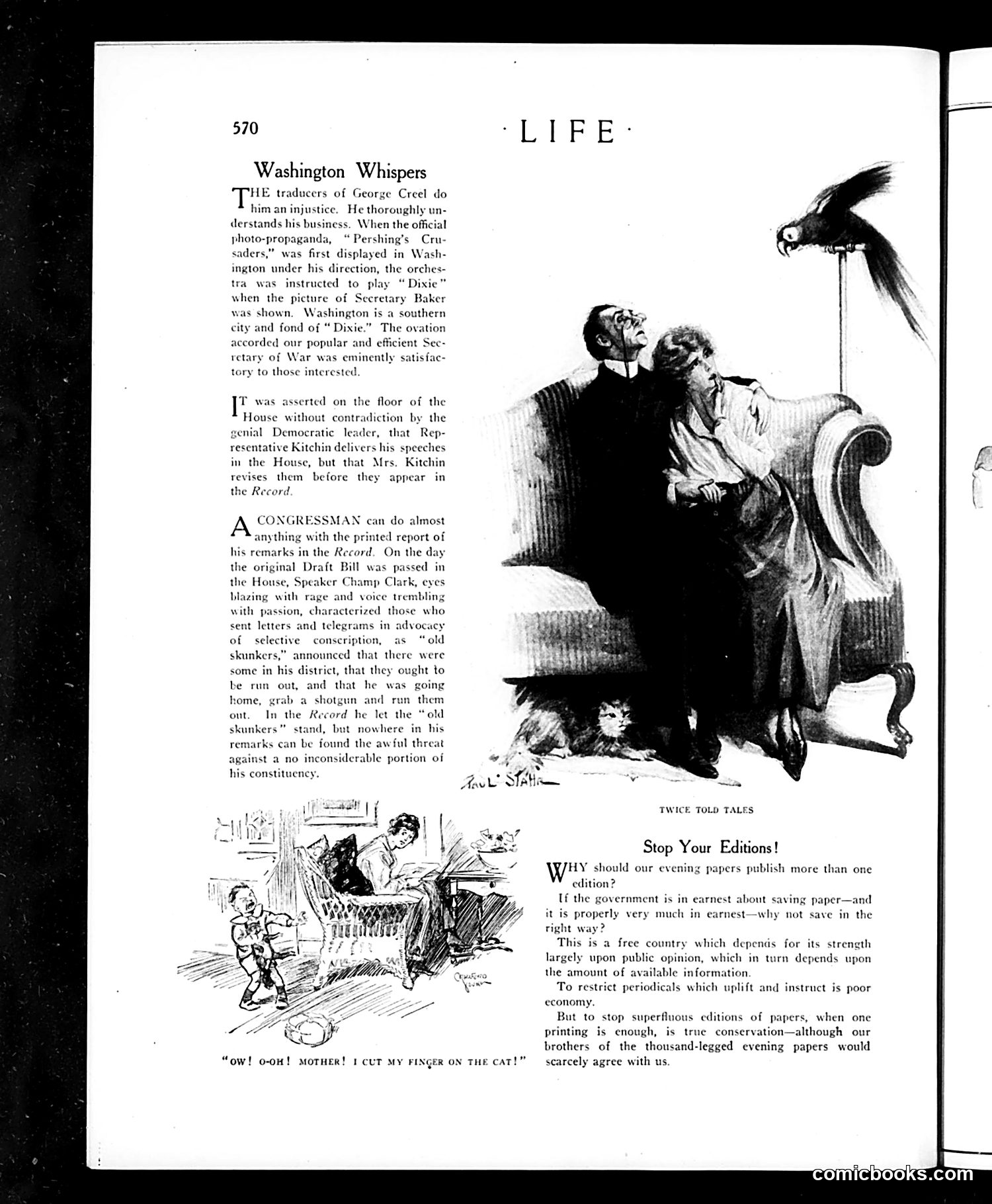
This page contains three satirical pieces about American government during World War I: **"Washington Whispers"** mocks George Creel (head of wartime propaganda) for orchestrating emotional responses to the film "Pershing's Crusaders" by having orchestras play "Dixie" when Secretary of War Baker appeared onscreen. The second item ridicules Representative Kitchin, suggesting his wife edits his speeches before they're published in the Congressional Record—implying he says things he shouldn't. The third criticizes Speaker Champ Clark, claiming he made inflammatory threats (grabbing a shotgun to run out "old skunkers" opposing selective conscription) during a House speech, but these remarks mysteriously disappeared from the official Record. This exposes how congressmen could alter their recorded statements. **"Stop Your Editions"** argues against newspaper chains publishing multiple daily editions, framing it as paper conservation—though the cartoons suggest the real issue is chaos and unnecessary duplication. The page satirizes government propaganda, congressional dishonesty, and media excess during wartime.
📄 Transcribed text from this page (OCR, searchable)
Machine-transcribed from the original scan — historical spelling and the odd misread are preserved.
570 Washington Whispers HE traducers of George Creel do him an injustice. He thoroughly un- derstands his business. When the official photo-propaganda, “ Pershing’s Cru- saders,” was first displayed in Wash- ington under his direction, the orche tra was instructed to play when the picture of Secret was shown, Washington is a southern city and fond of “ Dixie.” The ovation accorded our popular and efficient $ retary of War was eminently sati tory to those interested. T was asserted on the floor of the House without contradiction by the genial Democratic leader, that Rep- resentative Kitchin delivers his speeches in the House, but that Mrs. Kitchin revises them before they appear in the Record. CONGRESSMAN can do almost anything with the printed report of rks in the Record. On the day Draft Bill was passed in the House, Speaker Champ Clark, eyes Dlazing with rage and voice trembling with passion, characterized those who sent letters and telegrams in advocacy of selective conscription, as “old skunkers,” announced that there were some in his district, that they ought to be run out, and that he was going home, grab a shotgun and run them out. In the Record he let the “old skunkers” stand, but nowhere in his remarks can be found the awful threat against a no inconsiderable portion of his constituency. TWICE TOLD TALES Stop Your Editions! HY should our evening papers publish more than one edition? Uf the government is in earnest about saving paper—and j it is properly very much in earnest—why not save in the UNG ee 4 right wa, ? oa ih! 4 This is a free country which depends for its strength - largely upon public opinion, which in turn depends upon the amount of available information. To restrict periodicals which uplift and instruct is poor economy. But to stop superfluous editions of papers, when one printing is cnough, is true conservation—although our brothers of the thousand-legged evening papers would Ya pe; e “ow! o-oH! MOTHER! 1 CUT My FINGER ON THE CAT!” scarcely agree with us.