
Life, 1918-06-06 · page 39 of 40
Life — June 6, 1918 — page 39: what you’re looking at
What you’re looking at
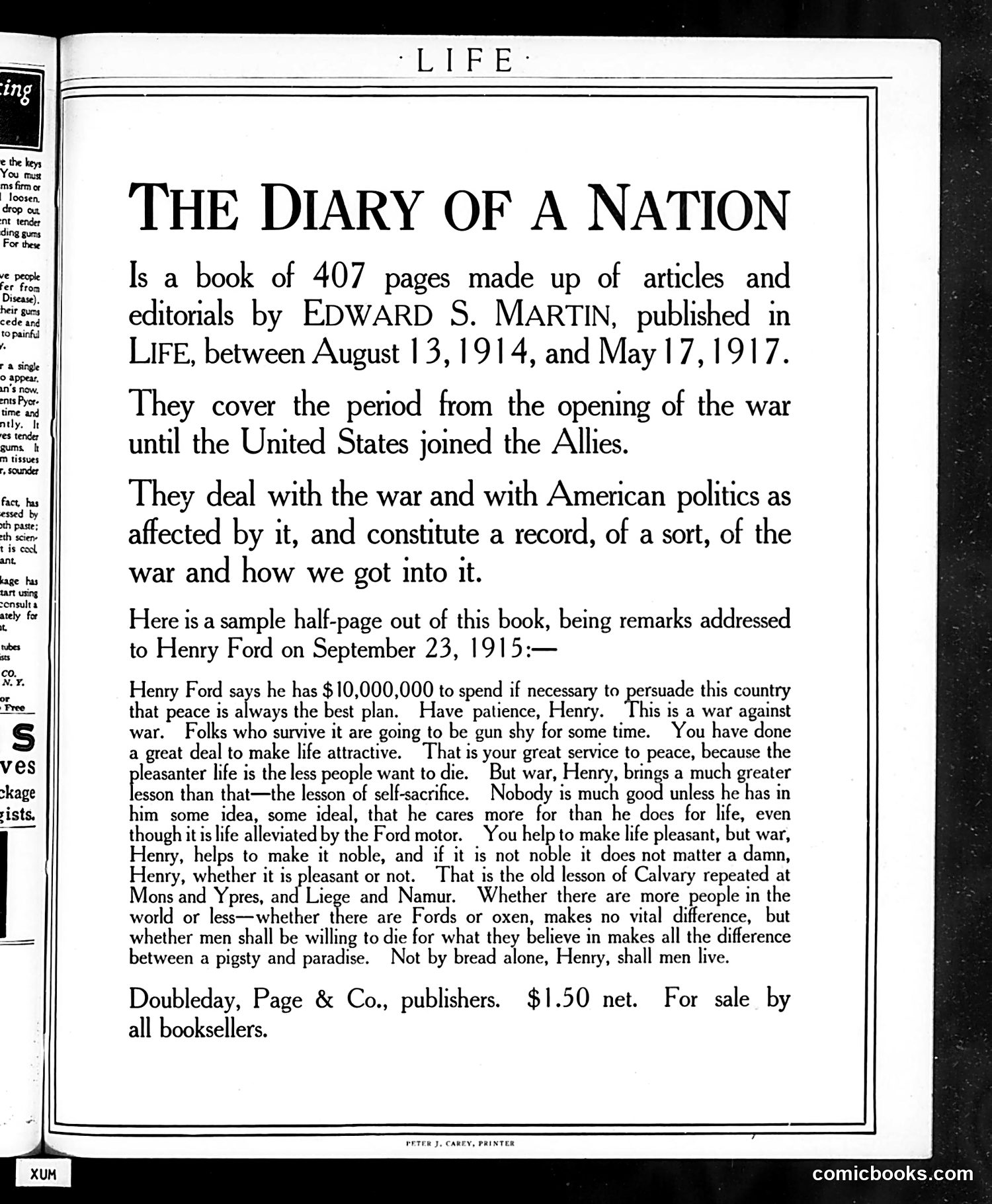
This page advertises Edward S. Martin's book *The Diary of a Nation*, a collection of editorials published in *Life* magazine from August 1914 to May 1917—covering World War I's opening until America entered. The excerpt shown is a 1915 editorial addressing **Henry Ford**, the automobile magnate who had publicly advocated for peace and offered to spend $10 million promoting pacifism. Martin's response is satirical critique: he acknowledges Ford's good works making life pleasant, but argues war teaches necessary lessons about **self-sacrifice and ideals worth dying for**—spiritual nobility beyond material comfort. Martin invokes World War I battles (Mons, Ypres, Liège, Namur) and religious imagery (Calvary) to argue that mere comfort and consumption (symbolized by "Fords or oxen") matter less than whether people possess convictions worth dying for. The message: Ford's pacifism, however well-intentioned, misses war's role in elevating human purpose beyond mere survival and pleasure. This reflects pre-1917 American debate over intervention.
📄 Transcribed text from this page (OCR, searchable)
Machine-transcribed from the original scan — historical spelling and the odd misread are preserved.
XUM LIFE: THE DIARY OF A NATION Is a book of 407 pages made up of articles and editorials by EDWARD S. MARTIN, published in LIFE, between August 13,1914, and May 17,1917. They cover the period from the opening of the war until the United States joined the Allies. They deal with the war and with American politics as affected by it, and constitute a record, of a sort, of the war and how we got into it. Here is a sample half-page out of this book, being remarks addressed to Henry Ford on September 23, 1915:— Henry Ford says he has $10,000,000 to spend if necessary to persuade this country that peace is always the best plan. lave patience, Henry. ‘This is a war against war. Folks who survive it are going to be gun shy for some time. You have done a great deal to make life attractive. That is your great service to peace, because the leasanter life is the less people want to die. But war, Henry, brings a much greater on than that—the lesson of self-sacrifice. Nobody is much good unless he has in him some idea, some ideal, that he cares more for than he does for life, even though itis life alleviated by the Ford motor. You help to make life pleasant, but war, Henry, helps to make it noble, and if it is not noble it does not matter a damn, Henry, whether it is pleasant or not. That is the old lesson of Calvary repeated at Mons and Ypres, and Liege and Namur. Whether there are more people in the world or less—whether there are Fords or oxen, makes no vital difference, but whether men shall be willing to die for what they believe in makes all the difference between a pigsty and paradise. Not by bread alone, Henry, shall men live. Doubleday, Page & Co., publishers. $1.50 net. For sale by all booksellers. comicbooks.com