
Life, 1918-03-21 · page 23 of 56
Life — March 21, 1918 — page 23: what you’re looking at
What you’re looking at
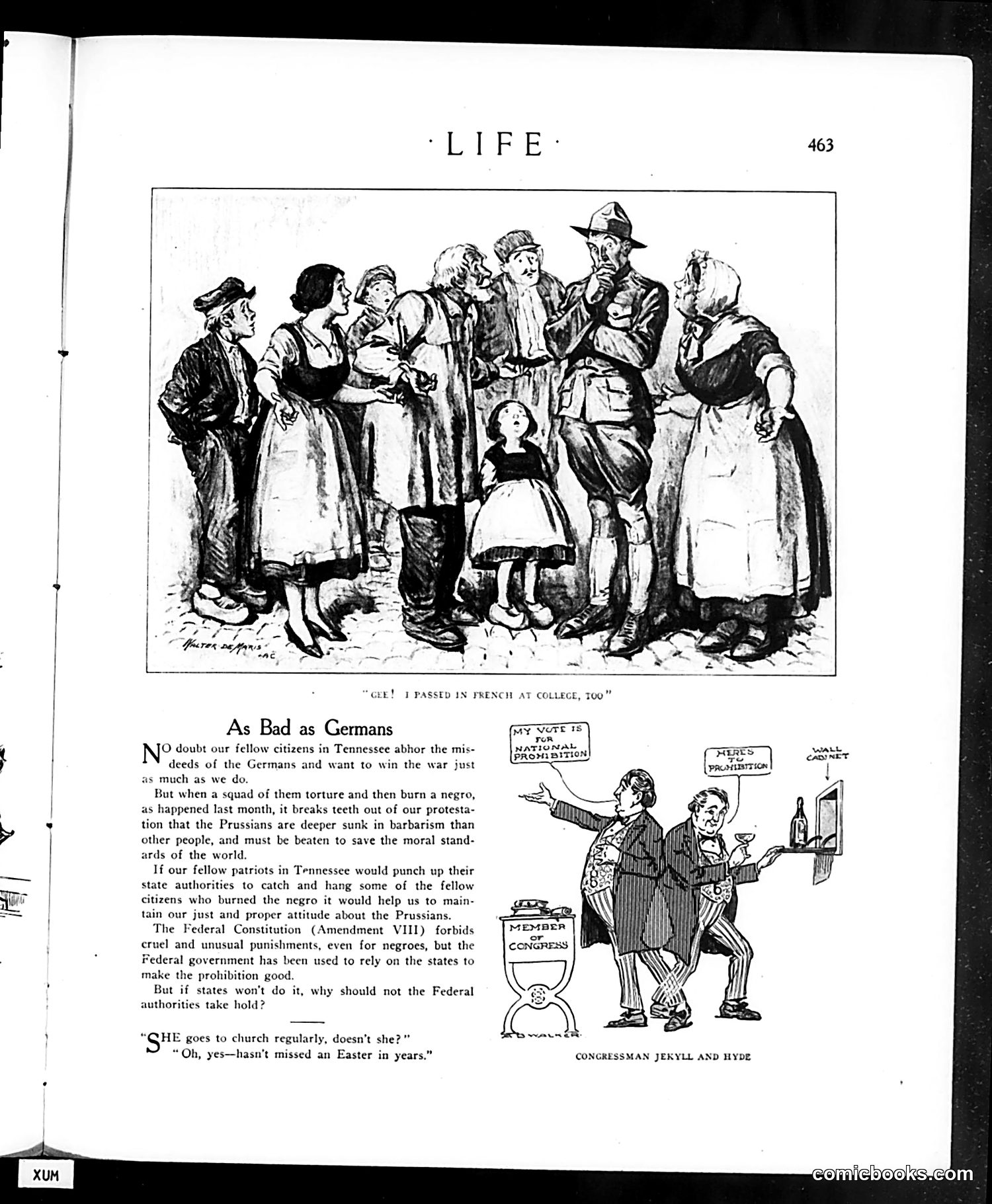
This page criticizes American hypocrisy regarding moral authority. The main article, "As Bad as Germans," addresses a lynching in Tennessee (referenced as occurring "last month"). It argues that while Americans condemn German brutality in WWI, American citizens who torture and burn a Black person undermine American moral claims to superiority. The author calls for federal intervention when states fail to enforce the Constitutional prohibition on cruel punishment. The bottom cartoon, "Congressman Jekyll and Hyde," satirizes a politician who publicly advocates for national Prohibition while privately consuming alcohol—shown with bottles and a wall cabinet. The labels "Member of Congress," "My Vote is for National Prohibition," and "Hard Wall Prohibition" emphasize the gap between public morality and private behavior. Together, these pieces expose American double standards: condemning foreign barbarism while permitting domestic racial violence, and championing moral reform while ignoring personal hypocrisy. This reflects Life magazine's progressive stance on racial justice and political accountability during the WWI era.
📄 Transcribed text from this page (OCR, searchable)
Machine-transcribed from the original scan — historical spelling and the odd misread are preserved.
“ore! As Bad as Germans ‘O doubt our fellow citizens in Tennessee abhor the mis- deeds of the Germans and want to win the war just as much as we do. But when a squad of them torture and then burn a negro, as happened last month, it breaks teeth out of our protesta- tion that the Prussians are deeper sunk in barbarism than other people, and must be beaten to save the moral stand- ards of the world. If our fellow patriots in Tennessee would punch up their state authorities to catch and hang some of the fellow citizens who burned the negro it would help us to main- tain our just and proper attitude about the Prussians. The Federal Constitution (Amendment VIII) forbids cruel and unusual punishments, even for negroes, but the Federal government has been used to rely on the states to make the prohibition good. But if states won't do it, why should not the Federal authorities take hold? “QHE goes to church regularly, doesn’t she?” “Oh, yes—hasn't missed an Easter in years.” I PASSED IN FRENCH AT COLLEGE, 100” NATIONAL PROMBITION CONGRESSMAN JEKYLL AND HYDE