
Life, 1918-01-24 · page 12 of 40
Life — January 24, 1918 — page 12: what you’re looking at
What you’re looking at
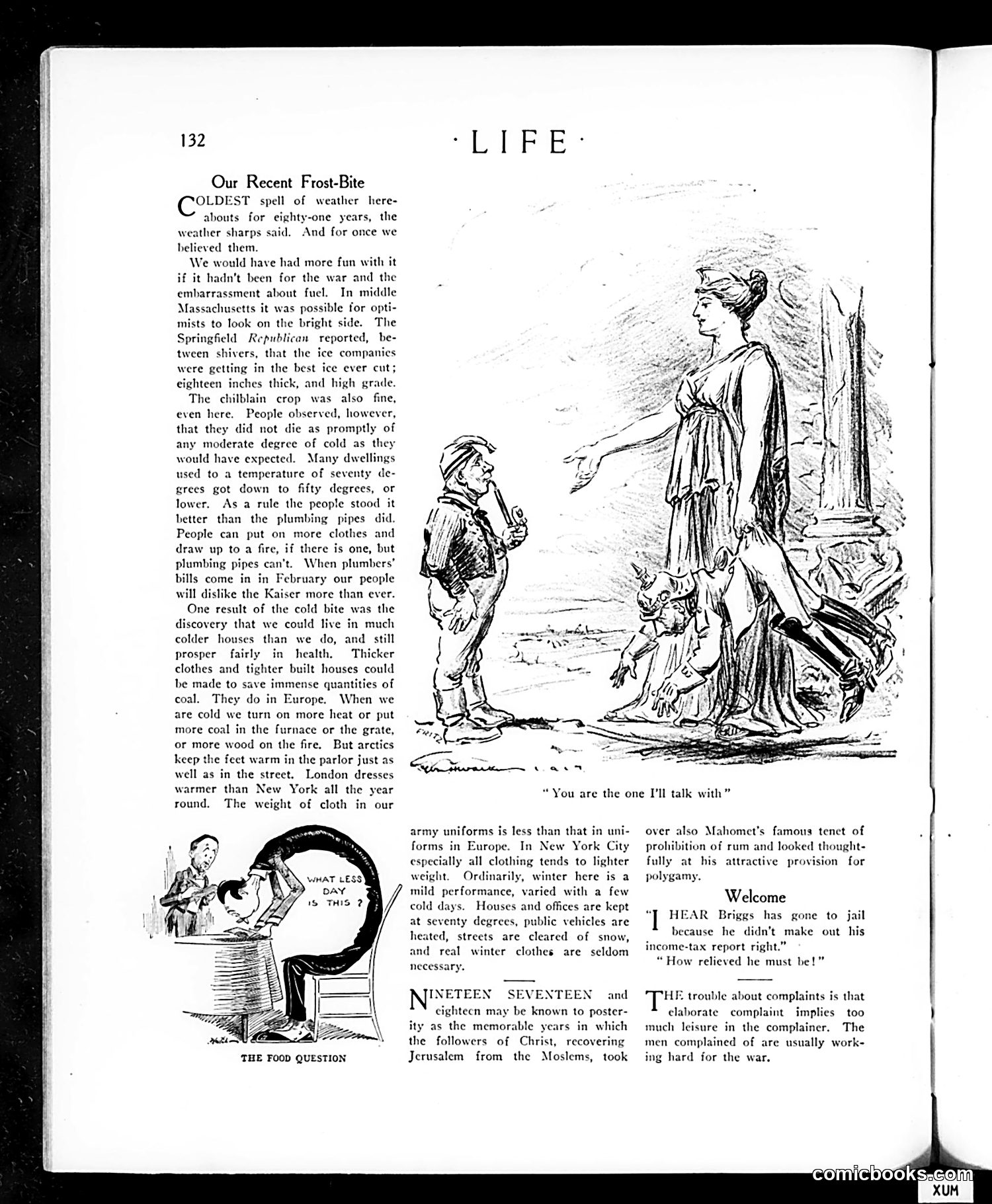
This page contains three distinct pieces: 1. **"Our Recent Frost-Bite"** - An editorial essay about an unusually severe cold spell in Massachusetts, noting it was the coldest in 81 years. The piece humorously observes that despite hardship, Americans could live in colder conditions than Europeans if necessary. 2. **"The Food Question"** - A small cartoon showing a person at a desk asking "What less do I eat this?" - a reference to wartime food rationing or scarcity (likely WWI era, given contextual references to "the war"). 3. **"Welcome"** and **"Hear Brings has gone to jail"** - Brief satirical notes about someone failing to file income-tax reports and complaints about wartime hardships. The overall tone reflects American home-front experiences during wartime, mixing humor with social commentary about resource management and citizen complaints.
📄 Transcribed text from this page (OCR, searchable)
Machine-transcribed from the original scan — historical spelling and the odd misread are preserved.
132 IOP - Our Recent Frost-Bite OLDEST spell of weather here- abouts for eighty-one years, the weather sharps said. And for once we believed them. We would have had more fun with it if it hadn't been for the war and the embarrassment about fuel. In middle Massachusetts it was possible for opti- mists to look on the bright side. The Springfield Republican reported, be- tween shivers, that the ice companies were getting in the best ice ever cut; eighteen inches thick, and high grade. The chilblain crop was also fine, even here. People observed, however, that they did not die as promptly of any moderate degree of cold as they would have expected. Many dwellings used to a temperature of seventy de- grees got down to fifty degrees, or lower, As a rule the people stood it hetter than the plumbing pipes did. People can put on more clothes and draw up to a fire, if there is one, but plumbing pipes can’t. When plumbers’ bills come in in February our people will dislike the Kaiser more than ever. One result of the cold bite was the discovery that we could live in much colder houses than we do, and. still prosper fairly in health, Thicker clothes and tighter built houses could be made to save immense quantities of coal. They do in Europe. When we are cold we turn on more heat or put more coal in the furnace or the grate, or more wood on the fire. But arctics keep the feet warm in the parlor just as well as in the street. London dresses warmer than New York all the year round. The weight of cloth in our army uniforms is less than that in uni- forms in Europe. In New York City especially all clothing tends to lighter weight. Ordinarily, winter here is a mild performance, varied with a few cold days. Houses and offices are kept at seventy degrees, public vehicles are heated, streets are cleared of snow, and real winter clothes are seldom necessary. WHAT LESS DAY 1S THIS 2 INETEEN SEVENTEEN and ightecn may be known to poster- ity as the memorable years in which the followers of Christ, recovering Jerusalem from the Moslems, took THE FOOD QUESTION “You are the one I'll talk with” over also Mahomet’s famous tenet of prohibition of rum and looked thought- fully at his attractive pre for polygamy. Welcome HEAR Briggs has gone to jail because he didn’t make out his income-tax report right.” “How relieved he must be!” HE trouble about complaints is that elaborate complaint implies too much leisure in the complainer. The men complained of are usually work- ing hard for the war.