
Life, 1918-01-24 · page 10 of 40
Life — January 24, 1918 — page 10: what you’re looking at
What you’re looking at
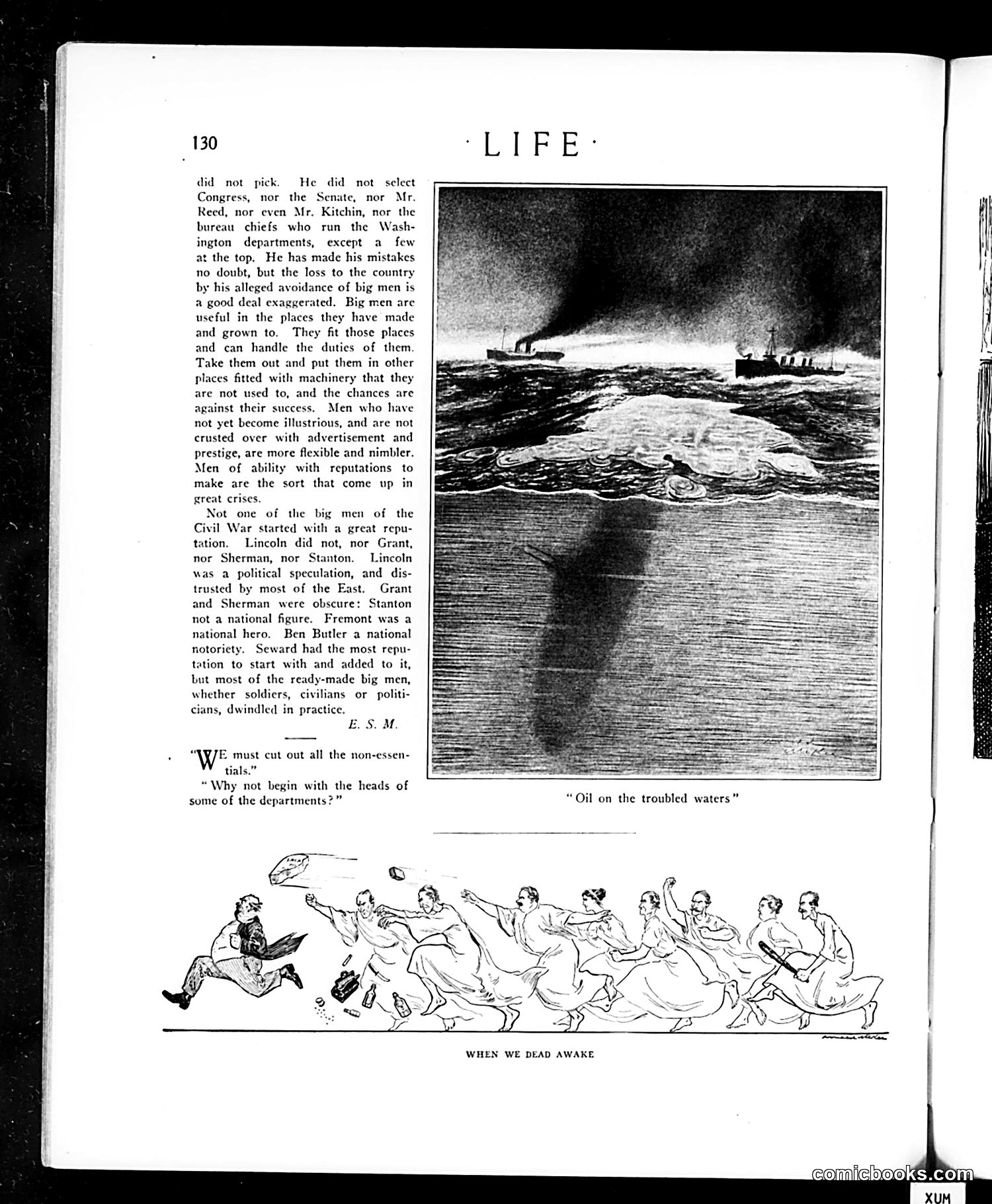
The page critiques President Wilson's cabinet selections and administrative choices. The main text argues Wilson failed to appoint experienced "big men" to key positions—he avoided selecting major political figures like those who led the Civil War (Lincoln, Grant, Sherman). Instead, Wilson chose less-established figures, which the author suggests makes government less effective. The political cartoon "When We Dead Awake" (bottom) depicts figures in a tug-of-war, likely representing competing political factions or interests pulling at the government during Wilson's administration. The ship photograph titled "Oil on the troubled waters" (top right) appears metaphorical—illustrating attempts to calm turbulent political or economic conditions through governmental action. The overall message: Wilson's cabinet lacked sufficient gravitas to handle national crises effectively.
📄 Transcribed text from this page (OCR, searchable)
Machine-transcribed from the original scan — historical spelling and the odd misread are preserved.
130 did not pick. He did not. select Congress, nor the Senate, nor Mr. Reed, nor even Mr. Kitchin, nor the bureau chiefs who run the Wash- ington departments, except a few at the top. He has made his mistakes no doubt, but the loss to the country by his alleged avoidance of big men is a good deal exaggerated. Big men are useful in the places they have made and grown to. They fit those places and can handle the duties of them: Take them out and put them in other places fitted with machinery that they are not used to, and the chances are against their success. Men who ha not yet become illustrious, and are not crusted over with advertisement and prestige, are more flexible and nimbler. Men of ability with reputations to make are the sort that come up in great crises. Not one of the big men of the Civil War started with a great repu- tation. Lincoln did not, nor Grant, nor Sherman, nor Stanton. Lincoln was a political speculation, and dis- trusted by most of the East. Grant and Sherman were obscure: Stanton not a national figure. Fremont was a national hero. Ben Butler a national notoriety. Seward had the most repu- tation to start with and added to it, but most of the ready-made big men, whether soldiers, civilians or politi- cians, dwindled in practice. M 'W' must cut out all the non-essen- tials.” “Why not begin with the heads of some of the departments?” “Oil on the troubled waters WHEN WE DEAD AWAKE