
Life, 1917-11-22 · page 18 of 44
Life — November 22, 1917 — page 18: what you’re looking at
What you’re looking at
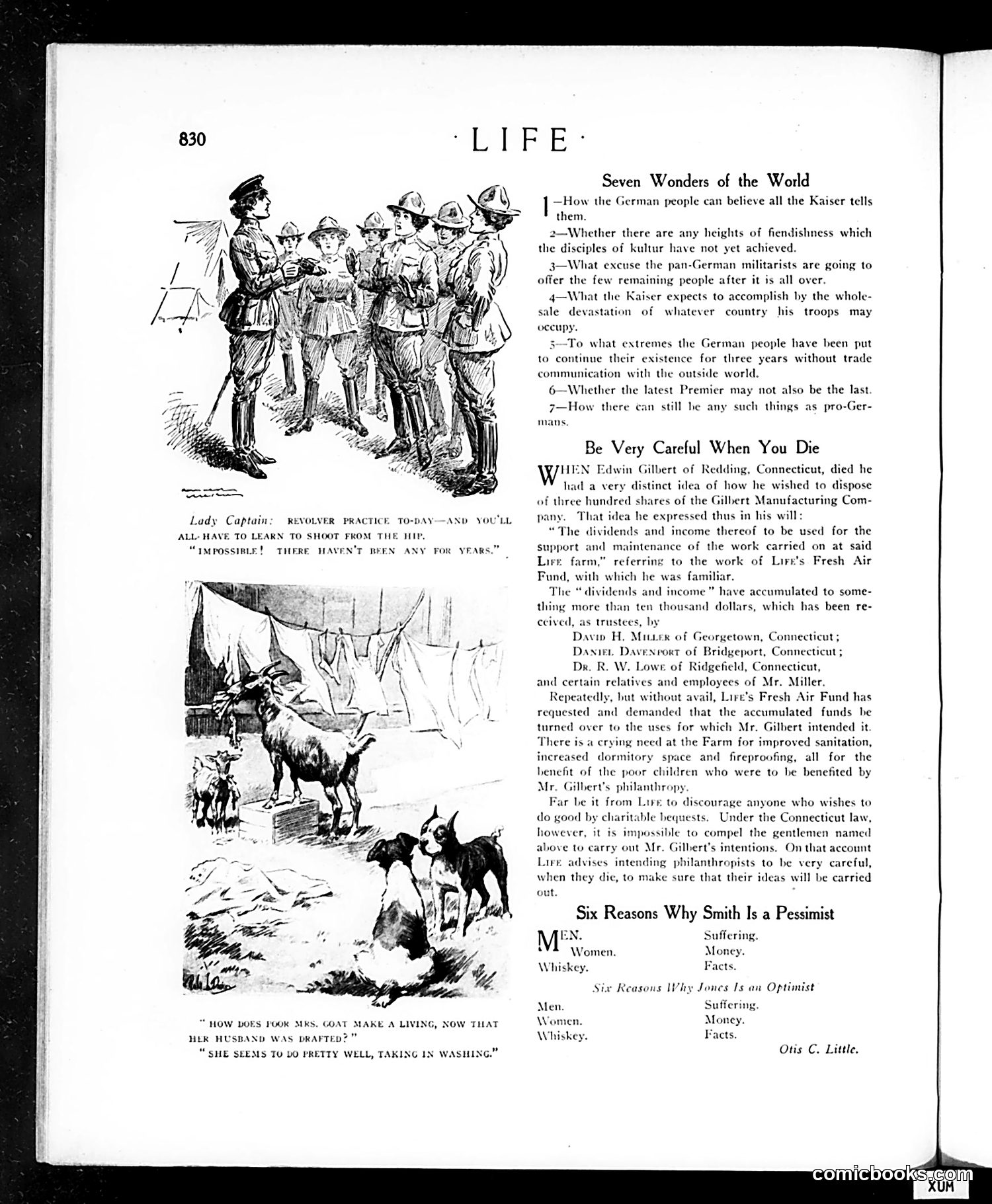
This WWI-era satirical page contains three distinct pieces: ## Top Cartoon A female officer conducting "revolver practice" is told her volunteers "haven't been any for years"—satirizing women's newly active military roles during the war. The bottom cartoon shows a widow supporting herself through laundry work after her husband was drafted, highlighting the economic hardship war imposed on civilian families. ## "Seven Wonders of the World" A list mocking German leadership and culture during WWI: the Kaiser's propaganda power, German militarism's cruelty, and the population's tolerance of wartime suffering. This reflects American wartime hostility toward Germany. ## "Be Very Careful When You Die" A cautionary tale about Edwin Gilbert's will: he left Manufacturing Company dividends to Life's Fresh Air Fund (a charitable organization), but trustees withheld the accumulated ten thousand dollars. The article warns philanthropists to ensure their charitable intentions are legally enforceable—a dig at Connecticut law and the trustees' apparent obstruction. The humor pieces at bottom contrast Smith (pessimist) and Jones (optimist) through identical lists: both cite suffering, women, money, and whiskey—suggesting pessimism and optimism are arbitrary distinctions.
📄 Transcribed text from this page (OCR, searchable)
Machine-transcribed from the original scan — historical spelling and the odd misread are preserved.
"EE Lady Captain: REVOLVER PRACTICE TO-DAY ALL- HAVE TO LEARN TO SHOOT FROM THE HIP, “IMPOSSIBLE! TITERE HAVEN'T REEN ANY FOR YEARS.” “HOW DOES POOK MKS. GOAT MAKE A LIVING, NOW THAT MEK HUSBAND WAS DRAFTED?” “ SHE SEEMS TU DO PRETTY WELL, TAKING IN WASHING.” AND YOU'LL Seven Wonders of the World —How the German people can believe all the Kaiser tells them, 2—Whether there are any heights of fiendishness which the disciples of kultur have not yet achieved. 3—What excuse the pan-German militarists are going to offer the few remaining people after it is all over. 4—What the Kaiser expects to accomplish by the whole- sale devastation of whatever country his troops may occupy. 3-—-To what extremes the German people have been put to continue their existence for three years without trade communication with the outside world, 6—Whether the latest Premier may not also be the last 7—How there can still he any such things as pro-Ger- mans Be Very Careful When You Die HEN Edwin Gilbert of Redding, Connecticut, died he had a very distinct idea of how he wished to dispose of three hundred shares of the Gilbert Manufacturing Com- ve That idea he expressed thus in his will: “The dividends and income thereof to be used for the support and maintenance of the work carried on at said Lire farm,” referring to the work of Lirr’s Fresh Air Fund, with which he was familiar. The “dividends and income” have accumulated to some- thing more than ten thousand dollars, which has been re- ceived, as trustees, by Davin H, Miter of rgetown, Connecticut ; Daniet Davenrort of Bridgeport, Connecticut; Dr. R. W. Lowe of Ridgefield, Connecticut, and certain relatives and employees of Mr. Miller, Repeatedly, but without avail, Lire's Fresh Air Fund has requested and demanded that the accumulated funds be turned over to the uses for which Mr. Gilbert intended it There is a crying need at the Farm for improved sanitation, increased dormitory space and fireproofing, all for the benefit of the poor children who were to be benefited by Mr. Gilbert's philanthropy ‘ar be it from Lire to discourage anyone who wishes to do good by charitable bequests, Under the Connecticut law, however, it is impossible to compel the gentlemen named above to carry out Mr. Gilbert's intentions. On that account Lire advises intending philanthropists to be very careful, when they die, to make sure that their ideas will be carried out. Six Reasons Why Smith Is a Pessimist IN. Suffering. Women. Money. Whiskey. acts. s Is an Optimist Men. Suffering. Women Money. Whiskey. Facts. ‘ Six Keasous Wh Otis C. Little,