
Life, 1917-10-18 · page 14 of 40
Life — October 18, 1917 — page 14: what you’re looking at
What you’re looking at
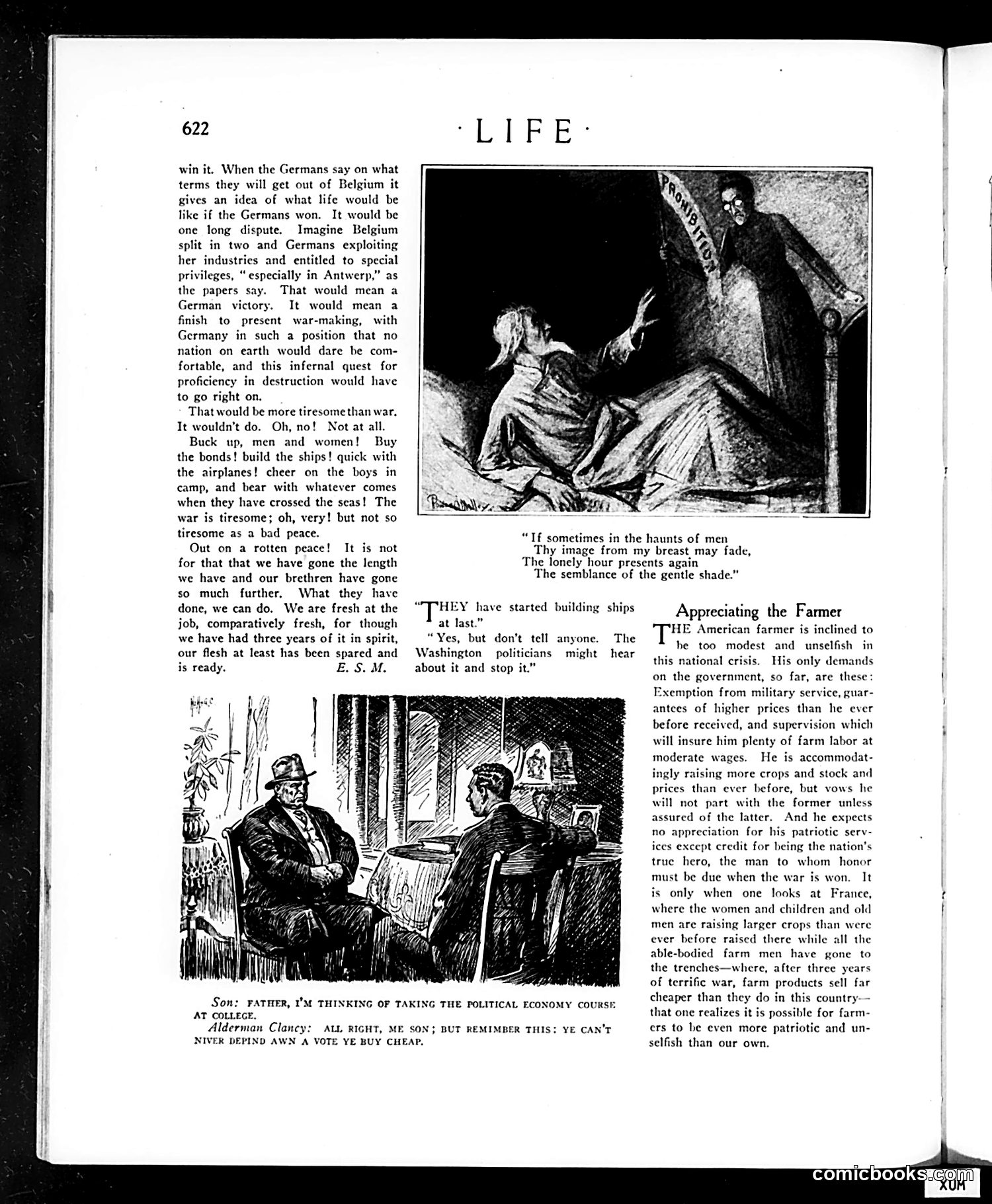
This page contains two distinct cartoons. The upper illustration depicts a classical allegorical figure, likely representing a nation or ideal, with accompanying verse about memory and gentleness—likely symbolic commentary on wartime sacrifice. The lower cartoon shows two men in conversation, labeled as "Alderman Clancy" and "Son." The son mentions taking a political economy course at college; Clancy responds: "All right, me son; but remember this: ye can't niver depend awn a vote ye buy cheap." This satirizes working-class political corruption—specifically, the practice of buying votes with minimal expenditure. The Irish names and dialect suggest commentary on urban machine politics and immigrant communities vulnerable to such manipulation. The joke critiques both voter corruptibility and the cheapness of those attempting to purchase political influence.
📄 Transcribed text from this page (OCR, searchable)
Machine-transcribed from the original scan — historical spelling and the odd misread are preserved.
622 win it. When the Germans say on what terms they will get out of Belgium it gives an idea of what life would be like if the Germans won. It would be one long dispute. Imagine Belgium split in two and Germans exploiting her industries and entitled to special privileges, “especially in Antwery the papers say. That would mean a German victory. It would mean a finish to present war-making, with Germany in such a position that no nation on earth would dare be com- fortable, and this infernal quest for proficiency in destruction would have to go right on. That would be more tiresome than war, It wouldn't do. Oh, no! Not at all. Buck up, men and women! Buy the bonds! build the ships! quick with the airplanes! cheer on the boys in camp, and bear with whatever comes when they have crossed the seas! The war is tiresome; oh, very! but not so tiresome as a bad peace. Out on a rotten peace! It is not for that that we have gone the length we have and our brethren have gone so much further. What they have done, we can do. We are fresh at the job, comparatively fresh, for though we have had three years of it in spirit, our flesh at least has been spared and is ready. E.S.M. Son: FATHER, I'M THINKING OF TAKING THE POLITICAL ECONOMY COURSE AT COLLEGE. Alderman Clancy: ALL RIGHT, ME SON; BUT REMIMBER THIS: YE CAN'T NIVER DEPIND AWN A VOTE YE BUY CHEAP. “Lf sometimes in the haunts of men Thy image from my breast, may fade, The lonely hour presents again The semblance of the gentle shade.” “THEY have started building ships at last.” “Yes, but don’t tell anyone. The Washington politicians might hear about it and stop it.” Appreciating the Farmer HE American farmer is inclined to he too modest and unselfish in this national crisis. His only demands on the government, so far, are these: mption from military service, guar- antces of higher prices than he ever before received, and supervision which will insure him plenty of farm labor at moderate wages. He is accommodat- ingly raising more crops and stock and prices than ever before, but vows he will not part with the former unless assured of the latter. And he expects no appreciation for his patriotic serv- ices except credit for being the nation’s true hero, the man to whom honor must be due when the war is won, It is only when one looks at France, where the women and children and old men are raising larger crops than were ever before raised there while all the able-bodied farm men have gone to the trenches—where, after three rs of terrific war, farm products sell far cheaper than they do in this country: that one realizes it is possible for farm- ers to he even more patriotic and un- selfish than our own.