
Life, 1917-10-04 · page 18 of 44
Life — October 4, 1917 — page 18: what you’re looking at
What you’re looking at
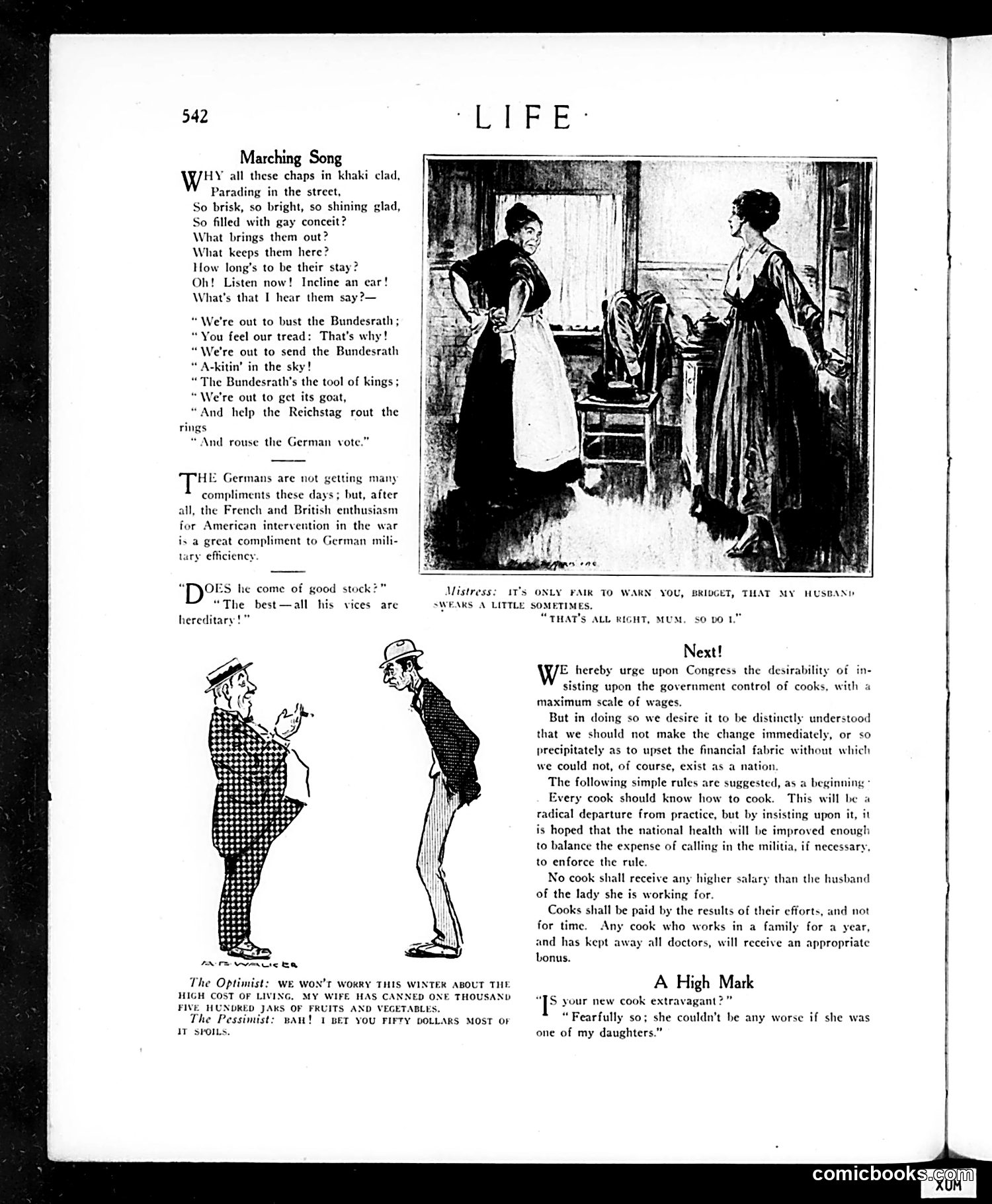
This WWI-era satirical page contains three distinct items: **"Marching Song"** (top left): A poem mocking German military ambitions, featuring soldiers in khaki singing about destroying the Bundesrath (the upper house of the German parliament). The satire ridicules German pride and imperial structure, suggesting their military goals are internally contradictory—attacking their own governmental institutions. **Two cartoons** (bottom left): An "Optimist" and "Pessimist" debate war-time food costs and preservation. The humor plays on class anxieties about inflation and domestic management during wartime rationing. **"Next!" section** (right): Satirical commentary proposing Congress regulate cooks with wage controls and performance standards. This absurdist piece mocks both labor regulation debates and the "servant problem"—the era's widespread complaints about domestic help quality and cost. The closing anecdote jokes that good cooks are as rare as good daughters, poking fun at middle-class domestic frustrations during wartime economic strain. The page reflects American attitudes toward the war, German politics, and homefront economic anxieties circa 1917-1918.
📄 Transcribed text from this page (OCR, searchable)
Machine-transcribed from the original scan — historical spelling and the odd misread are preserved.
542 Marching Song HY all these chaps in khaki clad, Parading in the street, So brisk, so bright, so shining glad, So filled with gay conceit? What brings them out? What keeps them here? How long’s to be their stay? Oh! Listen now! Incline an car! What's that I hear them say?— “We're out to bust the Bundesratl “You feel our tread: That's why! “We' ut to send the Bundesrath in the sky! “The Bundesrath’s the tool of kings ; “We're out to get its goat, “And help the Reichstag rout the rings “And rouse the German vote.” THe Germans are not getting many compliments these days; but, after all, the French and British enthusiasm or American intervention in the war is a great compliment to German mili- tary efficiency he come of good stock ‘D° hereditary!” The Optimis: HIGH COST OF LIVING, MY WIFE HAS C FIVE HUNDRED JAKS OF FRUITS AND V The Pessimist: AT SPOILS. GETABLES. E WON'T WORRY THIS WINTER ABOUT THE ED ONE THOUSAND BAH! 1 BET YOU FIFTY DOLLARS MOST OF IT’S ONLY FAIK 10 WARN YOU, BRIDGET, THAT MY HUSBAND The best—all his vices are SWEAKS A LITTLE SOMETIM “THAT'S ALL RIGHT, MUM, SO DO 1.” Next! E hereby urge upon Congress the desirability of in- sisting upon the government control of cooks, with a maximum scale of wages. But in doing so we desire it to be distinctly understood that we should not make the change immediately, or so precipitately as to upset the financial fabric without which we could not, of course, exist as a nation. The following simple rules are suggested, as a beginning ° Every cook should know how to cook. This will be a radical departure from practice, but by insisting upon it, it is hoped that the national health will be improved enough to balance the expense of calling in the militia, if necessary, to enforce the rule. No cook shall receive any higher salary than the husband of the lady she is working for. Cooks shall be paid by the results of their efforts, and not for time. Any cook who works in a family for a year, and has kept away all doctors, will receive an appropriate bonus. A High Mark S your new cook extravagant “Fearfully so; she couldn't be any worse if she was one of my daughters.” comicbook seq