
Life, 1917-08-23 · page 15 of 40
Life — August 23, 1917 — page 15: what you’re looking at
What you’re looking at
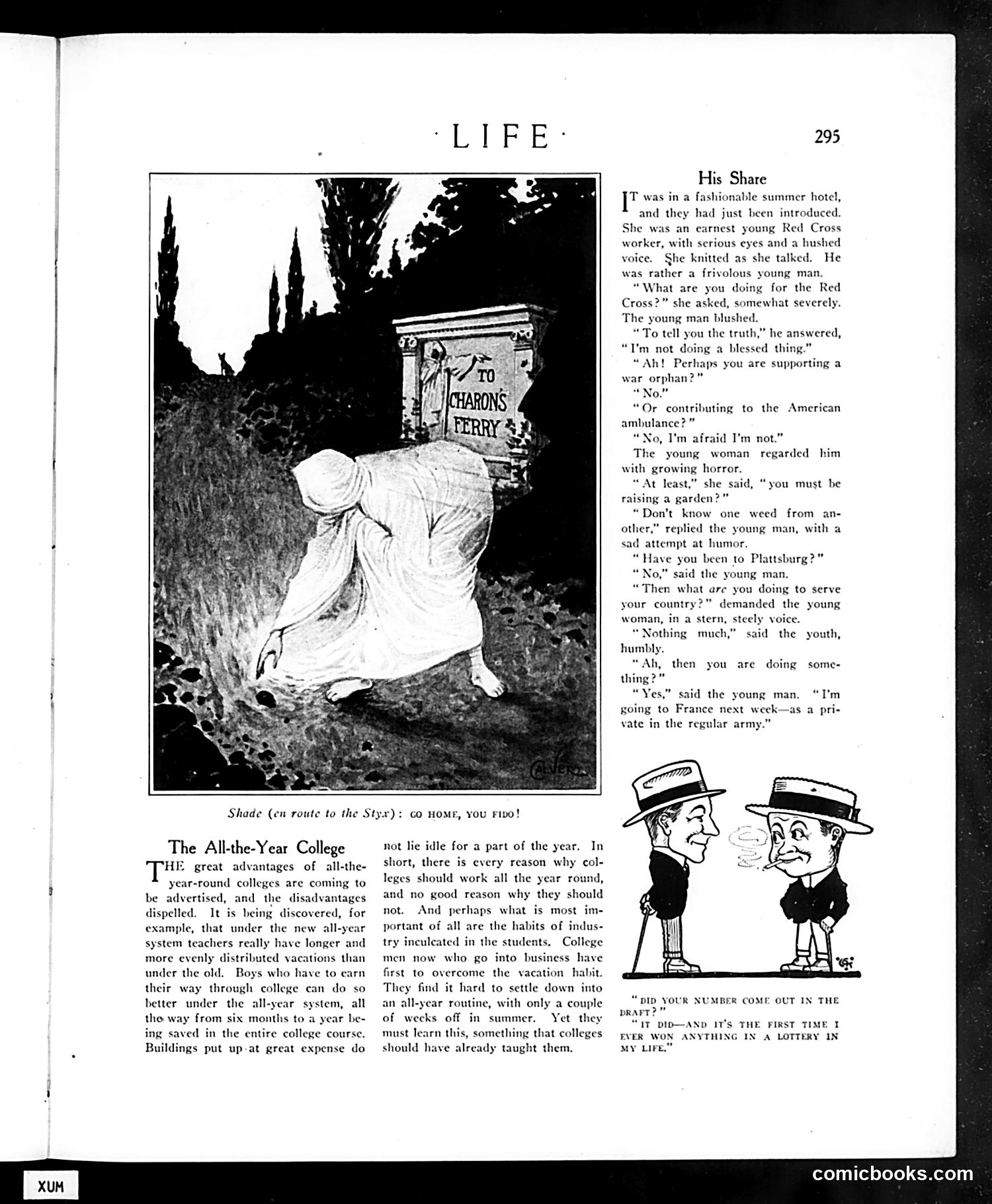
The main illustration depicts a woman (identified as a Red Cross worker by the text) kneeling in despair beside a sign reading "TO CHARON'S FERRY"—a classical reference to the mythological ferryman of the dead. This visualizes the conversation's subtext: a young man admits he's doing nothing for the war effort and is simply enlisting as a regular soldier, disappointing the patriotic woman who expected more substantial sacrifice or service. The cartoon critiques young men's perceived lack of patriotic commitment during WWI. The "Charon's Ferry" reference suggests death awaits—making the man's casual attitude toward military service appear callous or cowardly to civilian observers, particularly women involved in organized relief work.
📄 Transcribed text from this page (OCR, searchable)
Machine-transcribed from the original scan — historical spelling and the odd misread are preserved.
Shade (en route to the Styx): co Home, you Fivo! The All-the-Year College HE great advantages of all-the- year-round colleges are coming to be advertised, and the disadvantages dispelled. It is being discovered, for example, that under the new all-year system teachers really have longer and more evenly distributed vacations than under the old. Boys who have to earn their way through college can do so better under the all-year system, all the way from six months to a year be- ing saved in the entire college course. Buildings put up-at great expense do not lie idle for a part of the year. In short, there is every reason why col- leges should work all the year round, and no good reason why they should not. And perhaps what is most im- portant of all are the habits of indu: try inculcated in the students, College men now who go into business have first to overcome the vacation habit. They find it hard to settle down into an all-year routine, with only a couple of weeks off in summer. Yet they must learn this, something that colleges should have already taught them. 295 His Share T was in a fashionable summer hotel, and they had just been introduced. She was an earnest young Red Cross worker, with serious eyes and a hushed voice. She knitted as she talked. He was rather a frivolous young man. “What are you doing for the Red ross?” she asked, somewhat severely. The young man blushed. “To tell you the truth,” he answered, “T'm not doing a blessed thing.” “Ah! Perhaps you are supporting a war orphan?” No.” “Or contributing to the American ambulance?” “No, I'm afraid I'm not.” The young woman regarded him with growing horror. “At least,” she said, “you must be raising a garden? “Don’t know one weed from an- other,” replied the young man, with a sad attempt at humor. “Have you been to Plattsburg?” “No,” said the young man, “Then what are you doing to serve your country?” demanded the young woman, in a stern, steely voice. “Nothing much,” said the youth, humbly. “ Ah, thing? “Yes,” said the young man. “I'm going to France next week—as a pri- vate in the regular army.” then you are doing some- “DID YOUR NUMBER COME OUT IN THE DRAFT?" “IT DID—AND 11's THE FIRST TIME I EVER WON ANYTHING IN A LOTTERY IN MY LIFE.” comicbooks.com