
Life, 1917-04-05 · page 21 of 70
Life — April 5, 1917 — page 21: what you’re looking at
What you’re looking at
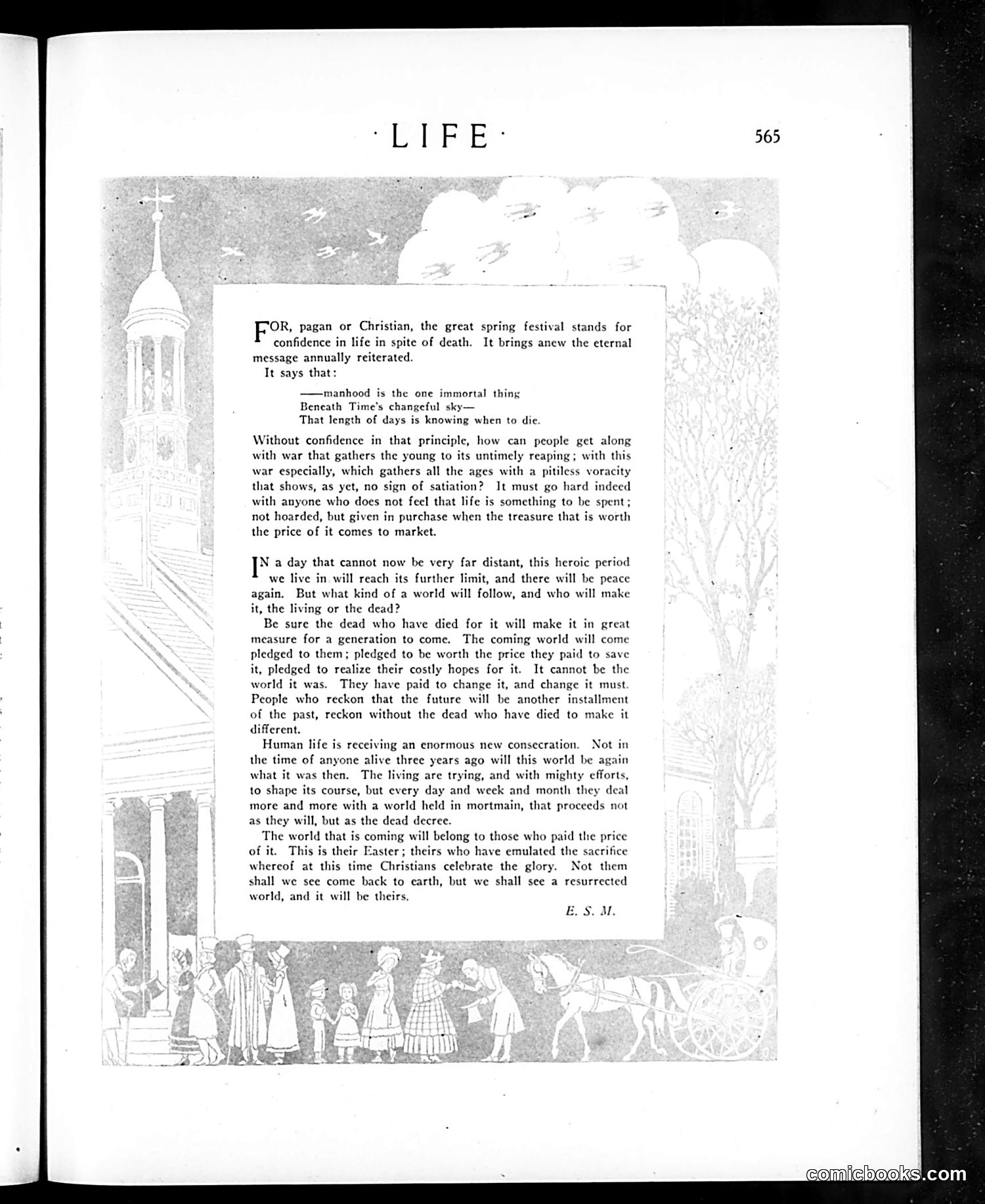
This is an Easter editorial essay (signed E.S.M.) from Life magazine, likely published during World War I, addressing spring festival traditions as symbols of hope despite wartime death. The text argues that Easter—for both pagan and Christian traditions—represents confidence in life persisting beyond death. However, the author pivots to a more somber point: the current war is indiscriminately harvesting young and old with "pitiless voracity." The central argument is that the dead who sacrifice themselves will spiritually shape the postwar world. The living must honor their sacrifice by building a fundamentally transformed society—not merely restoring what existed before. The essay presents the fallen as a moral force ("the dead decree") that will guide humanity's future. The decorative border illustrations show a church steeple and civilians, reinforcing themes of community and faith. This is propagandistic rhetoric: war sacrifice is reframed as sacred duty, and the resulting world becomes the soldiers' "Easter"—their spiritual resurrection through posterity's obligations to them.
📄 Transcribed text from this page (OCR, searchable)
Machine-transcribed from the original scan — historical spelling and the odd misread are preserved.
'OR, pagan or Christian, the great spring festival stands for confidence in life in spite of death. It brings anew the eternal message annually reiterated. It says that: ——manhood is the one immortal thing Beneath Time's changeful sky— That length of days is knowing when to die Without confidence in that principle, how can people get along with war that gathers the young to its untimely reaping; with this war especially, which gathers all the ages with a pitiless voracity that shows, as yet, no sign of satiation? It must go hard indeed with anyone who does not feel that life is something to be spent; not hoarded, but given in purchase when the treasure that is worth the price of it comes to market. IX a day that cannot now be very far distant, this heroic period we live in will reach its further limit, and there will be peace again. But what kind of a world will follow, and who will make it, the living or the dead? Be sure the dead who have died for it will make it in great measure for a generation to come. The coming world will come pledged to them; pledged to be worth the price they paid to save it, pledged to realize their costly hopes for it. It cannot be the world it was. They have paid to change it, and change it must People who reckon that the future will be another installment of the past, reckon without the dead who have died to make it different. Human life is receiving an enormous new consecration. Not in the time of anyone alive three years ago will this world be again what it was then. The living are trying, and with mighty efforts, to shape its course, but every day and week and month they deal more and more with a world held in mortmain, that proceeds not as they will, but as the dead decree. The world that is coming will belong to those who paid the price of it. This is their Easter; theirs who have emulated the sacrifice whereof at this time Christians celebrate the glory. Not them shall we see come back to earth, but we shall see a resurrected world, and it will be theirs. E. S. M.