
Life, 1917-02-22 · page 11 of 42
Life — February 22, 1917 — page 11: what you’re looking at
What you’re looking at
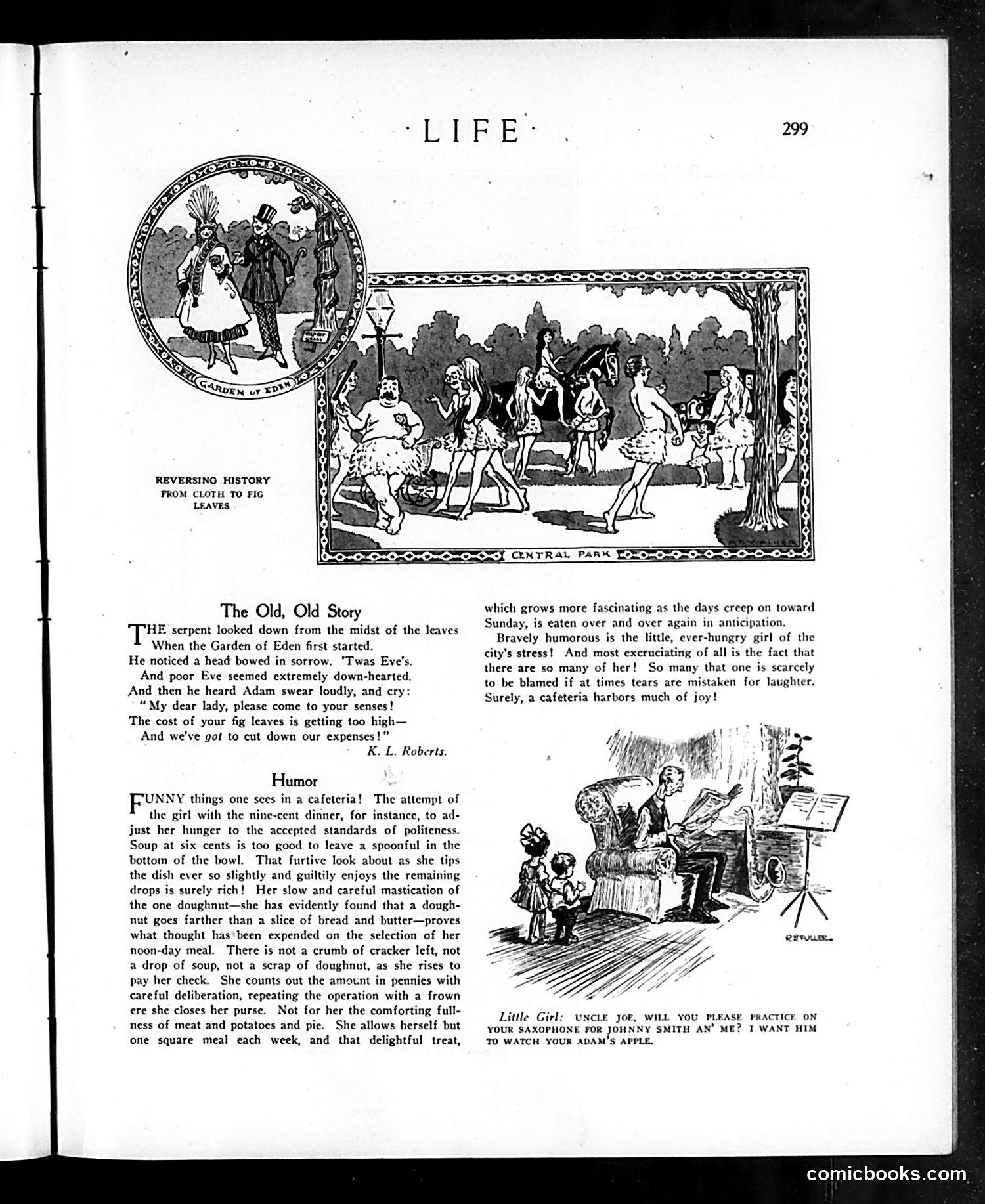
This page contains two distinct pieces of social satire: **"The Old, Old Story"** (top) depicts the Garden of Eden with a modern twist—Eve complains to Adam that their expenses are too high and they must "cut down our expenses." The satire mocks contemporary marital dynamics, suggesting that even humanity's original couple faced nagging financial pressures, framing modern economic anxiety as timeless domestic conflict. **"Humor"** (middle section) humorously catalogs a cafeteria girl's meticulous penny-counting and careful meal selection, illustrating Depression-era or post-war economic scarcity. She obsesses over every cent spent on a modest lunch. **The bottom illustration** shows a child asking "Uncle Joe" to practice saxophone while watching her father's apple—domestic humor about noise and parental annoyance with children's musical practice.
📄 Transcribed text from this page (OCR, searchable)
Machine-transcribed from the original scan — historical spelling and the odd misread are preserved.
REVERSING HISTORY PROM CLOTH TO FIG LEAVES The Old, Old Story HE serpent looked down from the midst of the leaves When the Garden of Eden first started. He noticed a head bowed in sorrow. "Twas Eve's. And poor Eve seemed extremely down-hearted. And then he heard Adam swear loudly, and cry: “My dear lady, please come to your senses! The cost of your fig leaves is getting too high— And we've got to cut down our expenses!” K. L. Roberts. Humor UNNY things one sees in a cafeteria! The attempt of the girl with the nine-cent dinner, for instance, to ad- just her hunger to the accepted standards of politeness. Soup at six cents is too good to leave a spoonful in the bottom of the bowl. That furtive look about as she tips the dish ever so slightly and guiltily enjoys the remaining drops is surely rich! Her slow and careful mastication of the one doughnut—she has evidently found that a dough- nut goes farther than a slice of bread and butter—proves what thought has'been expended on the selection of her noon-day meal. There is not a crumb of cracker left, not a drop of soup, not a scrap of doughnut, as she rises to pay her check. She counts out the amount in pennies with careful deliberation, repeating the operation with a frown ere she closes her purse. Not for her the comforting full- ness of meat and potatoes and pie. She allows herself but one square meal each week, and that delightful treat, which grows more fascinating as the days creep on toward Sunday, is eaten over and over again in anticipation. Bravely humorous is the little, ever-hungry girl of the city’s stress! And most excruciating of all is the fact that there are so many of her! So many that one is scarcely to be blamed if at times tears are mistaken for laughter. Surely, a cafeteria harbors much of joy! Little Girl: UNCLE JOR, WILL YOU PLEASE PRACTICE ON YOUR SAXOPHONE FOR JOHNNY SMITH AN’ ME? I WANT HIM TO WATCH YOUR ADAM'S APPLE, comicbooks.com