
Life, 1917-01-25 · page 9 of 40
Life — January 25, 1917 — page 9: what you’re looking at
What you’re looking at
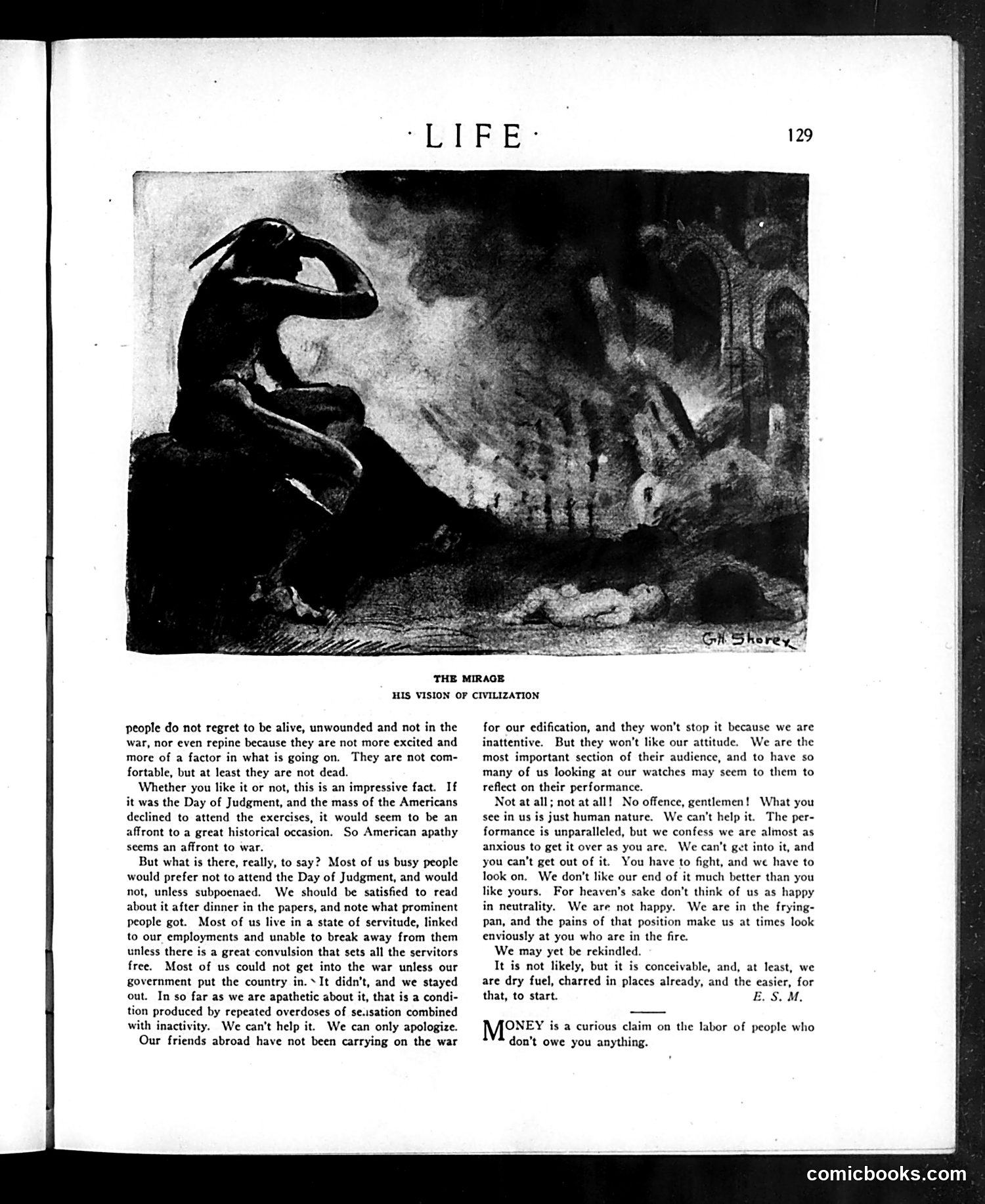
This political cartoon depicts a figure in military uniform gazing at a shimmering mirage of a cityscape. The satirical point appears to criticize post-WWI attitudes: the text argues that Americans reluctant to attend "Day of Judgment" exercises (likely military preparedness events) represent national apathy about war's realities. The cartoon suggests military leaders envision an idealized "civilization" that ordinary citizens won't support or sustain. The text's complaint—that Americans remain "inattentive" and "apathetic" about their civic/military duties—frames the soldier's hopeful vision as unrealistic fantasy. The unsigned artist (appears to be "Gil Short" based on visible signature) uses the mirage device to comment on the gap between military ambitions and public disengagement during the interwar period.
📄 Transcribed text from this page (OCR, searchable)
Machine-transcribed from the original scan — historical spelling and the odd misread are preserved.
HIS VISION OF CIVILIZATION people do not regret to be alive, unwounded and not in the war, nor even repine because they are not more excited and more of a factor in what is going on. They are not com- fortable, but at least they are not dead. Whether you like it or not, this is an impressive fact. If it was the Day of Judgment, and the mass of the Americans declined to attend the exercises, it would seem to be an affront to a great historical occasion. So American apathy seems an affront to war. But what is there, really, to say? Most of us busy people would prefer not to attend the Day of Judgment, and would not, unless subpoenaed. We should be satisfied to read about it after dinner in the papers, and note what prominent people got. Most of us live in a state of servitude, linked to our employments and unable to break away from them unless there is a great convulsion that sets all the servitors free. Most of us could not get into the war unless our government put the country in.» It didn’t, and we stayed out. In so far as we are apathetic about it, that is a condi- tion produced by repeated overdoses of se.isation combined with inactivity. We can't help it. We can only apologize. Our friends abroad have not been carrying on the war for our edification, and they won't stop it because we are inattentive. But they won't like our attitude. We are the most important section of their audience, and to have so many of us looking at our watches may seem to them to reflect on their performance. Not at all; not at all! No offence, gentlemen! What you see in us is just human nature. We can't help it. The per- formance is unparalleled, but we confess we are almost as anxious to get it over as you are. We can't get into it, and you can’t get out of it. You have to fight, and we have to look on. We don’t like our end of it much better than you like yours. For heaven’s sake don’t think of us as happy in neutrality. We are not happy. We are in the frying- pan, and the pains of that position make us at times look enviously at you who are in the fire. We may yet be rekindled. It is not likely, but it is conceivable, and, at least, we are dry fuel, charred in places already, and the easier, for that, to start. ELS. M. MOXEY is a curious claim on the labor of people who don’t owe you anything. comicbooks.com