
Life, 1916-12-14 · page 30 of 42
Life — December 14, 1916 — page 30: what you’re looking at
What you’re looking at
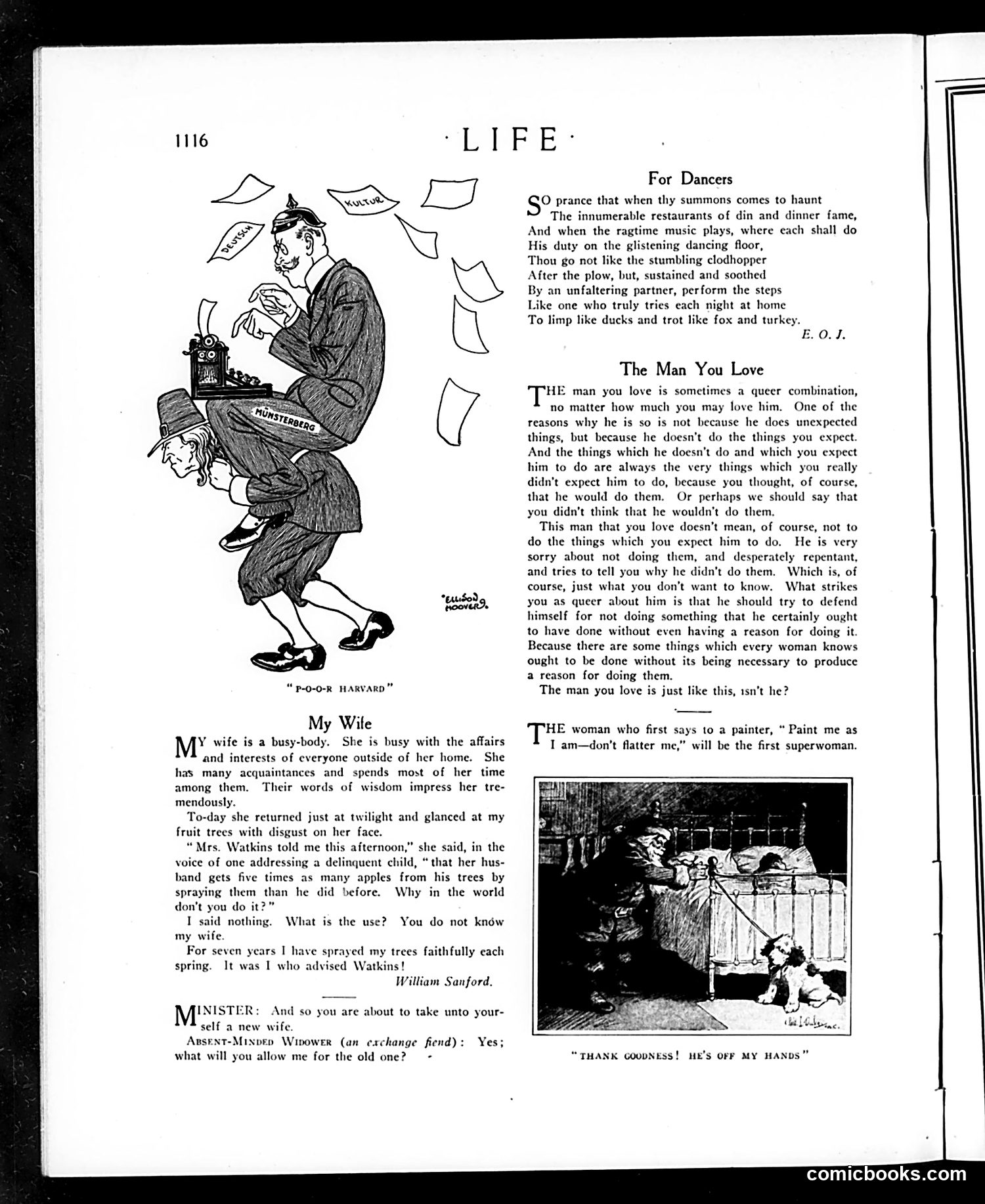
This satirical page from *Life* magazine targets domestic frustrations through multiple pieces: **"My Wife"** mocks the busy-body housewife who neglects her own home while dispensing unsolicited advice from neighbors. The joke: the wife criticizes her husband's apple trees, unaware *he* originally gave the neighbor the spraying advice she's now parroting back to him. **"Poor Harvard"** (cartoon) depicts a scholarly figure burdened by papers—likely satirizing Harvard University's administrative or academic excess. **The minister exchange** jokes darkly about remarriage: a widower asks what trade-in value he'll receive for his "old" wife, suggesting wives are disposable goods. **"For Dancers"** is verse mocking dancers who haven't practiced at home, performing clumsily at restaurants and dinner clubs. **"The Man You Love"** is philosophical satire about romantic contradiction: women expect men to intuitively know what needs doing without being told, yet resent their attempts to explain failures. All pieces reflect early 20th-century gender anxiety and marital discord humor.
📄 Transcribed text from this page (OCR, searchable)
Machine-transcribed from the original scan — historical spelling and the odd misread are preserved.
“ p-O-0-R HARVARD” My Wife M ’ wife is a busy-body. She is busy with the affairs and interests of everyone outside of her home. She has many acquaintances and spends most of her time among them. Their words of wisdom impress her tre- mendously, To-day she returned just at twilight and glanced at my fruit trees with disgust on her face. “Mrs. Watkins told me this afternoon,” she said, in the voice of one addressing a delinquent child, band gets five times as many apples from spraying them than he did before. Why in the world don’t you do it?” I said nothing. my wife. For seven years I have sprayed my trees faithfully each spring. It was I who advised Watkins! William Sanford. What is the use? You do not knéw INISTER: And so you are about to take unto your- self a new wife. Apsent-Mixveo Winower (an exchange fiend): Ye what will you allow me for the old one? - For Dancers O prance that when thy summons comes to haunt The innumerable restaurants of din and dinner fame, And when the ragtime music plays, where each shall do His duty on the glistening dancing floor, Thou go not like the stumbling clodhopper After the plow, but, sustained and soothed By an unfaltering partner, perform the steps Like one who truly tries each night at home To limp like ducks and trot like fox and turkey. The Man You Love HE man you love is sometimes a queer combination, no matter how much you may love him. One of the reasons why he is so is not because he does unexpected things, but because he doesn’t do the things you expect. And the things which he doesn’t do and which you expect him to do are always the very things which you really didn’t expect him to do, because you thought, of course, that he would do them. Or perhaps we should say that you didn’t think that he wouldn't do them, This man that you love doesn’t mean, of course, not to do the things which you expect him to do. He is very sorry about not doing them, and desperately repentant, and tries to tell you why he didn’t do them. Which is, of course, just what you don’t want to know. What strikes you as queer about him is that he should try to defend himself for not doing something that he certainly ought to have done without even having a reason for doing it. Because there are some things which every woman knows ought to be done without its being necessary to produce a reason for doing them. The man you love is just like this, isn’t he? TH woman who first says to a painter, “ Paint me as I am—don’t flatter me,” will be the first superwoman. “THANK GOODNESS! HE'S OFF MY HANDS” comicbooks.com